A New Axis between the Nile and the Bosphorus: The Turkish-Egyptian Rapprochement in a Fragmented Middle East
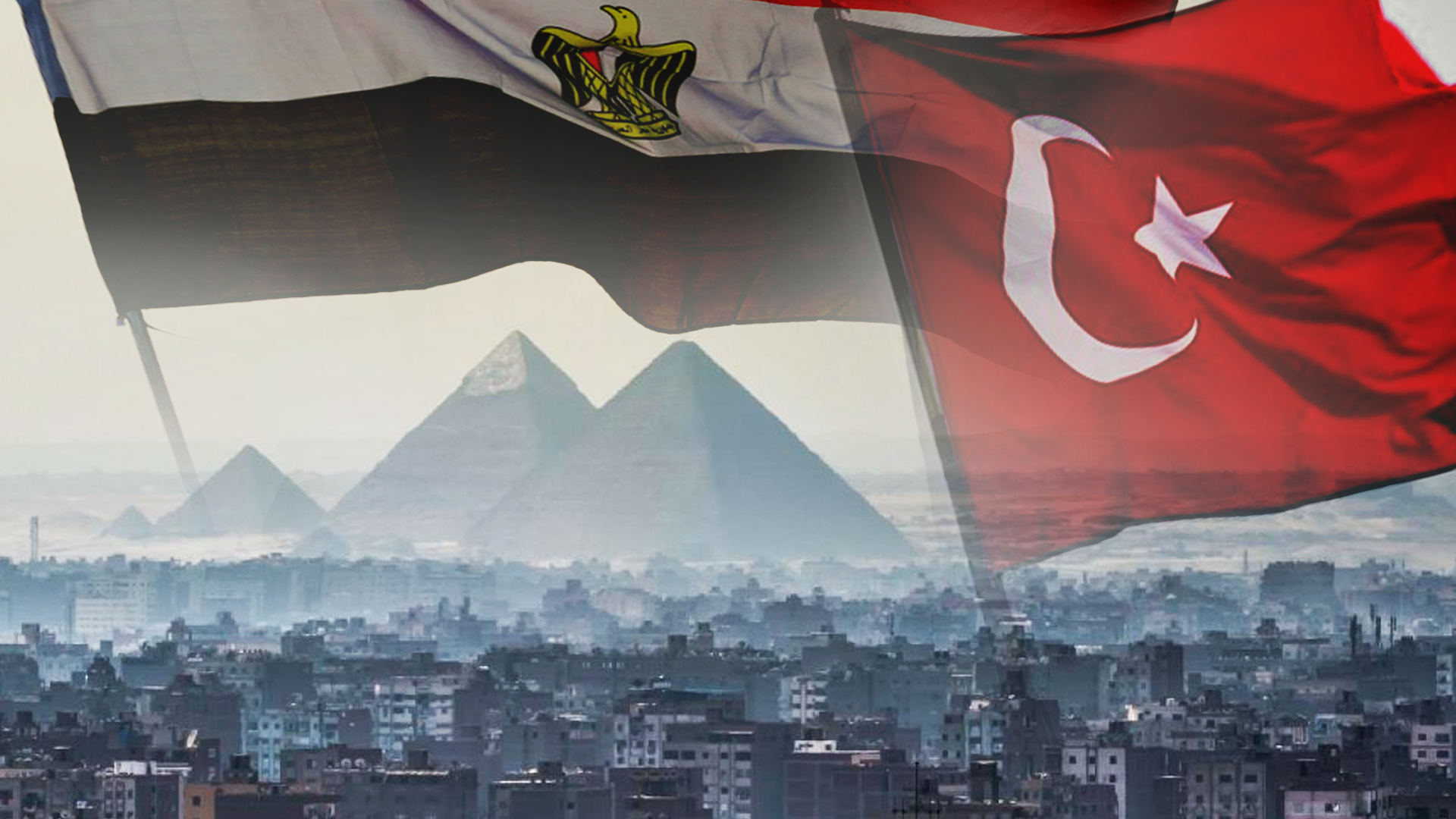
A New Axis between the Nile and the Bosphorus: The Turkish-Egyptian Rapprochement in a Fragmented Middle East
A new axis of pragmatism
A decade ago, Türkiye and Egypt sat on opposite sides of almost all regional fault lines, from the debate over the Muslim Brotherhood to the conflicts in Libya and the disputes in the Eastern Mediterranean. Their leaders now exchange visits, and Ankara and Cairo speak of strategic cooperation on energy, trade and Gaza diplomacy. To Türkiye, this is not a nostalgic reconciliation but a hard‑nosed gamble that a working axis with Egypt can turn Middle Eastern fragmentation into strategic leverage rather than isolation for both countries. The question is not whether Türkiye wants to pursue this opening – it already does – but whether Ankara can transform a tactical thaw into a lasting partnership that serves its long‑term interests without further polarising the region.
From ideological rupture to a cautious reset
The relationship deteriorated in 2013, when the army chief, Abdel Fattah el-Sisi, ousted President Mohamed Morsi, a Muslim Brotherhood head who had the support of Ankara. Türkiye refused to recognise the new order and harbored exiled Brotherhood leaders, and Cairo denounced the movement as a terrorist group and both the capitals were locked into an ugly ideological confrontation. Despite this, however, this political hostility did not halt trade volumes: in 2022, the volume of bilateral trade is approximately 9-10 billion dollars, as Türkiye is now the largest importer of Egyptian goods.[1] In July 2023, the two countries restored full diplomatic relations, appointing ambassadors again after a decade‑long rupture. [2]
Why Ankara needs Cairo now
In the case of Türkiye, rapprochement with Egypt is significant towards meeting three fundamental foreign policy requirements namely; reducing strategic encirclement, stabilising the economic environment and enhancement of its ability as an indispensable mediator. To begin with, the normalization with Cairo is aimed at shaking the sense of a Türkiye boxed-in over the Eastern Mediterranean and the Arab world. The disputes that Ankara had with Greece and Cyprus over sea boundaries and gas exploration had put it aside in terms of regional energy forumsin where Egypt occupied the centre stage. By restoring contacts with Cairo, Türkiye will be able not only to become a part of the conversation about liquefied natural gas and pipeline routes, but also about nuclear energy cooperation in which President Erdoğan directly raised the subject of nuclear energy with Sisi. Second, there is a high economic stake.
The political rift did not kill trade, indeed, it is now being increased, with each side of the divide actively seeking 15 billion dollars of exchange every year, and more aggressive Turkish investment in Egyptian production, transport and tourism. [3] At a time when Türkiye is struggling with high inflation and a pressing need for foreign capital, it is logical to take advantage of Egypt with its immense market share, the cheapness of labour and logistics at Suez. Third, the mutual interests of the Türkiye and Egypt, though not always in terms of approach, have been increased as a result of the Gaza war. Cairo has always been the indispensable intermediary on Gaza via Rafah; Ankara is an act as a protector of the Palestinian cause and a scolder of Israeli policy. Co-ordination of the two - in humanitarian aid, ceasefire and reconstruction of the post war - allows Türkiye to be part of Gaza diplomacy via a partner Israel and western capitals would still consider unavoidable.
A fragmented region, a shared agenda
The Turkish-Egyptian thaw is the most logical one as it fits into a wider recalibration of cold peace: Türkiye attempts to drift towards Saudi Arabia, UAE, and even an attempt to reset with Israel slightly in advance of the Gaza war; Gulf state balancing between Washington, Beijing, and Moscow; and regional middle powers trying to buffer against great power instabilities. Ankara and Cairo now spearhead similar talking points concerning various crises. On Gaza, they both condemn Israeli acts in robust words and demand that there is no sustainable order of security that will come without either having some form of viable Palestinian state and on the cessation of occupation. On Libya, they both make more accent on the necessity to unite the institutions, to elect and withdraw the foreign forces, although their favorite local partners are still varied. On Sudan, they stress ceasefire and access to humanitarian in order to prevent state collapse as a source of instability along the Nile and the Red Sea passageway.
This does not imply complete congruence-it merely implies that in a Middle East characterized by intersecting wars (Gaza, Sudan, Yemen), economic crisis and great power rivalry, Turkish and Egyptian interests will come into more common contact than into conflict. To Ankara, such a convergence presents it with an opportunity to shape outcomes rather than respond to coalitions that are being made outside of it. [4]
The Israel problem - and the limits of the axis
There is no evaluation of this new axis which is not done in the context of the Israel problem. In the case of Jerusalem, there is no third party that is neutral between Türkiye who has been playing a hostile game whose rhetoric on Gaza and its support of Hamas-related networks have been a red line despite any formal relationship. The further Ankara approaches Cairo in the Gaza policy discussion, and even holds combined naval or security drills with Egypt, the greater the risk of Türkiye employing this alliance to impose hard power into the Eastern Mediterranean and the Levant, according to the Israeli strategic thinkers. This has already caused a minor yet serious rift between the United States and Israel due to this perception. Washington still sees Türkiye, however challenging, as a potential partner in the alliance of the Nato countries and a required interlocutor in postwar plans of Gaza; this is despite the lobbying that Israel has made in opposition to inclusion of Ankara in any formal security arrangement involving the Strip. Introducing Türkiye into the context of formatting the presence of Egypt and Qatar on ceasefire or reconstruction will remain a point of contention, and the fact that Ankara has accepted Cairo would only add to Israelis as opposed to appeasing it. [5]
Turkish point of view is that this conflict is a threat and a bargaining chip. Excessive swing to an anti-Israel axis with Egypt would imperfect the efforts of Ankara to maintain a route, how narrow, to Tel Aviv and to the western capitals who dislike seeing their own polarized. However, prudent cooperation with Cairo on the humanitarian corridors, border plans and reconstruction would make Türkiye more indispensable to the West, but should be accompanied by the created stabilizing regional architecture rather than a punitive anti-Israel block.
What Türkiye should aim for
Türkiye success in this new axis must not be measured by headlines but improvements made by the structure. First, Ankara must cement economic interdependence to weather political storm: long-term investment structures, joint industrial zones, and unchanging rules to Turkish companies in Egypt and Egyptian companies in Türkiye. Second, it ought to pursue a realistic Eastern Mediterranean energy architecture where Turkish and Egyptian infrastructure are complementary, rather than competing, as they are recognizable as mutually reinforcing. Third, Türkiye should leverage Egyptian access and legitimacy on Gaza and regional security but must concede that Cairo remains the gatekeeper. A division of labor - Egypt as the indispensable border guard, Türkiye as a reconstruction partner and political advocate - would fulfill the ambitions of Ankara without eliciting the maximum response among the Israeli and the Western. [6]
In the dysfunctional Middle East, Türkiye can hardly afford either historical nostalgia of the lost ideological struggles or illusion of effortless coalition. The silver bullet is not a well managed relationship with Egypt, but it is one of the few strategic choices available to Ankara that is a solution to its economic dependency, isolation within the region and the wish to be at the center of the regional diplomacy. Only under this condition of pragmatic and interest-based calculus will the axis between the Nile and the Bosphorus survive - and it is here that the Turkish foreign policy has always been at the most.
References
[1]https://www.dailynewsegypt.com/2023/07/04/egypt-turkiye-appoint-ambassadors-to-restore-diplomatic-ties/
[2]https://www.aljazeera.com/news/2023/7/4/turkey-and-egypt-appoint-ambassadors-to-restore-diplomatic-ties
[3]https://www.aa.com.tr/en/middle-east/turkiye-egypt-agree-on-joint-approach-to-regional-crises-condemn-israel-s-gaza-occupation-plan/3655015
[4]https://www.dailysabah.com/politics/diplomacy/erdogan-el-sissi-put-gaza-at-center-of-renewed-turkiyeegypt-cooperation
[5] https://caliber.az/en/post/what-to-expect-from-turkiye-egypt-normalization-process
[6]https://www.atlanticcouncil.org/in-depth-research-reports/report/will-rapprochement-unlock-the-full-potential-of-the-eastern-mediterraneans-natural-gas-wealth/
Image source: uwidata.com
Author: Dávid Biró, Senior Advisor, Research and Academic Network Lead of the Ludovika Center for Turkic Studies