A Review of the 2024 Hungarian-Turkish Cultural Season
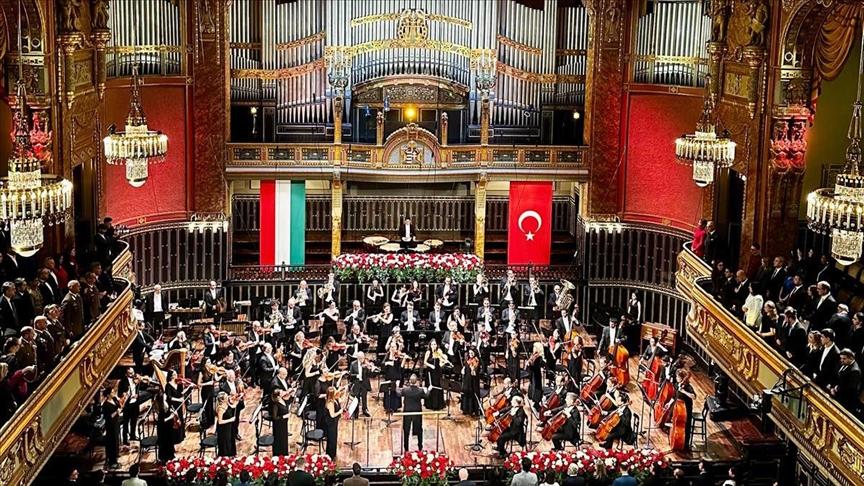
A Review of the 2024 Hungarian-Turkish Cultural Season
The development of Hungarian-Turkish relations over the past decades – particularly since 1990 – has shown a trend toward expanding into more and more fields of cooperation. In connection with Hungary’s accession to NATO in 1999, Ankara consistently took a supportive stance, just as Budapest has been a consistent advocate of Turkey’s integration into the European Union. As Süleyman Demirel stated during his visit to Budapest in September 1997:
“Turkey was extremely pleased that Hungary was joining NATO. Turkey views Hungary as a factor in European stability and peace. But the support Turkey gave to Hungary was not based solely on this consideration. Above all, Turkey strongly supported Hungary’s inclusion in the Atlantic Treaty as an equal and full member because of our historical friendship.” (qutoed by Hóvári János: Folyamatosság, törések és változások a magyar-török kapcsolatok százéves történetében. 2013: egy korszakváltás kezdete. https://hiia.hu/wp-content/uploads/2023/07/1-Hovari-Janos.pdf)
The number of bilateral visits has also risen significantly since the change of regime, though it is true that Hungarian foreign policy began a cautious opening as early as the mid-1960s, as diplomatic missions that had previously been at the legation level were officially elevated to the ambassadorial level in 1967 (until that time, in the Turkish system, the embassy in Budapest fell into the “ortaelcsi,” or medium-sized embassy, category).
This process accelerated even further after the 2010s, as cultural institutes were opened in both countries on a reciprocal basis, and since 2013, Ankara and Budapest have been strategic – and later on priority strategic – partners to each other, within the framework of which the leaders of the two countries hold joint government meetings from time to time.
Accordingly, the goal of the Cultural Season, marked by the motto “Century of Friendship and Cooperation” was on the Hungarian side, to reinforce and deepen the positive sentiments toward Hungary and the Hungarian people that are generally present in Turkish society, as well as to support the political and economic relations between the two countries through the medium of culture.
It is in this context, that the effort to make the Hungarian cultural presence in Turkey even more prominent during the season can be understood. From a Hungarian perspective, the initiative was of great significance, if only because the first Hungarian scientific institute abroad – the Hungarian Scientific Institute in Constantinople (KMTI) – began its operations in Istanbul in 1916. Although the collapse following World War I brought an end to the KMTI’s operations, with the launch of Hungarian studies in Ankara in the mid-1930s, Hungarian language instruction, culture, and scholarship were once again – and have remained ever since – able to operate within an organized framework in the Turkish capital.
This historical ties – which dates back to the past but began in the modern era – are also reflected in the fact that the Cultural Season opened in Budapest on December 18, 2023, marking the 100th anniversary of the establishment of official diplomatic relations between the two countries. In commemoration of the centennial, Hungary planned to implement 100 cultural programs in Turkey during 2024, while Turkey also committed to organizing 100 programs in Hungary. The Hungarian Season in Turkey enjoyed great interest and success nationwide; all in all, by the Season’s conclusion on December 12, 160 Hungarian productions were successfully staged in Turkey under the leadership of the responsible government commission.
The statistics for the 365-day season can be summarized as follows:
- 160 programs
- 17 cities
- 60 venues
- nearly 1.5 million Turkish attendees at the programs
- 1,000 media appearances
Based on the figures above and the feedbacks regarding the season, we can confidently state that the season achieved its cultural diplomacy objectives and contributed not only to a deeper understanding and appreciation of Hungarian culture and history in Turkey, but also laid further common ground in the fields of culture, higher education, and the economy.
The Hungarian-Turkish Cultural Season in 2024 provided an excellent example of how it is important to look to the future in order to preserve the excellent relations that exist today. I am confident that just as the diplomatic and scientific diplomatic steps taken in the early 20th century formed an important foundation for our bilateral relations with Turkey, the Hungarian-Turkish Cultural Season will also serve as an excellent starting point for the development of bilateral relations in the coming decades.
Author: Péter Kövecsi-Oláh, advisor - LCTS, LUPS
Image source: aa.com.tr