A Review of the 2025 Hungarian-Turkish Year of Science and Innovation
A Review of the 2025 Hungarian-Turkish Year of Science and Innovation
Although we often refer to the significance of our shared past when discussing the current state and future direction of Hungarian-Turkish relations, it is also worth focusing on planning, innovation, and scientific cooperation in order to shape our future together. That’s why, it is important to engage the younger generations and to strengthen those institutional ties that can lay a solid foundation for shared thinking in the future as well.
Over the past century and a half, Hungarian scholarship has played an important role in shaping Western perceptions of the Turkic world. However, this work is not yet complete, as Hungary can still do much to ensure that the Turkic world is better understood and known in Europe. Moreover – from a Hungarian perspective – shaping relations with the East always offers an opportunity for self-knowledge and self-reflection, as the awareness that our ancestors once migrated from the East to the Carpathian Basin is an integral part of our national identity.
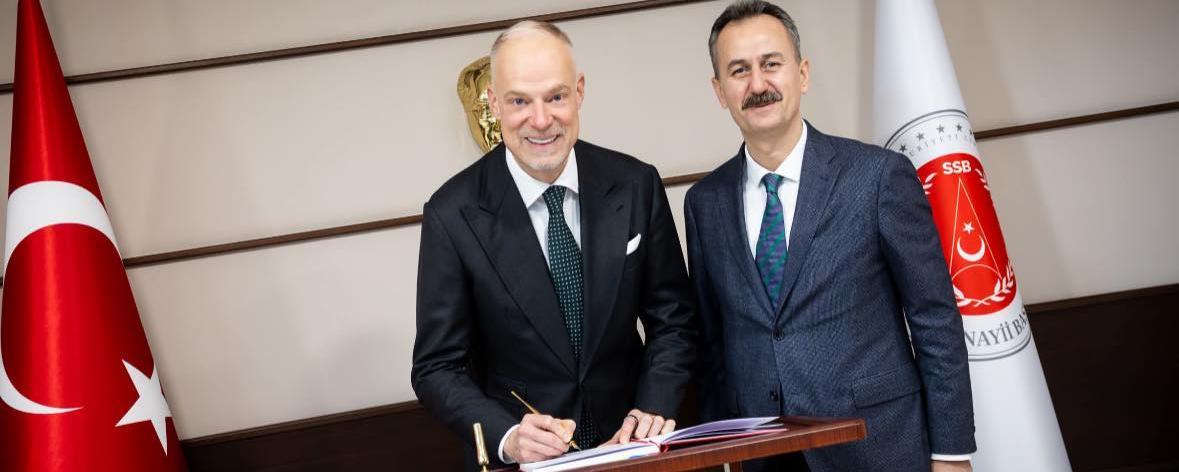
Accordingly, the 2025 Hungarian-Turkish Year of Science and Innovation has set as its goal the preservation of a mutually positive national image, as well as its enrichment with modern content and tools. This is to be facilitated by the development of university ties, the expansion of scholarship programs, the introduction of language courses within the walls of the University of Public Service, and the launch of joint research projects. Also worth to underline that withing this framework, special attention was paid on the cooperation between the two countries in defence sector as well.
Without claiming to be exhaustive, we aim to highlight below the programs in the fields of science and innovation that were implemented or launched in 2025 through Hungarian and Turkish collaboration.
First of all, the Attila exhibition of Hungarian National Musem, which opened in January 2026, is an excellent example of the spectacular and meaningful results that can be achieved through the joint work of domestic and foreign experts.
The same is true of the survey and documentation of the “Hungarian houses” in Milas (Western Türkiye), a project that forms an integral part of the preservation and maintenance of Hungary’s architectural heritage in Türkiye. Faculty and students from the Budapest University of Technology and Economics contributed to the work, carefully documenting the buildings constructed in the 1920s by Hungarian masters who appeared in the region, through which the modernity of new era in of the Turkish Republic has been reflected. Also for the memory of Hungarian innovation and knowledge, the Hungarian Memorial Park was inaugurated in the city of Zonguldak in the autumn of 2025, serving as a memento to the Hungarian mining engineers who worked in the city.
These projects can be considered within the framework of a lont term project, that is mapping and cataloging the geographical sites in Anatolia with Hungarian connections, a project that is currently underway but was initiated as part of the Year of Science and Innovation.
In Ankara, a scientific conference was held in memory of Antal Réthly, a meteorologist widely recognized for his contributions to scientific innovation in Hungary. But at the same time, Réthly was the founder of modern Turkish meteorological measurements; during his two years of work in the 1920’s, he laid the foundations of Turkish meteorology and established the conditions for accurate measurements.
In order to underline Szeged’s Altaic traditions, in September 2025 the University of Szeged organized a successful international conference titled “Altay Communities Symposium-XIII,” which was attended by both speakers and students representing numerous universities from the Turkic world.
In addition, with the coordination of Hungarian state institutions, a process has also been initiated aimed to secure the Hungarian rights of use for the Transylvanian Hungarian Palace, the building that served as the residence of the Transylvanian Principality’s (1570–1711) envoys in Istanbul.
The fictional documentary film called the Footsteps of Bartók won an award at the 5th Korkut Ata Film Festival in Aktau, and the film was also screened in Istanbul on September 26, 2025.
To strengthen coordination among our museums, the Hungarian National Museum also participated in the annual general assembly of the National Museum Association of Turkic Peoples, held in Aktau, Kazakhstan. Furthermore, the unique Attila exhibition, which opened its doors on January 22, 2026, also provided an excellent opportunity for the directors of the national museums of the Turkic states to hold a meeting in Hungary as a result of the joint work with TÜRKSOY.
As the above examples demonstrate, the 2025 Hungarian-Turkish Year of Science and Innovation achieved significant results that can serve as a model for future scientific, cultural, or even innovation years organized on a bilateral basis with other countries of the Turkic world.
Author: Péter Kövecsi-Oláh, advisor - LCTS, LUPS
Image source: kormany.hu