Ankara Talks Mark a New Chapter in Hungarian–Turkish Relations
Ankara Talks Mark a New Chapter in Hungarian–Turkish Relations
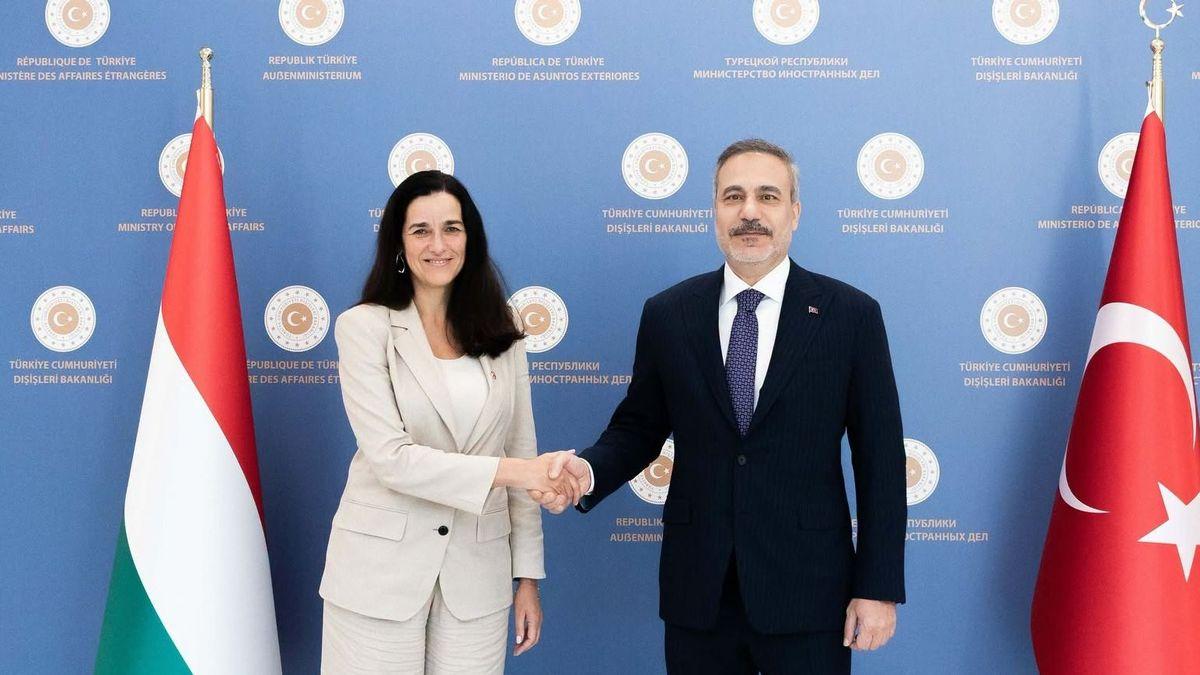
It is high-level diplomacy that will make the difference in the creation of lasting institutions and concrete cooperation. The October 8 meeting in Ankara between Hungarian Deputy PM and Foreign Minister Anita Orbán and Turkish Foreign Minister Hakan Fidan did just that: it maintained the strategic depth of Hungarian–Turkish partnership, and set a more structured and future-oriented agenda.
The key finding was an institutional one. The talks were the first Hungarian – Turkish foreign-ministerial consultations since the formation of the new Hungarian government, and featured the first meeting of the Joint Planning Group. The group will be formed under the High-Level Strategic Cooperation Council and shall help in planning the bilateral priorities, reviewing and follow up on prior decisions and prepare for future high-level meetings. The two sides also agreed to resume the structured cooperation between their foreign ministries and hold a security-policy dialogue. These steps might seem routine, but the mechanisms which are established and adhered to are what ensure bilateral relations are not affected by political cycles and that declarations are followed through. [1]
The economic program was equally far-reaching. Bilateral trade has surpassed 5 billion USD and Ankara has set 10 billion USD as the next milestone. Not only will the trade flows need to be increased, both sides will need to facilitate investment and link up companies and projects in higher-value sectors. Turkish companies operate in Hungary in various areas such as food and manufacturing industries, defence and other large investment projects. The meeting thus served as a link between the headline targets and the commercial work needed to meet the targets. [2]
Energy continues to be another focus. Fidan spoke about cooperation to be considered with regard to natural gas and renewable energy and Orbán said both sides will strive to strengthen their energy relationship. This is not only relevant strategically for Hungary, where energy security is dependent on the secure flow of energy and diversified partnerships, but also for Türkiye, who is consolidating its status as the energy bridge between the energy supply and energy market areas. Now the hurdle is to convert political support into profit-generating projects and business deals. [3]
One of the most obvious and concrete benefits was connectivity. Since April 29 2026, there has been a direct air link between Budapest and Ankara, and Hungary's parliament has approved a new bilateral air-services agreement that is likely to aid in further expansion of air traffic between the countries. Improved transport connections are not only essential to enable the official visits, they also support the development of tourism, business contacts, educational contacts and people-to-people ties. Hungary is also strategically significant as a way of access for Turkish products to enter Europe. [4]
The talks reaffirmed the security aspect of the NATO close collaboration between two allies. Defence-industry cooperation and irregular migration and regional security were discussed, and Fidan cautioned against the Russia–Ukraine war becoming a Black Sea theatre as well. Closer consultation is strategic necessity for Hungary and Türkiye both exposed to instability around the wider neighbourhood of Europe. [5]
Perhaps the most politically significant element was Hungary’s willingness to provide Türkiye with practical assistance on EU-related matters. Budapest supports the modernisation of the EU–Türkiye Customs Union, while Hungarian experts will share their knowledge and experience with Turkish institutions through the EU’s TAIEX programme. This method is constructive as it emphasizes on steps that are attainable even though there may be obstacles in the path of the accession of Türkiye. It also sets a new tone for pragmatic relations between Ankara and Brussels as a bridge builder among the nations. [6]
This is not just a ceremonial repetition, but rather the start of a more systematic period of bilateral relations, that should take place on October 8. It will be determined in the end by implementation – that the Joint Planning Group meets regularly, trade moves towards the $10 billion target, energy and defence projects progress and connectivity expands. But the groundwork is now laid. Strategic partnership can be both continuity and renewal – and political trust and results – Hungary and Türkiye have proved.
References
[1] https://dailynewshungary.com/hungary-turkiye-diplomatic-cooperation/
[2] https://www.hurriyetdailynews.com/hungary-fm-due-in-turkiye-for-comprehensive-talks-227849#google_vignette
[3] https://www.dailysabah.com/politics/diplomacy/turkiye-hungary-launch-new-mechanism-to-deepen-strategic-ties/amp
[4] https://www.portfolio.hu/gazdasag/20261008/bejelentette-orban-anita-targyalt-torok-partnerevel-szorosabbra-fuzik-a-kapcsolatokat-tobb-teruleten-is-868446
[5] https://mobile.aa.com.tr/tr/gundem/bakan-fidan-mekke-anlasmasi-bir-saldiri-anlasmasi-degil/4082098
[6] https://www.vg.hu/kozelet/2026/10/orban-anita-magyar-torok-targyalas-ankara-diplomacia#google_vignette
Author: Dávid Biró, Senior Advisor, Research and Academic Network Lead of the Ludovika Center for Turkic Studies
Image source: mfa.gov.hu