Ankara's Ambitions in the Shanghai Cooperation Organization
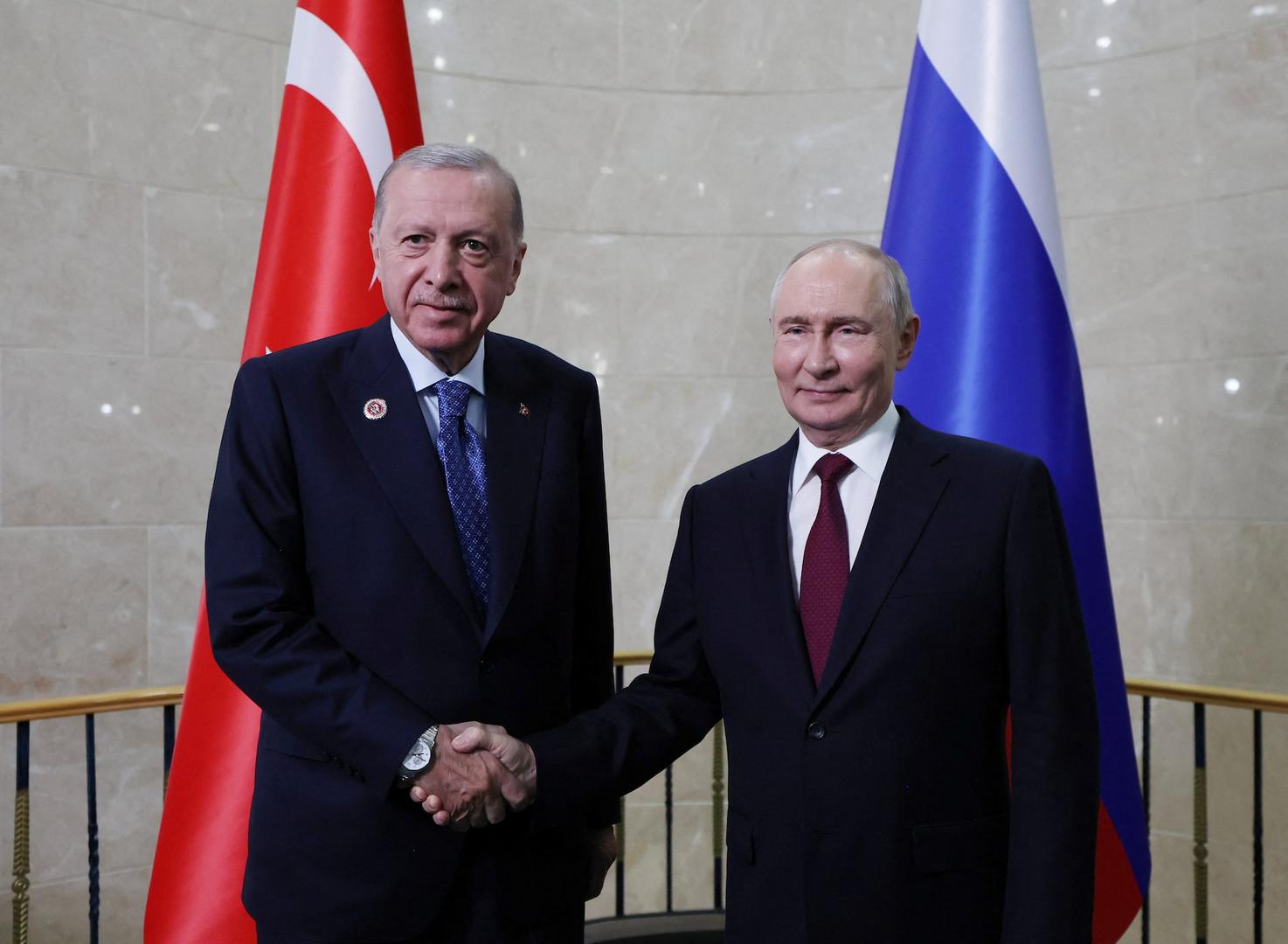
Ankara's Ambitions in the Shanghai Cooperation Organization
The changing dynamics of the Shanghai Cooperation Organization (SCO) and Türkiye are a case study in Ankara's ‘multi‑alignment’ policy: expanding its engagement across Eurasia without abandoning its institutional ties to NATO and the West. Even a serious discussion on the direction of Türkiye's foreign policy these days has to address the implications of the pull toward a greater SCO engagement – and how it would not.
What Is the SCO – and What Is It Not?
The Shanghai Cooperation Organization was established in 2001, evolving from the Shanghai Five mechanism created in 1996 by China, Russia, Kazakhstan, Kyrgyzstan and Tajikistan. It combines hard security issues such as border management, counter-terrorism and annual “Peace Mission” drills with softer themes that include economic and connectivity issues that many other countries dismiss as utopic ideals. [1]
The SCO has added new members recently – Iran in 2023 and Belarus in 2024 – solidifying its position as a non‑Western hub in the context of an increasingly competitive systemic rivalry. However, the organization's institutional strength is weak and internal divisions between China, Russia, India and Pakistan impede it from functioning as a cohesive geopolitical bloc.
Türkiye’s Gradual Engagement with the SCO
Türkiye was admitted as an SCO dialogue partner at the organization’s Beijing summit in June 2012. It has not become an observer or full member. The status allows Ankara to attend selected meetings and participate in certain SCO activities, but it does not give Türkiye the rights or decision-making role of a full member. [2]
In 2017, Türkiye chaired the SCO Energy Club, becoming the first non-member state to assume a leadership role within an SCO body. Turkish leaders have always interpreted the dialogue relationship as a first step towards further interaction and have hinted at hopes for observer and even membership status.
Erdoğan’s Reframing of Türkiye’s SCO Engagement
The SCO has once again found itself in the middle of the dispute regarding Türkiye's strategic direction, which has come to an end with the latest moves by President Recep Tayyip Erdoğan. He said that any serious analysis of Türkiye’s foreign policy direction must therefore take into account what a deeper involvement in the SCO would – and would not – mean for Ankara’s relations with the West. [3]
This was not a passing fad; at the NATO summit in Washington last July, Erdoğan said that Türkiye is observing the organization and that “we wish to become a full member” and had already talked with the leaders of Russia and China on the subject. The message is clear, Türkiye would like to be at the main table of NATO and still have the chance to knock on the door of the SCO.
Instead of Rupture, Multi‑Alignment
The people from Turkey and the pro-government commentators have done everything they could to promote the idea that the SCO is not an alternative, but an additional forum to Euro‑Atlantic ones. Erdoğan says that he has a “360‑degree vision” and is “determined to diversify economic, political and strategic options” and, quite clearly, that joining SCO is not “turning its back on the West.”
It is part of a wider multi‑alignment doctrine: the elites in Ankara feel that there is a fluid order that includes, but isn't limited to, NATO and the EU, and the very fact that Ankara is confined to NATO and the EU to secure its position, it is no longer sufficient for its security interests. The use of non‑Western media like BRICS and the SCO is presented as a means of hedging, strengthening autonomy and playing Türkiye's geographical role with China and Central Asia as the gateway to Russia, the Black Sea and the Mediterranean. [4]
The dimensions of Eurasia and Turkic resumes
The greater engagement of SCO from the perspective of Eurasia would formalize what is already happening in the outreach of SCO to Central Asia and the wider Turkic region in Türkiye. The Central Asian republics - Kazakhstan, Kyrgyzstan, Tajikistan and Uzbekistan - are the founding or early members of the SCO, and now are using a double architecture that also incorporates the Organization of Turkic States and various trade and connectivity initiatives.
The SCO provides Ankara with alternative venue to be at the same table with these partners, instead of in Turkic-centric bodies that Moscow and Beijing observe from the sidelines. With proper play, this might be the opportunity for Türkiye to bring its own agenda into the larger Eurasian discussion as it seeks to develop transport corridors, energy and security partnerships, etc. without giving up on its Turkic agenda. [5]
There are, however, certain restrictions on the SCO option
However, there are some caveats to the SCO way. Despite the current political tensions and mistrust, NATO continues to be the main security umbrella for Türkiye, according to most analysts from both Turkish and European think tank circles. The Alliance continues to provide essential capabilities, interoperability and deterrence against threats from Russia to those emanating from the unstable regions of Syria and Iraq.
Besides, China has also shown a prudent attitude towards the accelerated development of the SCO, which is based on the principle of step by step and strict criteria and long-term review. Current rules are explicit that observer countries will have a long road to membership, and Ankara's claims could be more than the bureaucrats can stomach, particularly when it comes to bringing a big NATO power into a bloc many consider to be a symbol of non - Western security cooperation. [6]
Domestic politics and signalling
Domestically, the SCO talks ring nicely with those who view Western institutions as hypocritical, hostile, or unreliable and in the face of EU accession fatigue and periodic feuds with Washington and European capitals. With the Shanghai card dangling, Erdoğan can convey to his followers that Türkiye has options and does not need to be “held hostage” by the Euro-Atlantic partners.
Concurrently, the SCO discourse pushes outwards: allies from the West cannot assume a Turkey loyal to them, but should view Ankara as a pole of independence in the region, and not as a flank state. The possibility of full membership, even if it doesn't come to pass, also serves as a bargaining tool – in the talks about sanctions, arms sales or the position with regard to Russia and the problems in the region. [7]
Implications for NATO and Europe
A NATO country in both Brussels and Shanghai would only add to the Alliance's troubled political dynamics, largely because of the different threat assessments held by NATO and European countries, and Ankara's assertive regional policies. The presence of another key ally in regular security discussions with Russia and China under the auspices of SCO would further raise the concerns of intelligence sharing, interoperability and crisis decision‑making.
But it is also the case that if it is pushed back or if the engagement with SCO is seen as a red line, it will prove to be a self‐fulfilling prophecy. A more sensible approach would have been to understand that Ankara will be always engaged in balancing the West and the Non ‐ West and to attend to protecting the core-competencies of NATO, with discreet training of the wings of Türkiye's multi ‐ alignment. [8]
Global positioning of Ankara is at stake No. 1
The place from Ankara's perspective is that this is a symbolic affirmation of Türkiye's Eurasian status; it is a platform to develop relations with Central Asian, South Asian and Middle Eastern partners for more than Western eyes; and it provides leverage to engage with Euro‑Atlantic institutions. But all of these don't necessarily need to be formal full membership - "observer" status or an upgraded “partner” category could do many of the same things at a lower cost.
The strategic problem is that they don't want to use the Shanghai card too much. But if Ankara, who wants to pursue the multi‑alignment it desires, presses too strongly, it may elicit precisely the NATO and EU reaction that will further constrain its options, and damage the very multi‑alignment it wants. The more plausible way is through incremental - making it a dialogue partner and at a gradual pace exploring the possibility of observer level participation in the SCO, and don't make the SCO the pivot point towards turning away from the West but rather another thread in a complex web of approaches to the East. [9]
A balancing act, not a binary choice
In conclusion, one should not interpret Türkiye's SCO journey as a dramatic shift towards the East, but rather as a gesture to make it more institutionalized as a swinging country in a multipolar world system. Ankara has a habit of occupying several rooms simultaneously as it tries to turn the presence in Ankara into influence and autonomy in NATO councils, EU corridors, Turkic summits and SCO summits.
It remains to be seen if this multi‑room approach will work, as much will depend on Erdoğan's rhetoric and his ability to manage the trade-offs and perceptions of playing both sides in Shanghai and Brussels. In the meantime, the SCO is a useful instrument in the foreign-policy toolbox of the Turkish capital – strong as a symbol, weak as a institution, and exposing most of all in terms of the perceptions of Ankara towards its position in Eurasia and the world in general. [10]
References
[1] https://www.baks.bund.de/sites/baks010/files/working_paper_2017_06.pdf
[2] https://www.mfa.gov.tr/shanghai-cooperation-organization.en.mfa
[3] https://www.reuters.com/world/china/erdogan-says-turkey-would-consider-full-membership-china-russia-led-security-2026-09-02/
[4] https://collections.fes.de/publikationen/ident/fes/22147
[5] https://dergipark.org.tr/tr/download/article-file/2816586
[6] https://www.baks.bund.de/sites/baks010/files/working_paper_2017_06.pdf
[7] https://collections.fes.de/publikationen/ident/fes/22147
[8] https://www.baks.bund.de/sites/baks010/files/working_paper_2017_06.pdf
[9] https://www.aa.com.tr/en/turkiye/turkiyes-sco-membership-perspective-never-means-turning-its-back-on-west-president-erdogan/4045249
Author: Dávid Biró, Senior Advisor, Research and Academic Network Lead of the Ludovika Center for Turkic Studies
Image source: Türkiye UN