Aurel Stein: The Hungarian Scholar Who Rediscovered the Geography of Eurasia
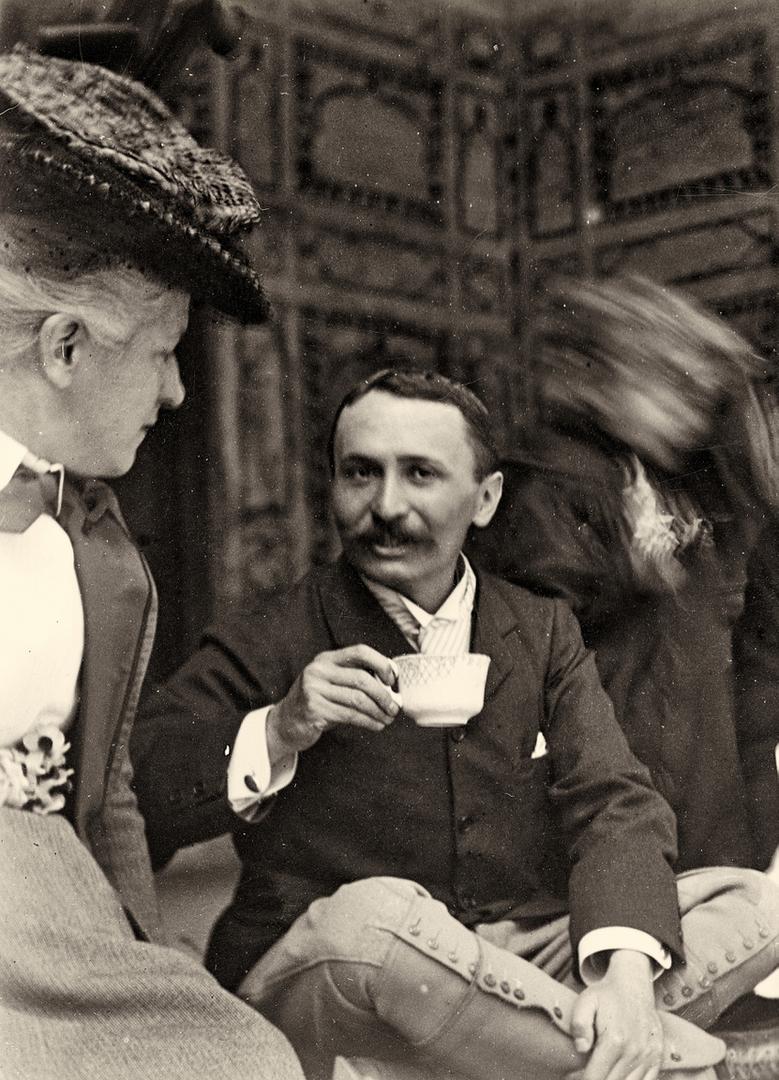
Aurel Stein: The Hungarian Scholar Who Rediscovered the Geography of Eurasia
“I have had a wonderful life and it could not be concluded more happily than in Afghanistan which I have wanted to visit for sixty years.” Few sentences could capture Aurel Stein’s life more precisely. When Sir Aurel Stein died in Kabul in October 1943, at the age of eighty, he had finally reached a country he had been trying to enter for decades and much of his scholarly life. Afghanistan was not only an extraordinary journey for him, but the country also lay near the geographical centre of the territory that had occupied Stein for more than half a century.
Today, Stein is usually associated with the Silk Road and, among the enthusiasts, with the manuscripts he acquired at Dunhuang in 1907, including the celebrated ninth-century Diamond Sutra. Yet reducing his career to that episode obscures the scale of his work. Stein was a philologist, archaeologist, geographer and cartographer whose fieldwork extended across an extraordinary expanse of Eurasia: from Kashmir and the north-western frontiers of the Indian subcontinent, across the Pamirs and the oasis settlements of the Tarim Basin, to Gansu and Dunhuang in western China; and, in the later decades of his career, across large parts of Iran, as well as Iraq and Transjordan. Combining his study fields, Stein used ancient texts, archaeological evidence and the landscape itself to reconstruct the historical routes and connections of Eurasia.
Born in Pest on 26 November 1862, Stein studied in Vienna, Leipzig and Tübingen, where his academic training centred on Sanskrit, comparative philology and Old Iranian languages. He completed his doctorate in 1883 with a dissertation on Avestan, while his early research already reflected an interest in the relationship between texts, geography and the historical connections between the Iranian and Indian worlds. A Hungarian state scholarship subsequently took him to Britain, while military service in the Austro-Hungarian army provided training in surveying and cartography. In 1887, he moved to British India, becoming principal of the Oriental College in Lahore and registrar of Punjab University. India would remain his professional base for much of his career. His first major scholarly achievement concerned Kashmir. Stein worked extensively on Kalhaṇa’s twelfth-century Sanskrit chronicle, the Rājataraṅgiṇī, travelling through Kashmir to compare its geographical descriptions with surviving sites and the physical landscape. His critical edition appeared in 1892, followed by an annotated English translation in 1900.
This combination of textual scholarship and field observation became characteristic of Stein’s work. He sought to locate the worlds described by ancient authors in the landscape itself, with Alexander the Great and the seventh-century Chinese Buddhist pilgrim Xuanzang serving as important reference points. By the end of the nineteenth century, his attention had increasingly turned towards Central Asia.
Stein’s first Central Asian expedition, in 1900-1901, took him across the Pamirs to Kashgar, Khotan and the southern edge of the Taklamakan Desert. At sites such as Dandan-Uiliq and Niya, the region’s arid conditions had preserved manuscripts, textiles and other remains reflecting Chinese, Indian and Iranian influences. These discoveries revealed Central Asia not merely as a transit route, but as a region of sustained cultural interaction.
His second expedition, between 1906 and 1908, became the most famous. At Dunhuang in 1907, Stein gained access through the Daoist custodian Wang Yuanlu to the so-called Library Cave at Mogao, which contained tens of thousands of manuscripts, paintings and printed works. Among the material he acquired was the Diamond Sutra, printed in 868 and regarded as the earliest known complete printed book bearing an explicit date. More broadly, the multilingual Dunhuang collection offered exceptional evidence of the religious, cultural and administrative networks that had connected different parts of Eurasia. Stein returned to Central Asia in 1913, conducting research across the Tarim Basin and around Turfan before travelling westwards through the Pamirs into eastern Persia. By then, the geographical scope of his work had expanded well beyond the conventional boundaries of the Silk Road.
Iran and the western half of Stein’s career
This western dimension of Stein’s work is often overshadowed by his Central Asian expeditions. Yet Iran brought him back to intellectual questions that had occupied him since his earliest years as a scholar. Stein conducted four major expeditions in Iran between 1932 and 1936. His surveys stretched across southern and western parts of the country, including Baluchistan, Kerman, Fars and the Persian Gulf region, documenting sites from prehistoric settlements to remains of the Islamic period.
His research repeatedly crossed the modern geographical categories separating the Iranian world, the Indian subcontinent and Inner Asia. What interested him were the routes and frontier zones through which these regions had interacted over centuries. The same approach informed his long-standing interest in Alexander the Great. In the frontier regions of British India, Stein compared classical accounts of Alexander’s campaigns with local geography and archaeological evidence, publishing the results in On Alexander’s Track to the Indus in 1929.
Scholar of Two Worlds
Although Stein spent most of his professional life abroad and became a British citizen in 1904, his relationship with Hungary remained important. The Hungarian Academy of Sciences occupied a significant place in his intellectual life.. His career also belonged to a longer Hungarian tradition of Asian scholarship, most notably associated with Sándor Kőrösi Csoma.
Csoma had left Hungary in 1819 in search of the historical origins of the Hungarians. His journey eventually led him to Ladakh and the study of Tibetan language and Buddhist literature. From Leh, he hoped to continue towards Yarkand and Central Asia, but was unable to complete the journey.
Stein, born twenty years after Csoma’s death, openly admired his predecessor. Csoma represented for him a model of scholarly dedication and endurance, and the geographical parallel between their careers is striking. The Central Asian world that remained beyond Csoma’s reach became one of the principal fields of Stein’s research.
Yet the connection between them is more significant than the fact that two Hungarian scholars travelled eastward. Their careers reflect different stages in the development of European knowledge about Asia.
Author: Blanka Benkő-Kovács, advisor - LCTS, LUPS
Image source: index.hu