Born in Crisis: The Mecca Pact
Born in Crisis: The Mecca Pact
While the Mecca Pact represents Ankara's most ambitious effort to change the nature of Middle East security from within so far, it is also a test of the extent to which Türkiye's multi-vector foreign policy can really go. The agreement, which was designed in a defensive and inclusive manner, may develop into either a new Muslim security structure or reveal new fault lines in a fragile regional order.
A pact born in crisis
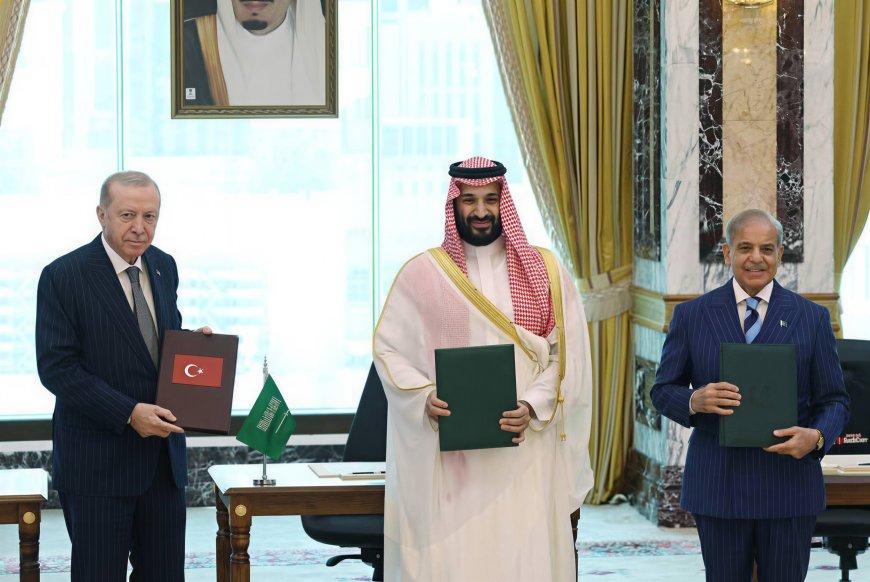
Three of the most influential Muslim-majority states, Saudi Arabia, Türkiye and Pakistan, inked the Mecca Joint Defence Agreement in the holy city of Mecca on 7 August 2026, uniting them under a single mutual-defence pact. The agreement was made amid a growing regional conflict involving Iran, and all three parties were eager to send a message of a joint front on defence but did not explicitly mention a regional threat. Now, the accord is structured in a similar fashion as NATO's Article 5, which states that an armed attack on any one of the three is an attack on all. Note that the agreement is deliberately vague on exactly what each country would be obligated to do in the event of a crisis. [1]
Regional ownership, not another NATO
Turkish authorities have reiterated the Mecca Pact is “defence” and “purely defensive in nature” as well as to seek to make regional deterrence more effective, to maintain responsibility for security among regional actors. Foreign Minister Hakan Fidan says the deal is “technically the same” as the NATO collective-defence pact, but that it is not directed at any country and does not specify a written threat. For Ankara, the key is that the pact does not replace and does not contradict the existing commitments of the country within the NATO alliance, which includes its role as a core member of the organization, and is an important reassurance for the Western allies who are uncomfortable with the formation of parallel security structures in the Middle East. [2]
Türkiye’s strategic calculus
In Türkiye, the Mecca Pact is not just about of ensuring hard security, but also about status and influence. Ankara is elevated to a pivotal position in a trilateral partnership that highlights its historical ties with Saudi Arabia and Pakistan, and promotes the Turkish defence industry as a choice in terms of supplying “deep tech” equipment, joint production, and advanced military technologies. The deal aligns with President Recep Tayyip Erdoğan's vision of turning Türkiye into a global leader in the Muslim world and creating a unified security system in which the wealth of the Gulf states, the manpower of Pakistan, and the Turkish technology are merged. It is a political message, too, at home, that, even though old-fashioned Western security guarantees are not that predictable, Türkiye can determine the regional outcomes on its own terms. [3]
Saudi and Pakistani stakes
Saudi Arabia will be the "financial engine" of the pact, with the alliance's secretariat being located in Riyadh and its defence projects and industrial cooperation being funded by Saudi money. Pakistan, on the other hand, is able to infuse battlefield experience and manpower, having signed Strategic Mutual Defence Agreement with Riyadh in 2025, which, as a part of the Mecca Pact, also encompasses Türkiye. Though Pakistan's nuclear status is significant in regional perceptions, analysts warn that the Pakistan agreement is not expected to formally add a nuclear umbrella to Saudi Arabia or Türkiye's nuclear arsenal, limiting the alliance to "conventional deterrence" and political signaling. [4]
Architecture and institutions
The Mecca Pact is not just about a declaration, it's also being given an institutional framework. Under the agreement, a Strategic Political and Defence Committee is established to coordinate strategic directions, which will include foreign ministers, defence ministers and chiefs of general staff from all three countries. The secretariat of the alliance will be headquartered in Riyadh, while the first secretary-general will be from the South Asian nations, a sign of the Gulf leadership and South Asian representation. Joint military exercises on land, air and sea, and extended development of the defence industry partnership in such areas as unmanned systems, electronic warfare and artificial intelligence are among the activities planned. [5]
An open door to “brotherly” countries
Early on, Turkey's and Saudi Arabia's leaders have presented the Mecca Pact as open to “brotherly countries” that wish peace, prosperity and stability, and not as a club for the exclusive use of a few. Egypt has been dangling the prospect of joining the alliance, saying that a roadmap is under preparation that outlines the conditions, standards and procedures of accession.Hakan Fidan has previously suggested in public statements that Egypt will join the alliance, saying that a roadmap is being prepared that outlines the conditions, standards and procedures of accession. Such a development, if it comes to fruition, would turn the pact into a wider Muslim security umbrella, but also increase the internal political and strategic tensions that any such collective-defence system has to manage. [6]
Implications for NATO and Western partners
The Mecca Pact will certainly be interpreted in the capitals of the Euro-Atlantic through the prism of Türkiye's complicated ties with NATO and the US. Ankara's Defence Ministry has made no secret of the fact that the deal is “not an alternative or rival organisation to NATO”, but stresses its complementary and regional dimension. However, the fact that a trilateral alliance centred around Mecca is developing its own committees, secretariat and joint exercises does highlight a certain movement toward fallback and parallel security practices, decreasing Turkey's reliance on Western-controlled institutions. This new architecture will be a concern for Washington and European governments in terms of whether it is compatible with their own crisis management efforts in the Gulf and broader Middle East.
Iran and Gulf dynamics
Official statements are bent over backwards to say the pact is not against Iran, and that no country is listed as a common threat in the document. Yet, given the context of a conflict between Tehran and Iranian missile attacks against oil exporters from the Gulf, the Mecca Pact will be read in Tehran and elsewhere as a Sunni alliance for joint deterrence against pressure from Tehran. The perception may dampen Iran's willingness to take risks or may even make the country more cautious in its efforts to look for counter-alliances to the same effect as the threat of war it is trying to prevent. [7]
Risks and unanswered questions
Despite all its symbolism the Mecca Pact has provoked more questions than answers. The joint statement doesn't detail exactly what each party has agreed to do, according to Reuters and others, leaving questions about what help would be provided in the event of a crisis. Even the Turkish authorities admit the edifice is in a fledgling stage as political trust, military interoperability and mechanisms for pooling capabilities remains untested in practice. Domestically, every nation will also have to deal with growing doubts from a population that is either leery of being drawn into other countries' wars or skeptical of the notion of alliances formed during war. [8]
What does it imply for Türkiye?
The Mecca Pact is a gamble with high stakes for Türkiye, one where regional ownership, Muslim unity and defence-industrial power can be combined into a sustainable security system. If Ankara is able to maintain the promise of the pact being truly defensive and inclusive, and complementary to NATO, it could improve its leverage as a major security contributor from the Mediterranean to the Gulf. But if the alliance is used as a platform for unilaterally pursuing agendas or proves to be a test of solidarity that it fails to meet, it could taint the Turkish image and the concept of a security order led by the region. Mecca, in that respect, is not the end but the beginning of an extended and unpredictable journey in the field of Turkish foreign and security policy. [9]
References
[1] https://www.dailysabah.com/politics/turkiye-aims-to-expand-mecca-pact-underlines-no-country-targeted/news
[2] https://www.aljazeera.com/news/2026/8/8/turkiye-says-mecca-defence-pact-not-aimed-at-iran
[3] https://www.aljazeera.com/news/2026/8/13/turkiye-lays-out-mechanisms-of-defence-pact-with-pakistan-saudi-arabia
[4] https://www.aa.com.tr/en/turkiye/mecca-defense-agreement-launches-process-for-new-regional-security-cooperation-architecture-turkish-foreign-minister/4042759
[5] https://anewz.tv/world/world-news/23912/turkiye-pakistan-saudi-arabia-formalise-mecca-defence-pact/news
[6] https://www.trtworld.com/article/7992e3d8c37f
[7] https://www.reuters.com/world/asia-pacific/saudi-arabia-turkey-pakistan-sign-joint-defence-deal-amid-regional-turmoil-2026-08-07/
[8] https://www.middleeasteye.net/news/mecca-agreement-turkeys-new-defence-pact-and-tests-ahead
[9] https://www.bbc.com/news/articles/c30418m4mj4o
Author: Dávid Biró, Senior Advisor, Research and Academic Network Lead of the Ludovika Center for Turkic Studies
Image source: https://counterpointbd.com/uploads/images/202609/image_870x_6aa63caf10ccb.jpg