Central Asia and Azerbaijan: Building a Wider Regional Architecture
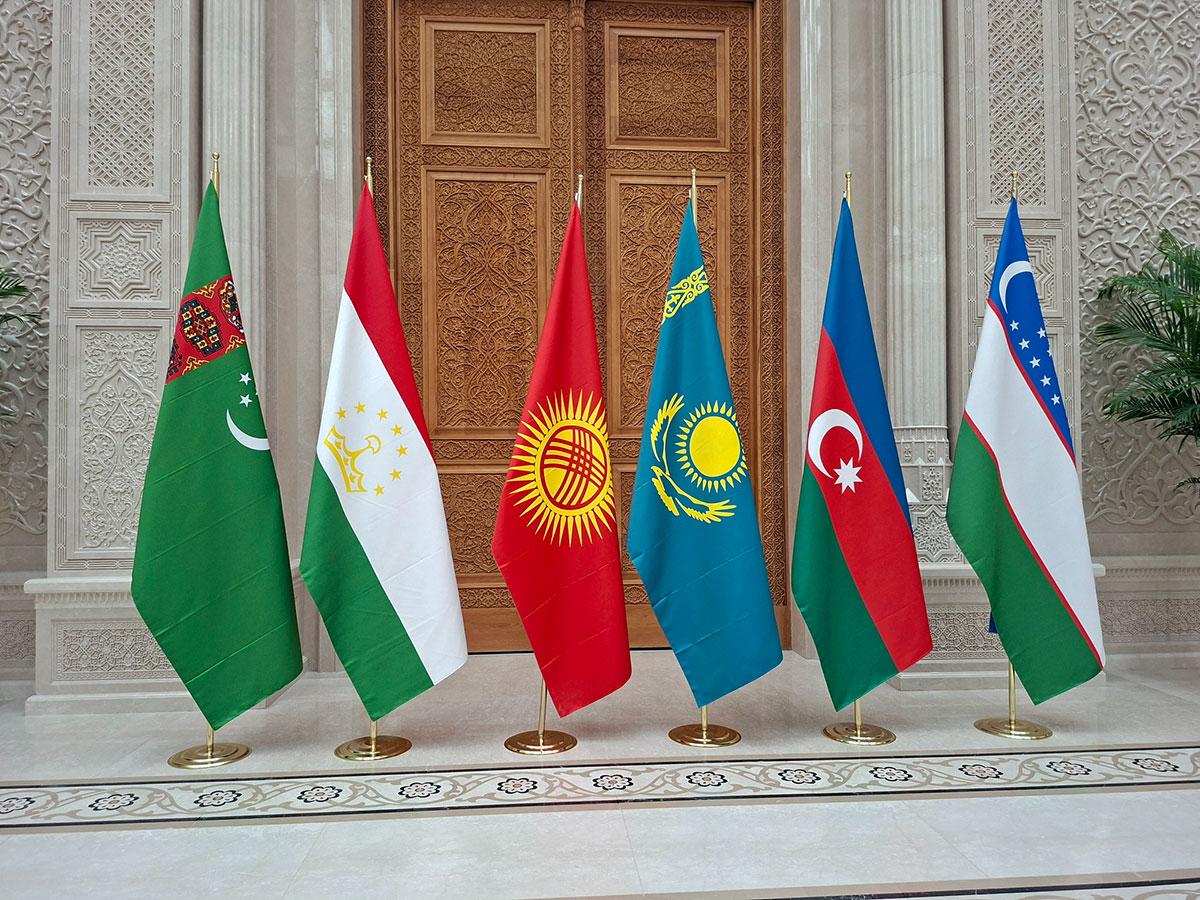
Central Asia and Azerbaijan: Building a Wider Regional Architecture
From “C5” to “C6”: Azerbaijan's institutional entry
Central Asia this summer made another quiet stride towards being a confident regional power player, not only a battleground for great powers, and Azerbaijan was a big part of that. The presidents of Kazakhstan and Kyrgyzstan, Tajikistan, Turkmenistan and Uzbekistan signed the Declaration of Cholpon-Ata in Cholpon-Ata, which means that the consultative process has started to shift from an ad hoc political dialogue to one in which the structured governance of the region has been implemented.
In November 2025, Azerbaijan joined the “C6” format of the consultative process by taking full part in it.Political change, and Baku can be not only an external partner of the five post-Soviet states, but also one of the other creators of the political space of the region, or of a broader arc of the Caspian and South Caucasus. The visits of Ilham Aliyev to the capitals of Central Asian countries and the increased level of bilateral diplomacy reflect that it is not symbolic, but a long-term, well‑prepared process that has been underway for years in order to involve Azerbaijan in the new architecture of the Central Asian countries. [1]
Roadmaps, digital corridors and the Middle Corridor
The newly agreed “roadmap for cooperation” and connected sectoral documents illustrate that the C6 format is becoming operational, in particular in the field of connectivity which is also reflected in the Cholpon‑Ata Declaration. The eTIR digital system has been launched in Azerbaijan, Turkmenistan and Uzbekistan to facilitate goods movement to boost the efficiency of cross-border truck transport along the Caspian and the South Caucasus section of the Middle Corridor. It is a part of the trend in which multimodal rail, road and port projects are slowly transforming the Trans‑Caspian route from a geopolitical concept into a working east–west trade hub, moving Central Asia from being a landlocked periphery to a land‑linked intermediary. [2]
The need for Central Asian states to diversify transportation routes from the exclusive use of northern transit with Russia and chokepoints through the sea is not only economic but also strategic. They can connect their export volumes to Azerbaijan's improved logistics, railways and ports, which provide access to the markets of the South Caucasus, Türkiye and Europe, and Baku has become a regional hub for the organisation of a new Eurasian connectivity system. Repeatedly, the roadmap conversations and summit communiqués focus on transport and energy corridors, revealing that the new architecture is, not only a treaty, but an edifice of the infrastructure of interdependence itself. [3]
Central Asia – Azerbaijan partnership is not limited to energy and transit cooperation anymore but extends to the cooperation in the field of finance and digital cooperation. In recent agreements, the Treaty on Allied Relations, and a visa to double the joint development fund from 100 to 200 million dollars, have been the agenda of political eminences, as a result of which the rapprochement between Azerbaijan and Kyrgyzstan is now becoming tangible in the form of instruments of investment and sectoral projects. Likewise, roadmaps of energy cooperation and memoranda of understanding on petroleum supply show that a network is emerging where energy supply from the Caspian fits the demand from Central Asian nations – and all three are connected to shared systems of customs and transport management. [4]
A new type of regionalism
This new regionalism of Issyk-Kul and the Caspian is not a 'traditional bloc against the outsiders' but a more flexible regionalism that aims at enhancing actors' bargaining power through connectivity and coordination. Leaders have made great efforts to ensure that their policy on the C6 is aligned with their multi vectors foreign policy and they have positioned themselves as a high profile collective in their interactions with Russia, China, the EU, Türkiye and the Gulf states, not just with any one state in particular. It's Azerbaijan's own multi-regional foreign policy that has been implemented, which tries to unite European, Turkic and wider Eurasian formats but is not limited to a single one, which is why it has limited room for manoeuvre in the international arena. [5]
But, the tale of ‘wider regional architecture' should not be the blinders that obscure the vulnerabilities in the fabric. The lack of coordination and trust could be a result of governance and coordination problems, such as different regulatory frameworks, lack of bureaucratic momentum, and environmental issues related to the Caspian and Aral Sea, if they go unresolved. Moreover, if the essential benefits to the common people, like improved trade predictability, transport cost reduction, and real progress in energy security, are missing, the C6 could turn into the exclusive project for the elites rather than a regional community that's socially-driven. [6]
What is to follow?
There are three priorities to consider to transform this into a lasting architecture in Central Asian countries and Azerbaijan. First, they need to have a clear and shared cooperation roadmap implementation mechanism and create time frames, monitoring and dispute resolution processes; this means that the commitments taken at Issyk-Kul and Avaza should be reflected in concrete work done along the Middle Corridor and other parts. Second, they need to emphasize the human face of regionalism, have a student exchange programme, a tourism project to be developed and a programme of cooperation between cities, etc., to bring the concept of a shared space of Central Asia and Azerbaijan to life, not just to the level of diplomatic discussion. [7]
Lastly, they need to explicitly incorporate environmental and climate adaptation considerations in all elements of the new architecture — and acknowledge that water, ecology and sustainability are no less important to regional security than railways and pipelines. In the present fractured world order in Eurasia, one of the most important, but not discussed experiments in non‑Western regional integration is the C6 format and its cooperation roadmap.
References
[1] https://en.kabar.kg/news/central-asia-and-azerbaijan-presidents-sign-cholpon-ata-declaration/
[2] https://timesca.com/central-asia-and-azerbaijan-what-the-regions-leaders-agreed-at-issyk-kul/
[3] https://eurasianet.org/central-asian-states-azerbaijan-create-roadmap-for-cooperation
[4] https://www.eureporter.co/world/azerbaijan-world/2025/12/26/how-the-middle-corridor-repositions-central-asia-in-eurasian-connectivity/
[5] https://24.kz/amp/ru/news/top-news/783037-chto-obsudyat-na-sammite-tsentralnaya-aziya-azerbajdzhan
[6] https://caliber.az/en/post/history-on-the-shores-of-issyk-kul-azerbaijan-and-kyrgyzstan-forge-an-alliance
[7]https://24.kg/english/383737_Leaders_of_Central_Asian_states_and_Azerbaijan_sign_Cholpon-Ata_Declaration/
Author: Dávid Biró, Senior Advisor, Research and Academic Network Lead of the Ludovika Center for Turkic Studies
Image source: trend.az