Central Asia’s Afghanistan Dilemma
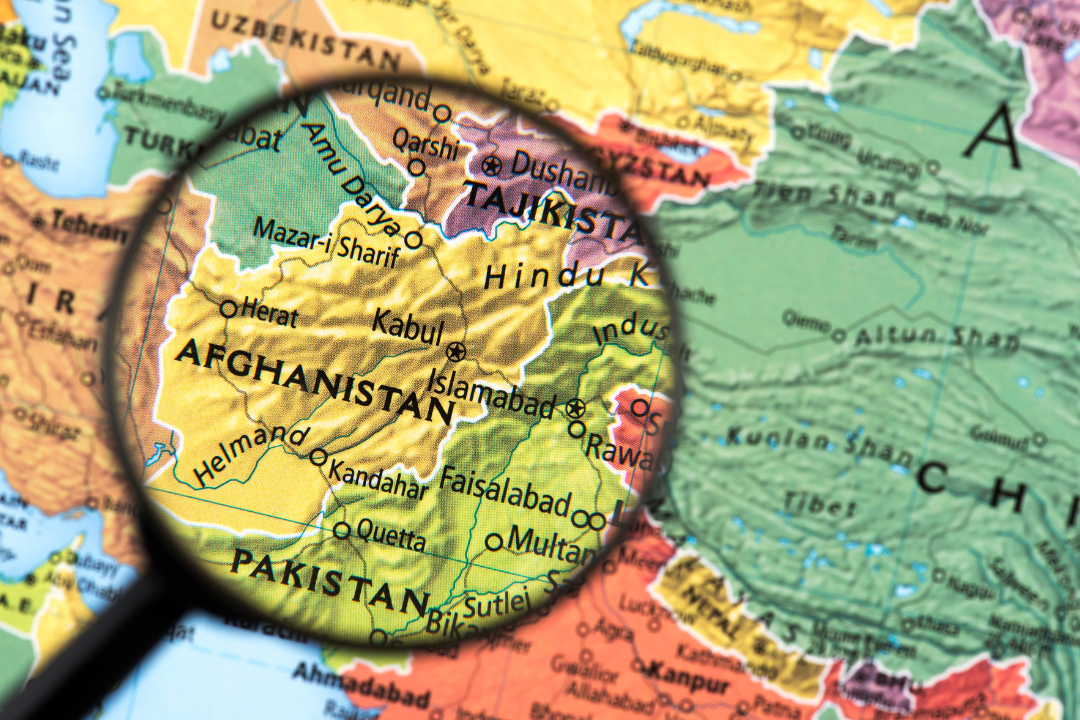
Afghanistan is not a problem Central Asian countries can solve – or ignore. For decades, it has been a volatility to manage and now is a corridor the region needs. In a generation’s time, Central Asia treated Afghanistan primarily as a southern frontier to be defended against and a neighbor to be helped and stabilized. Today, it increasingly sees Afghanistan as a route to be built – rightfully so. That is a rather strategic than sentimental shift, and in many ways, unavoidable if the Central Asian countries want to increase their trade connectivity and the associated benefits.
Landlocked Central Asia has faced a basic geopolitical and economical constraint since gaining its independence. After the collapse of the Soviet Union, China and Russia remained the dominant powers on its borders, while the successor states sought to find their own way in nation-building and their relations with each other. These countries – mainly Uzbekistan, Tajikistan, and Turkmenistan – also emerged alongside an Afghanistan full of protracted conflicts, while even the regional routes to the west across the Caucasus presented their own problems, leaving very few realistic ways to open and cooperate. In recent years, the region itself has gained strategic relevance, but its southern opening has remained incomplete – mostly because Afghanistan has been the missing or unstable link. Over time, the mixed – and ultimately failed – results of the Western presence in Afghanistan, followed by the Taliban’s return to power, gave new urgency to an old question: Central Asia must work and cooperate with Afghanistan, but on what terms?
The region’s answer, so far, has been a kind of pragmatic engagement without formal approval. Not much after the withdrawal of the US and ally troops and the takeover, since 2022, Central Asian countries have been reassessing Afghanistan less as a permanent security emergency and more as a neighbor whose stability and reliability directly shapes their own options. In practice, this meant keeping channels open with Kabul, expanding trade and humanitarian support, and – if possible – pushing forward connectivity projects in energy, transport, and infrastructure. However, the Taliban remain officially unrecognized, they are increasingly treated as the de facto gatekeepers of the routes the region wants to use.
This approach has become more coordinated over the course of time. To mention a few examples, in 2024, Uzbekistan hosted the first ambassador of the Islamic Emirate of Afghanistan, while other Central Asian states moved to lower the political barriers to contact – for example by removing the Taliban from national terrorist lists. Leaders have discussed the Afghan issue in regional consultative formats, and on 26 August 2024 Tashkent hosted the first meeting of Central Asian special representatives for Afghanistan (with Turkmenistan absent) to explore a more common line toward Kabul. The approach has been consistent: avoid questions that could derail dialogue, prioritize practical cooperation, and treat Afghanistan as a regional partner whose trajectory affects everyone.
To quote Henry Kissinger, “A country that demands moral perfection in its foreign policy will achieve neither perfection nor security”. Crucially to mention, Central Asian priorities are not identical to Western ones. In these regional calculations, the human rights situation – especially the arguments used in the West against recognizing the Taliban – has carried less weight than border stability, counterterrorism cooperation, and the viability of trade corridors. Central Asian governments do recognize the so-called atrocities committed by the Taliban, but they focus on threats with direct spillover potential: local Islamist organizations and groups linked to Islamic State Khorasan Province (ISKP), where cooperation with Kabul is seen as useful. In other words, the region is not betting on the Taliban’s legitimacy, it is betting on managing the consequences of Taliban rule.
Still, we should mention, different Central Asian countries have different attitudes today’s Afghanistan. Uzbekistan has been the most forward-looking, building what looks like de facto recognition through high-level visits, and economic and infrastructure cooperation. Turkmenistan keeps Afghanistan central to its energy and connectivity plans. Kazakhstan engages actively in trade and transport, Kyrgyzstan remains the least politically invested, while Tajikistan is the most cautious, shaped by long-standing fears of Islamist spillover and a tense political relationship with the Taliban.
Where this new, easing approach becomes most visible is connectivity. The trans-Afghan railway, which could link Uzbekistan to South Asia and connect onward to wider Eurasian routes, has strategic value for Tashkent and matters for others as well: it could complement other rail initiatives and widen options for landlocked economies that want alternatives. Kazakhstan, too, frames new routes to reduce dependence on Russia by reaching southern markets through Afghanistan. Discussions have also included other rail concepts, such as a line linking Tajikistan, Afghanistan, and Turkmenistan.
Energy is the second important pillar – and the clearest case where Afghanistan is simultaneously a partner and a risk. Turkmenistan’s flagship ambition is TAPI, the pipeline meant to connect the Galkynysh fields through Afghanistan toward Pakistan and India. Central Asian electricity exports to Afghanistan are also important: Turkmenistan is a major supplier, and Kyrgyzstan and Tajikistan also export electricity– linking everyday Afghan demand with Central Asian revenue and influence. Water governance must be noted as well: in May 2025, Afghanistan signed an agreement with Uzbekistan on joint management of the Amu Darya, a notable step given earlier Uzbek concerns about the Qosh Tepa canal and its downstream impact.
Trade figures also show the scale of this shift. Uzbekistan’s trade with Afghanistan has exceeded $1.1 billion in 2024, while Kazakhstan’s trade reached $545 million, with Astana openly aiming to go much higher. Business forums, agreements, logistics centers, and cross-border markets are no longer marginal additions but become the essence of the relationship. Even Kyrgyzstan has begun to expand its commercial footprint: on 16 December 2025 a Kyrgyz Trade House opened in Kabul to promote Kyrgyz products and business links. But none of this eliminates the central dilemma: the corridors cannot be kept isolated from conflicts. We must count on at least two external constraints.
The first is Pakistan. Any southern corridor needs an Afghanistan–Pakistan relationship that is at least predictable, if not reliable. However, cross-border militancy and recurrent tensions have repeatedly disrupted trade and border traffic. Russia is the second constraint. Central Asia wants to engage Kabul to widen its room for maneuver, but Moscow insists on remaining a control factor over the Afghan issue – so diversification can still trigger pressure from the very power the region is trying to balance.
And additionally, there is a third factor the region cannot afford to ignore: security shocks still happen and will continue to occur. Central Asia’s bet is that pragmatic engagement can gradually make Afghanistan a more predictable transit space without pretending it can shape Afghanistan’s politics or its neighborhood. The aim is modest but decisive: keep the southern option alive, widen it step by step, and protect against inevitable closures. Afghanistan may be the region’s best route south, but it will remain a fragile one – one that must not be allowed to become an easy point of failure for the region.
Author: Blanka Benkő-Kovács, advisor - LCTS, LUPS
Image source: Shitterstock