Diversification without Illusions: What can Europe expect from Azerbaijan on energy
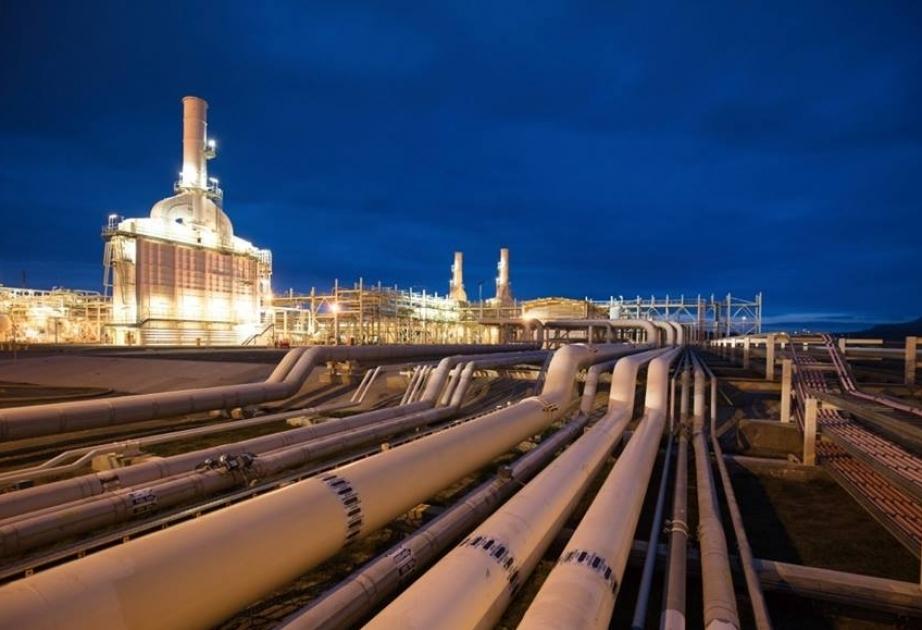
Diversification without Illusions: What can Europe expect from Azerbaijan on energy
In the last few years, Azerbaijan has emerged as one of the European Union’s prospective, alternative energy partners in the aftermath of the Russian‒Ukrainian war. Through the Southern Gas Corridor and the expansion of gas exports toward Europe, Baku has strengthened its geopolitical relevance while presenting itself as a reliable supplier in an increasingly fragmented energy landscape. Yet the country’s long-term role in Europe’s diversification strategy should be assessed without illusions.
Since gaining independence in 1991, the Caucasian country’s economy has undergone a major transformation driven primarily by hydrocarbon exports. The discovery and development of the Shah Deniz gas field significantly increased production capacities during the 2000s, while major investments were made into pipelines, electricity generation, and transmission infrastructure. Nevertheless, the country’s economic model remains heavily dependent on the energy sector, making it vulnerable to fluctuations in global oil and gas prices. The hydrocarbon sector still accounts for roughly one-third of GDP and more than 85-90% of exports. The foundations of Azerbaijan’s energy system remain overwhelmingly fossil-based. Natural gas accounts for approximately two-thirds of the country’s total energy supply, while electricity generation is dominated by gas-fired power plants. Azerbaijan’s energy self-sufficiency is exceptionally high: domestic production is several times larger than national demand, positioning the country among the world’s most energy-independent states. In 2022 only, more than 90% of electricity production originated from fossil fuels, primarily natural gas.
At the same time, Azerbaijan has increasingly emphasized the importance of renewable energy and energy efficiency in recent years. The country possesses considerable solar and wind potential, particularly in the Caspian region, and has adopted targets to increase the share of renewables in installed electricity capacity to 30% by 2030. In line with the Paris Agreement, Baku also committed to reducing greenhouse gas emissions by 35% compared to 1990 levels. However, implementation remains gradual, and the renewable sector still represents only a limited share of overall energy production.
For the European Union, Azerbaijan’s greatest value lies not necessarily in scale, but in diversification. Azerbaijani gas cannot replace Russian supplies on a one-to-one basis, yet it provides an alternative route and source at a time when energy security has once again become a geopolitical priority. The Southern Gas Corridor – including the TANAP and TAP pipelines – has therefore acquired strategic significance beyond its actual export capacity. The 2022 EU-Azerbaijan strategic partnership agreement, which foresees increasing gas exports to Europe to 20 bcm annually by 2027, reflects this shift in priorities.
Since the outbreak of the European energy crisis, Azerbaijan’s strategic relevance has continued to grow. In 2025, the country exported approximately 25 bcm of natural gas, around half of which was delivered to European markets. Azerbaijani gas now reaches a growing number of European states, particularly in Southeast and Central Europe, while exports toward Austria and Germany also started in early 2026. This expansion reflects Europe’s continued efforts to reduce dependence on Russian fossil fuels and strengthen alternative supply corridors into the continent. The volume of gas delivered through the Southern Gas Corridor has increased significantly since 2021, further reinforcing Azerbaijan’s geopolitical importance for the EU.
Azerbaijan’s geopolitical relevance is also rooted in geography. Located between Russia, Iran, and Turkey, and connected to the Caspian basin, the country occupies a strategic transit position linking Europe with the South Caucasus and Central Asia. The Baku-Tbilisi-Ceyhan oil pipeline and the Southern Gas Corridor have turned Azerbaijan into a key component of East-West energy connectivity. As a result, Europe’s engagement with Azerbaijan increasingly extends beyond energy trade and includes broader considerations of infrastructure resilience, regional stability, and connectivity.
The country’s importance is further strengthened by Europe’s growing interest in connectivity projects extending toward Central Asia. Azerbaijan increasingly positions itself not only as an exporter, but also as an energy and transport hub between the Caspian region and European markets. This broader geopolitical role aligns with EU efforts to diversify trade routes, strengthen critical infrastructure resilience, and reduce strategic dependencies in an era of intensifying geopolitical fragmentation. Renewable energy cooperation may open a new dimension in EU-Azerbaijan relations. Beyond hydrocarbons, Baku increasingly seeks to position itself as a future green electricity supplier to Europe. The Black Sea Submarine Cable project – connecting Azerbaijan, Georgia, Romania, and Hungary – has become one of the region’s most strategically discussed infrastructure initiatives. The project aims to transmit renewable electricity generated in the Caspian region toward the European market through a subsea cable under the Black Sea. In recent months, the initiative has gained additional political momentum within the EU, including discussions regarding strategic infrastructure status and further European financing support.
At the same time, Azerbaijan’s green ambitions should also be interpreted cautiously. Although the country possesses significant renewable potential, the energy system remains overwhelmingly dependent on fossil fuels, while large-scale renewable integration and export infrastructure still require substantial investments, technological modernization, and long-term political coordination.
Several structural limitations therefore remain. Although Azerbaijani exports have increased considerably since 2021, the country’s production scale still remains limited compared to Europe’s overall import needs. Infrastructure expansion, financing challenges, and rising domestic consumption continue to constrain Baku’s ability to substantially increase export volumes in the medium term. In this sense, Azerbaijan can contribute to Europe’s diversification efforts, but it cannot fundamentally reshape the continent’s energy balance on its own.
Ultimately, Azerbaijan is likely to remain an important – but limited – pillar of Europe’s diversification strategy. The country can strengthen supply flexibility, support regional connectivity initiatives, and contribute to reducing dependence on single-source energy imports. However, Europe’s expectations should remain realistic. Azerbaijan’s strategic importance lies less in replacing existing suppliers entirely, and more in offering geopolitical flexibility in an increasingly uncertain energy environment.
Author: Blanka Benkő-Kovács, advisor - LCTS, LUPS
Image source: azertag.az