Enver Pasha – The Pan-Turkist Ideology and the Political Reality at the end of WW I
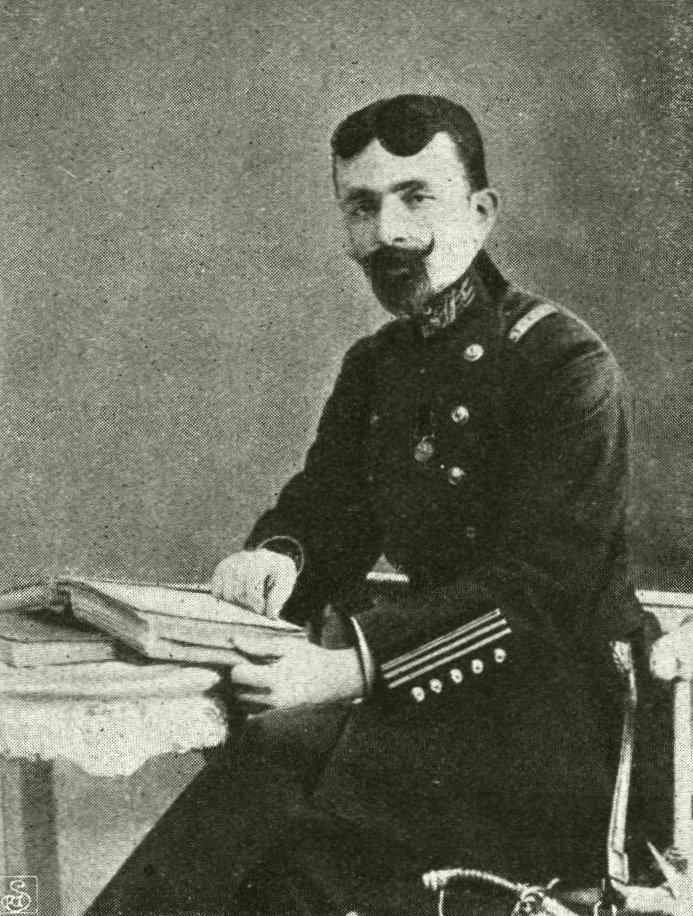
Enver Pasha – The Pan-Turkist Ideology and the Political Reality at the end of WW I
The figure of Enver Pasha is closely linked to the history of the Ottoman constitutional movement and the Committee of Union and Progress (CUP). The Ottoman Empire’s military performance during World War I, the atrocities committed against the empire’s Armenian population, and the Pan-Turkist ideology are also closely associated with his name. In this article, we will briefly review his actions relevant to the latter, that is, the Pan-Turkist ideology. The issue is perhaps somewhat relevant today as well, since the possibility of realizing Pan-Turkist goals has recently been raised in connection with the ethnic Turks living in Iran.
During his years in Berlin (1909–1910), the Libyan campaigns (1911), and the Balkan Wars (1912–1913), he gained valuable experience in diplomacy and military strategy too. Beginning in 1913, as de facto commander of the Ottoman military forces, he worked to ensure that the positions of the old military leaders were filled by young, energetic officers such as Mustafa Kemal, Fevzi Çakmak, Kazım Karabekir, and İsmet İnönü who played important roles in the formation of the new state during the Turkish war of independence. In this regard modernizing the Ottoman Army, the German military leadership and their achievements – which, for example, served as a model for Enver – played a significant role in his life and heritage.
Once the fighting had ended, in order to avoid the possible legal proccedings, Enver first fled to Germany, where he sought to influence political developments in Turkey by reorganizing the CUP. However, the successes of the armed struggle led by Mustafa Kemal in Anatolia made it impossible for him to return home. Berlin, too, was no longer in a position to deal substantively with the Turkish cause. In 1919, he visited Moscow to hold negotiations with Bolshevik leaders, from whom he sought to secure autonomy or independence for the Muslim, mainly Turkic-populated regions of Central Asia and the Caucasus. After his hopes were dashed and since Mustafa Kemal did not support the renewed strengthening of the old, pre-war elite – which he considered dangerous, especially from a foreign policy perspective – Enver had no choice but to join the Basmachi movement and fight against the Soviets.
With his death in 1922, he joined the ranks of those Young Turk leaders who were not granted much time in the new world that emerged after the war. Thus, none of the leaders of the late Ottoman triumvirate managed to be alive in 1923, as Armenian assassins first killed Talat Pasha and then, in July 1922, Cemal Pasha as well. With Enver’s death in August 1922, the last member of the triumvirate also passed away.
Paradoxically, the fact that he could not return to Anatolia and that he ultimately fell in armed combat against the Soviets played a major role in the positive portrayal of his memory. In this context, on the one hand, the nationalist narrative was able to cast him as a national hero, and on the other hand, he also fit into the Pan-Turkic worldview. As for the latter, neither the emerging Soviet leadership nor the British Empire had any interest in strengthening the national identity of Turkic-speaking peoples. The Soviet press of the time sought to portray Enver’s group as a reactionary uprising organized on religious grounds.
While, the British were primarily concerned with ensuring that their influence in Iran and Afghanistan would not diminish. In fact, as late as July 1922, British diplomats were informed that Sultan Vahdettin had intended to use Enver to crush the national movement established and lead by Mustafa Kemal.
Overall, it can be said that Enver Pasha’s life story, on the one hand, reveals the limits of Pan-Turkism, and on the other, highlights the long-term social impacts of memory politics. The shared cultural heritage of Turkic-speaking peoples does not automatically lead to economic or political cooperation. In this sense, the differences discernible in national identities, as well as geographical distance, have a decisive influence. Not to mention the interests of the great powers, which – as we saw above – were able to assert themselves effectively. Enver Pasha’s memory in Turkey is today overwhelmingly positive. His early death certainly played a role in this, as it prevented him from coming into conflict with the Anatolian national movement and the future leader of the newly established Turkish Republic. We will not see another example of such an attempt – that is about to bring significant political changes by implementing a Pan-Turkic ideology – until Abulfaz Elchibey, the first elected president of independent Azerbijan came into power in 1992.
Sources:
https://ataturkansiklopedisi.gov.tr/detay/666/Enver-Pa%C5%9Fa-(1882-1922)
https://belleten.gov.tr/tam-metin/496/tur
https://atamdergi.gov.tr/tam-metin-pdf/877/tur
Author: Péter Kövecsi-Oláh, advisor - LCTS, LUPS
Image source: https://dka.oszk.hu/html/kepoldal/index.phtml?id=9789