Gabala 2025: A New Chapter for Turkic Cooperation
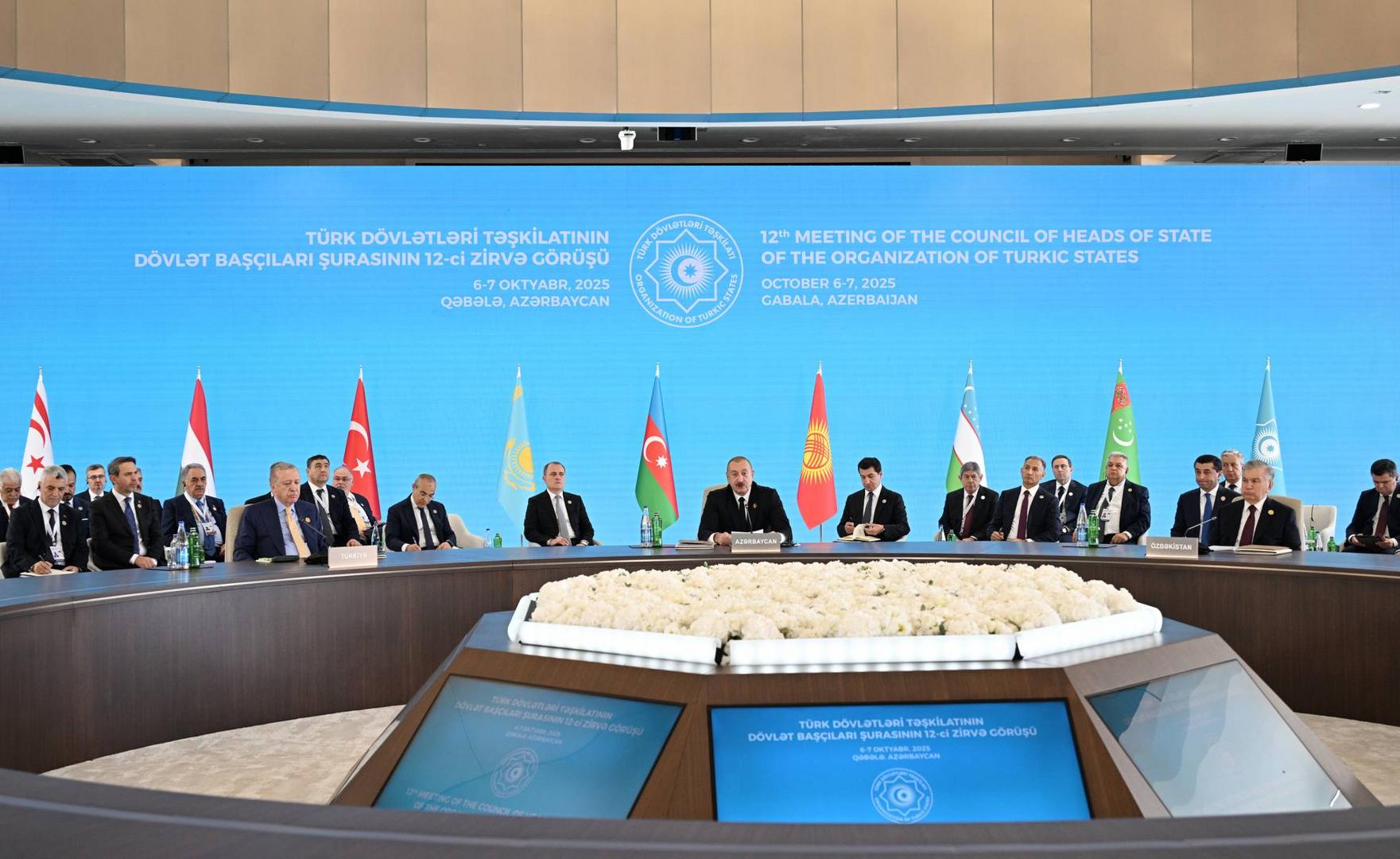
The turning point for regional integration came in October 2025 at the Gabala summit of the Organization of Turkic States (OTS). The fact that heads of Azerbaijan, Kazakhstan, Kyrgyzstan, Türkiye, and Uzbekistan sign a confirming document is more than a ritual gathering; it is a structural reorientation; a geopolitical space with enough structural characteristics to organize political economic and security initiatives on a scale-wide basis. The biggest communiqué is the commitment of rapid negotiation of a draft Treaty of Strategic Partnership, Eternal Friendship, and Brotherhood of Turkic States. The following one, which will be a formal document, is supposed to be a document that will bind Turkic cooperation, thus replacing informal political alignment. To readers who have been used to thinking about the OTS as a repository of cultural celebration, the shift that has taken place toward institutional codification is subject to critical examination. Formal treaties are obligating in nature; they do mean substantive commitments rather than rhetorical flourish. It is a positive sign that all five members of the core are willing to accelerate this process, instead of constantly stalling it out as the case of precedent has indicated. The Gabala Declaration provided the OTS+ framework that delivers a versatile tool of the cooperation with the external partners in the regions of common interest.
It is not exclusionary and subservient it is strategic maturity: the Turkic states are place themselves as a unitary entity that can form connections with the West, China, and regional powers without damage to sovereignty. Through the framework, it is possible to join the transport corridors like the Trump Route to International Peace and Prosperity (TRIPP)/ the Zangezur Corridor, thus connecting the Turkic world to European markets but maintaining independence of the diplomatic agency. Such pluralism seems more advantageous in the face of sharp rivalry of great powers as opposed to being the single member of a bloc. Economic integration has ceased to be a hope that has yet to come to fruition, intra-OTS trade has become an estimated 42-57 billion annually quite a significant value when compared to the estimated 3 percent, of the combined trade experienced half a decade ago. Gabala Declaration is determined to operationalize the Turkic Investment Fund, a joint financial organization that is aimed at triggering regional development, as well as introduction a single portal OTS Investment. Such mechanisms encourage the low cost of transaction and friction of standardization, and the porous borders are converted into viable economic zones, though not glamorously, but producing effective operational advantages.
An example of effective collaboration can be seen in the Central Asia-Azerbaijan Green Energy Corridor that was supported at the summit: Azerbaijan, Kazakhstan, and Uzbekistan are collectively designing capacity to export renewable resources to Europe, eliminating reliance on the Russian infrastructure. To the Central Asian states, which have been relying long on the energy monopoly of Moscow, such moves are actual gains of sovereignty.
The declaration is a watershed on security. The organization no longer talks of terrorism and extremism on an abstract level. Efforts to transform the organization into an institution are indicated by the planned joint OTS military exercises in 2026, which will be the first coordinated military operation by the organization. This is not a NATO alliance as such, but the development of a collective security structure based on similar interest and not external danger. Combined with the enhanced integration in the defense industry, as well as frequent meeting of the security council secretaries, the Turkic states are establishing horizontal coordination systems that Russia previously had the monopoly.
Yet caution is warranted. Three tenuous assumptions have been used to determine the integrity of the OTS. First, the geopolitical interests of such a member state are still aligned enough well. The priorities of Azerbaijan towards the stabilization of South Caucasus, the balancing game in Kazakhstan between Russia and China, and the border conflicts in Kyrgyzstan and Tajikistan are evidence of divergent priorities that are impossible to dissolve but can be coordinated by the OTS. Second, the leadership of Türkiye is inclusive instead of hegemonic, even though it is growing more assertive under the leadership of President Erdoğan. Pragmatism is seen in the case of the observership of Hungary and Turkmenistan, but admission of these two states as full member states may transform the ethnic and civilizational nature of the organization (But the reality of this process seems very distant at present). Third, the fact that the Turkic integration is tolerated by the external forces. No longer able to dominate the Central Asia region as it did in the aftermath of the USSR, Russia will use political pressurization, economic influence, and compromising strategies to upset unity. China, which fears Turkic mobilization undermines the stability in Xinjiang and it loses the control of the Belt and Road, will seek mute competition instead of open sparsity, yet it will be competition. The cultural revival, the celebration of the 100th anniversary of the 1926 Baku Turkology Congress and introduction of a Latin-based alphabet expressed in the Gabala Declaration reflects the more significant motive of the organization. The Turkic nations are deliberating paying decades of Soviet culture repression back. This is not just symbolism, cultural cohesion is the basis of legitimation of political integration. The more intense Turkic identity is, the more the reason to have a united foreign policy.
The approach of the declaration to the crises in the region, Gaza, Syria, Afghanistan and Cyprus, is quite moderate. Instead of enforcing common stances, the text demands a higher degree of coordination and consultations repeatedly so that member states will be free to act however they wish but indicating that there is a common worry. This realism sees the world: real security communities cannot be born in a day. It took the European Union a half-century; and the Turkic world should not hope to integrate faster. The greatest effect of Gabala will be probably silent. It creates institutional precedence and authority of greater integration. The 121 articles form a roadmap that runs across political affairs, economic cooperation, security, cultural and people to people exchange. It transforms the OTS into a regular summit gathering into a permanent institutional mechanism. The frameworks that the future leaders will inherit include Turkic Academy, TURKPA, TURKSOY cultural organization, which incorporates cooperation into permanent frameworks. This is exactly what makes regional organizations become lasting. To the greater geopolitical context, the Gabala Declaration is the beginning of a multipolar order where the Turkic world can be considered an independent center of gravity. The OTS is neither a Russian nor a Chinese or a Western possession, it provides Türkiye the Central Asian and Caucasian countries with a platform and opportunity of asserting their collective interests.
Author: Dávid Biró, senior advisor, research & academic network lead - LCTS, LUPS