György Almásy: Documenting Central Asia at the Turn of the Century
György Almásy: Documenting Central Asia at the Turn of the Century
At the beginning of the twentieth century, Central Asia was no longer the largely inaccessible world through which Ármin Vámbéry had travelled in disguise four decades earlier. The Russian Empire had consolidated its rule over much of the region, railways were reaching Tashkent and Andijan, and the imperial administration was transforming the political and economic landscape of Turkestan. Yet beyond the expanding cities and transport networks, large parts of the Tien Shan and the societies inhabiting its valleys and high pastures remained little documented by European scholarship.
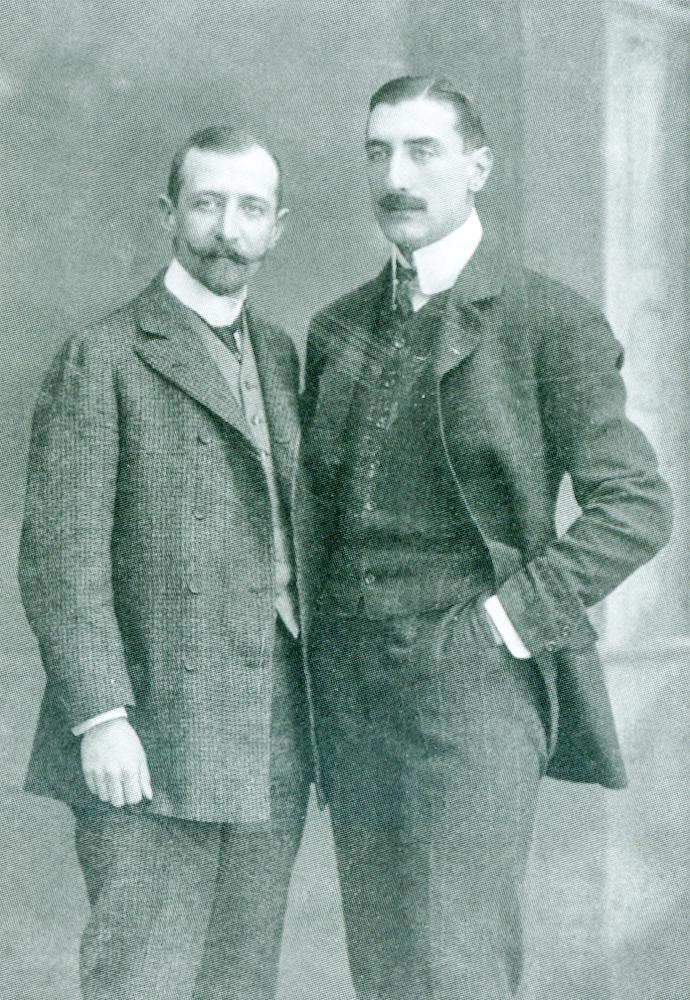
It was into this changing world that the Hungarian traveller and naturalist György Almásy arrived in 1900. Today, the name Almásy is far more readily associated with his son, László Almásy, the desert explorer. György Almásy’s own expeditions have consequently received considerably less public attention. Yet his two journeys through Central Asia, in 1900 and 1906, produced an unusually rich record of the region at the turn of the century. His initial interests were primarily zoological and geographical, but the Kyrgyz and Kazak communities he encountered increasingly became central to his work. His writings, photographs, collections and linguistic observations documented societies undergoing profound change under Russian imperial rule.
From ornithology to Central Asia
Born on 11 August 1867 in Felsőlendva, György Almásy came from a wealthy noble family with a strong interest in geography. His father, Ede Almásy, was among the founding members of the Hungarian Geographical Society. György studied law at the University of Graz and briefly pursued a career in the civil service before returning to the family estate at Borostyánkő, present-day Bernstein in Austria. His intellectual interests, however, increasingly lay elsewhere: particularly in zoology and ornithology.
An ornithological journey to Dobruja and the Danube Delta in 1897 provided an early opportunity for field research. By the end of the decade, his attention had shifted towards a considerably more ambitious destination: Russian Central Asia. Almásy departed for Central Asia in 1900 together with the Austrian zoologist Rudolf Stummer von Traunfels. Unlike Vámbéry, who had travelled through Central Asia under an assumed identity in the 1860s, Almásy entered a region that had since been incorporated into the Russian imperial system. He could make use of the expanding railway network and travelled with the knowledge and assistance of the tsarist authorities. The political geography of Central Asia had changed fundamentally within a generation.
From Samarkand and Tashkent, Almásy continued towards the “Land of Seven Rivers” and the territories of present-day Kazakhstan and Kyrgyzstan. His journey took him through the Ili region, towards Lake Issyk-Kul and deep into the Tien Shan. Although zoological collecting remained one of the expedition’s principal objectives, the journey soon became considerably more comprehensive.
Almásy recorded the region’s fauna, landscape and climatic conditions while also observing the everyday life of the Kazak and, especially, Kyrgyz communities he encountered. His descriptions covered livestock breeding, agriculture, trade, clothing and ethnic relations, while his travels generated extensive zoological collections. Material collected during the expedition was subsequently studied by specialists at the Hungarian National Museum, contributing to the scientific documentation of the fauna of Semirechye and the Tien Shan.
The journey also transformed Almásy’s own interests. The Kyrgyz highlands and their nomadic inhabitants increasingly occupied his attention, and the ethnographic dimension of his work would ultimately become one of its most enduring elements. Six years later, Almásy returned. His second Central Asian expedition in 1906 included the young Hungarian geographer Gyula Prinz and Herbert Archer. Prinz had joined the expedition on the recommendation of the prominent geographer Lajos Lóczy and was tasked with geological and geomorphological research in the Tien Shan. The collaboration between Almásy and Prinz did not last: disagreements led them to separate, after which they pursued their research independently.
Almásy again concentrated on the Kyrgyz territories but also travelled briefly into Chinese-controlled Xinjiang, reaching the Tekes Valley. The journey therefore took place close to one of the great political frontiers of Inner Asia: between Russian Turkestan and Qing China. Yet Almásy’s surviving material is valuable not primarily because he crossed an imperial boundary, but because of the detail with which he documented the people and landscapes around it.
Photography played an important role. Across his two Central Asian journeys, Almásy created a visual record of local communities, travelling companions, landscapes, fauna and flora. Today, almost seven hundred photographs connected to his expeditions and more than one hundred objects associated with Kyrgyz nomadic culture are preserved by Budapest’s Museum of Ethnography. More than a century later, these collections have acquired a significance that extends beyond the history of Hungarian exploration: they provide visual and material evidence of Kyrgyz life during a period of rapid political and social transformation.
That significance became particularly visible in 2025, when a selection of Almásy’s photographs returned to Kyrgyzstan in an exhibition organised by the Museum of Ethnography together with the National Historical Museum of the Kyrgyz Republic in Bishkek. The images that had originally introduced Central Asia to Hungarian audiences could now function in the opposite direction – as historical sources through which Kyrgyz audiences could encounter aspects of their own past.
Perhaps the most unusual legacy of Almásy’s second expedition began not with an artefact or photograph, but with a person.
When Almásy returned from Central Asia, he was accompanied by a young Kyrgyz man, Turgan Berdike-úlu. Turgan subsequently lived for several years with the Almásy family at Borostyánkő. Their relationship became part of Almásy’s growing interest in Kyrgyz language and oral tradition. Together they worked on material from the Manas, the monumental Kyrgyz heroic epic and one of the central works of Kyrgyz oral culture.
Only a small part of this work ultimately appeared in print. In 1911–1912 Almásy published a Kyrgyz episode describing the hero Manas bidding farewell to his young son Semetei, accompanied by a transcription and German translation. The published fragment amounted to only 72 lines, but it nevertheless formed part of the early European scholarly documentation of the epic.
Almásy never achieved the international prominence of Aurel Stein, nor did his expeditions cover comparable distances. Their significance lies elsewhere. His position was inevitably that of a European traveller operating within the structures of the Russian Empire, and his interpretations reflected the intellectual assumptions of his age, including the Hungarian search for eastern ethnographic parallels. Yet the breadth of the material he collected means that his work cannot be reduced to that framework. Almásy left something exceptionally valuable: a detailed record of Central Asia at a time when Russian imperial rule, expanding transport networks and economic change were increasingly transforming the societies of the region. György Almásy died in Graz in 1933. His son László would later carry the family name into the deserts of North Africa and, eventually, popular culture. The father’s legacy is quieter.
Author: Blanka Benkő-Kovács, advisor - LCTS, LUPS
Image source: Wikimedia Commons