How Assad’s Fall Reinvents Ankara’s Syria Policy
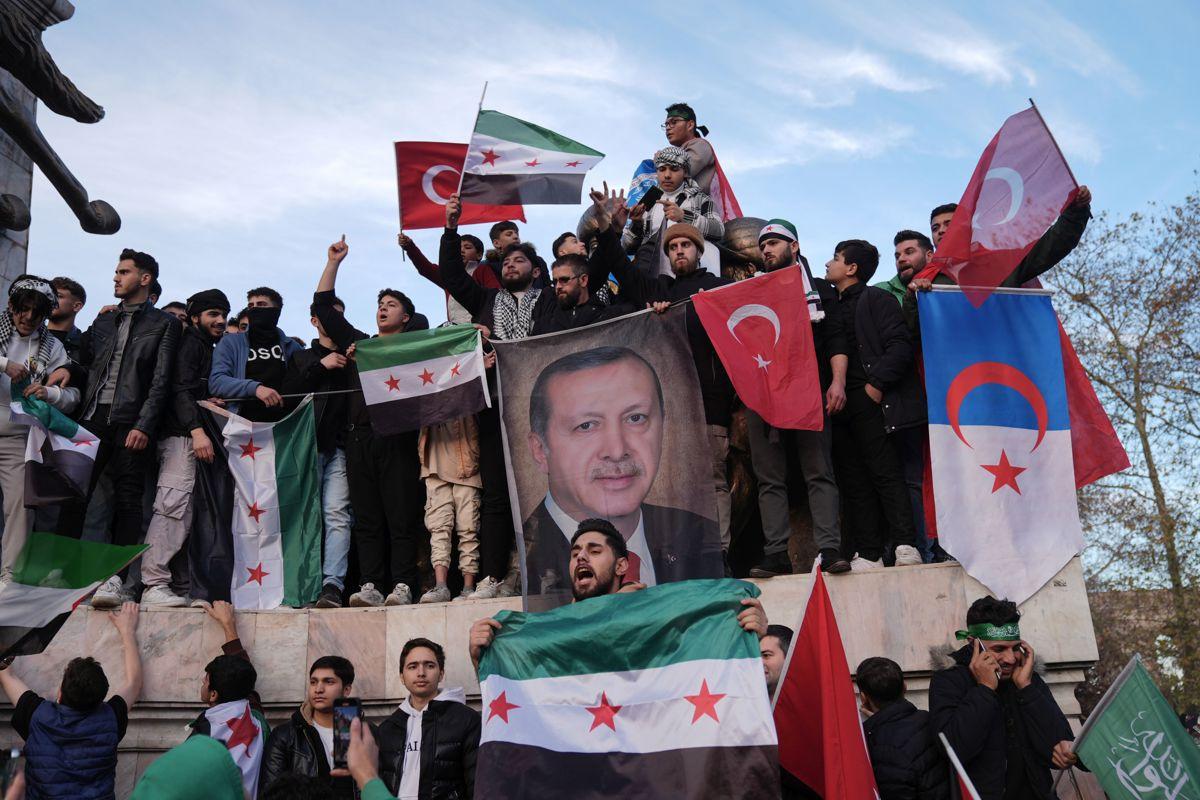
How Assad’s Fall Reinvents Ankara’s Syria Policy
Introduction
For Ankara, Syria has never been just another neighbor. It is the crucial test case for the wider foreign policy makeover of the Turkish state: the transformation from a cautious flank state anchored to the West to a state with an ambitious and expansive agenda of gaining strategic autonomy, regional primacy, and a bigger voice in a multipolar order. Within this vision, the Levant is not only a buffer, but also a bridge. Whoever controls Damascus helps decide whether the southern boundary of Türkiye is a launchpad for hostile powers and separatist movements or an economic and security hinterland integrated into what it calls the "Century of Türkiye."
From Threat to Opportunity
Over the last decade, Turkish foreign and security policy has rested on three principles in the Middle East. First, Ankara insists on the "regional ownership" of crises and prefers ad hoc formats such as Astana or trilaterals with Russia and Iran to Western-led interventions, increasingly positioning itself as a mediator and stabilizer from Libya to the Caucasus. Second, it avoids strategic dependence on the United States: it seeks strategic autonomy, maximizing the room for maneuver between great powers through an indigenous, export-oriented arms industry and reduced dependence on Western defense supply chains. Third, it sees hard power—forward bases, cross-border operations, drones, and special forces—as a key means of statecraft and diplomacy, trade, and soft power as a corollary that trails in its wake, rather than replaces it.[1]
Within this frame of reference, the Assad regime developed into a multi-layered national security threat. From Ankara's point of view, Damascus allowed the PKK's Syrian offshoots, initially by creating a safe haven before 1998 and later tolerating PKK-linked YPG and SDF structures on the border with Türkiye during the chaos of the civil war. This raised the specter of a de facto Kurdish statelet extending from Iraq deep into Syria, cutting off Arab hinterlands from Anatolia and fueling separatist narratives inside Türkiye. At the same time, Assad's deep entanglement with Iran and Russia effectively extended a hostile military and intelligence arc from the Persian Gulf to the Eastern Mediterranean, complicating Türkiye’s own energy-hub ambitions and naval posture. The regime's extreme brutality also led to a conveyor belt of radicalization and displacement: millions of refugees crossed over into Türkiye, while jihadist groups used ungoverned spaces to plot attacks. For Ankara, Assad was not the guarantor of order but the major producer of insecurity.[2]
A Fragile New Order in Damascus
Everything changed in late 2024. On November 27, Syrian rebel based in the northwestern city of Idlib, led by Hayat Tahrir al-Sham (HTS), a former Al Qaeda affiliate, began a march on the city of Aleppo, Syria’s economic center prior to the war and the city whose capture in 2016 by government forces had marked a turning point in favor of Assad. Within three days, they had taken control of the city. They then moved steadily south, seizing key cities like Hama, Daraa, and Homs before finally taking the capital. In less than two weeks of fighting, rebel groups took control of Damascus, forcing Bashar al Assad and his family to flee to Russia on December 8.[3] After 50 years, the Assad family’s regime came to an end. 13 years of civil war culminated in an uncertain new beginning, as HTS announced a caretaker government.
What enabled HTS to make such radical moves? The Assad regime was exhausted after more than a decade of civil war and international isolation both in political and economic terms. Moreover, both of its two principal international supporters, Iran and Russia, were significantly weakened and were more focused on strategic priorities elsewhere—the former due to an escalation with Israel and declining influence through its proxies like Hamas, Hezbollah, and the Houthis post October 2023,[4] and the latter because of its war in Ukraine, which redirected attention and resources away from the Middle East and left isolated from the West.[5] At the same time, HTS and its allies benefited from an ecosystem of support allegedly including various forms of assistance from Türkiye and possibly the Arab Gulf states, which stood to gain enormously from a change in the status quo.
The fall of the Assad regime marked the beginning of a long process to consolidate the country and build a new, prosperous Syria. A wide range of international actors were and continue to be involved, including the United States, the European Union, a number of Arab states, and others. Türkiye emerged as a particularly crucial partner for Damascus, playing a leading role in providing security assistance, economic support, and diplomatic facilitation. That is not to say that the process of consolidation was smooth. A relatively large portion of Syria—as much as 30–40 percent—was not yet under HTS control at the end of 2024.[6] Damascus also had to content with a legacy of more than a decade of destruction, repression, and isolation.
Security challenges continued to make it reconstruction difficult. Persistent attacks by remaining armed groups outside of the umbrella of the government remained a major concern. These were compounded by religious and ethnic tensions, as Syria is highly diverse, with a Sunni Muslim majority but a variety of other groups including Alawites, Arab Christians, Druze, and others. Government forces themselves sometimes implicated in violence. Two particularly notable cases occurred in 2025. In March, a wave of massacre-like reprisals targeted Alawites—members of the same community as the Assad family—in coastal areas like Latakia, Tartus, Hama, and Homs.[7] Some groups associated with the new government were implicated, raising concerns about its commitment to protect minorities. The government responded by launching a fact-finding mission and conducting trials, albeit with limited transparency. Later that month, a new constitutional declaration and transitional government were also announced.
The second case occurred in July, when deadly clashes broke out in Suweida between local Druze and Bedouin groups, near the border with Jordan. Government forces, primarily Sunni, were deployed, although they were accused of partiality towards the Bedouins—also Sunni, though more tribal—at the expense of the Druze, leading Israel to declare its intention to protect the Druze community and intervene directly.[8] More than one thousand individuals were killed before the government was able to enforce a ceasefire.
Another persistent challenge to Syria’s security since the fall of the Assad regime had been the Kurdish question. In northern Syria, a de facto autonomous Kurdish-led administration under the Syrian Democratic Forces (SDF)—linked to the broader People’s Protection Units (YPG)—had functioned for years under the civil war, with support from the West, particularly from United States, as part of the fight against the Islamic State (IS). Allowing the region to remain autonomous would have inhibited the new government’s consolidation of the country, and Damascus was keen to avoid the pitfalls seen in Iraq, where a federal structure including an autonomous Kurdistan Region of Iraq (KRI) in the north has offered some stability but limited the central government significantly. Kurdish-controlled areas of Syria also include important oil fields, agricultural land, and key border crossings with Iraq. Tensions continue to fuel clashes. Nevertheless, the January 2026 ceasefire agreement represented a notable step forward. It included provisions for a phased integration of Kurdish forces and territories, although this process will be long and difficult given the enduring mistrust.[9]
Türkiye as Syria’s Reluctant Security Patron
The demise of Assad in late 2024 therefore caused a very significant strategic shock to Türkiye, because it took a hostile regime backed by Iran and Russia out of Ankara's immediate backyard. By helping to form the coalition of rebel forces around HTS and other opposition forces, Türkiye ensured that post-Assad Damascus would not be dominated either by actors linked to the PKK or Tehran's proxies. This was consistent with a decade-long pattern: Ankara was prepared to work with a spectrum of Islamist and nationalist rebels so long as they were in opposition to both Assad and Kurdish separatism. On the other hand, the HTS-led caretaker government with its own share of legitimacy issues. Ankara now has to convince Western and regional partners of its preferred actors in Syria and that their preferred actors can transform into more accountable and less ideologically rigid structures even as they quietly depend on their coercive capacities to stabilize territory and contain rivals.[10]
The end of Assad's rule also altered Türkiye's great power calculus. With Russian and Iranian influence in Syria drastically reduced, Ankara had more room to maneuver, but also lost handy bargaining chips. The old Astana format, where Türkiye made trades with Moscow and Tehran on Idlib, the northeast, and regime-held areas, has generally run its course.[11] Instead, Türkiye has found itself playing a key role as a security provider for the new players in Damascus: training and equipping units, coordinating operations against holdout Daesh cells and rogue militias, and policing the frontlines with Kurdish and Druze forces. This security position reinforces Ankara's argument that it is the indispensable southeastern pillar of the alliance while at the same time exacerbating tensions with Israel, which has made clear its readiness to intervene to safeguard Druze communities and influence the post-war balance in southern Syria. Managing this triangular competition (between Türkiye, Israel, and a weakened but still present Iran) will be one of the defining tests of Ankara's regional strategy.[12]
As we enter 2026, Syria and Türkiye continue to share a broad set of interests. For Syria, Türkiye is an invaluable partner in promoting security through joint operations, training, and equipment support; improving economic conditions in the country through trade and infrastructure projects; and facilitating the return of refugees as it rebuilds. Cooperation with Ankara also provides Damascus with an invaluable opportunity to diversify its partnerships and reduce potential overdependence on any one single global bloc, whether Western or Eastern, in an increasingly polarized geopolitical environment. Economically and technologically, the Syrian endgame has shored up trends already evident in Turkish policy.
The conflict has been something of a showcase for the capabilities of Türkiye's indigenous defense industry: Bayraktar drones, electronic warfare systems and armored vehicles have all been fielded by Turkish forces and, indirectly, by allied rebel units. These platforms are the fruits of a threat-driven, state-backed push for localization that started after previous Western embargoes but accelerated under the Justice and Development Party (AKP) governments. Their fighting performance in Syria—after earlier tests in Libya, Nagorno-Karabakh, and Ukraine—has fostered new exports, as well as cemented Ankara's position as a no-strings-attached arms supplier to the wider Global South. At the same time, the reconstruction of Syrian infrastructure, border crossings and energy links provide new markets for Turkish contractors as well as opportunity to physically embed Türkiye's "Middle Corridor" ambitions—east–west rail, road, and pipeline routes—through a more permeable Syrian hinterland.[13]
Ankara’s Syria To‑Do List
Looking ahead, then, it is likely that Türkiye's interests in Syria are likely to converge around four interrelated agendas. The first is the question of border security and the Kurdish question. Ankara will continue to insist on the elimination of PKK/YPG military structures and avoidance of any internationally recognized Kurdish autonomy that could set a precedent for a similar one in the southeast of Türkiye, while accepting some form of local self-administration with the ultimate sovereignty remaining with Damascus. The second is refugee return and demographic engineering: Turkish leaders are under immense domestic pressure to reduce the number of Syrians in Türkiye and will exert pressure on the new authorities in Damascus to provide amnesties, mechanisms for the restitution of property, and internationally supervised "safe zones" to facilitate large-scale, gradual returns. Third, Türkiye wants to achieve integration in the economic and logistical sphere—upgrading transport corridors from Gaziantep and Hatay into Aleppo and beyond, providing privileged access for Turkish companies, and anchoring Syria into a wider network, which also includes Iraq, the South Caucasus and Central Asia. Finally, Ankara has an interest in the protection of minorities and institutional consolidation. A spiral of reprisals against Alawites, Druze or Christians would risk spillover into Türkiye's own heterogenous society and invite external interventions by Israel, Iran, or Western states, which could unravel Ankara's hard-won influence.
Summary
Whether Türkiye can deliver on this ambitious agenda will depend on its ability to square the circle of its own "strategic ambiguity." It wants to be both the cornerstone of the North Atlantic Treaty Organization and the key EU and United States partner on issues such as migration, counter terrorism and Ukraine, all while patronizing Islamist-leaning actors in Syria, keeping the lines open to Moscow and Tehran, and promoting itself as the champion of a more multipolar, "post-Western" order. In post-Assad Syria these contradictions are on full display. If Ankara can help usher Damascus out of its precarious, militia-dominated interim order and into a model of more inclusive, technocratic governance— without provoking backlash from its base of nationalist voters or alienating Western and Arab partners—it will shore up its claims to be the indispensable power of the eastern Mediterranean. If not, Syria may again prove to be the place where the search for strategic autonomy by Türkiye is bound to clash with the limits of its capacity and the suspicions of its allies.
References
[1] https://www.setav.org/en/turkiyes-foreign-and-security-policies-in-2025
[2] https://www.csis.org/analysis/strategic-ambiguity-erdogans-turkey-multipolar-world
[3] https://edition.cnn.com/2024/12/09/middleeast/timeline-syria-assad-regime-toppled-intl
[4] https://www.chathamhouse.org/2024/12/fall-assad-has-exposed-extent-damage-irans-axis-resistance
[5] https://www.foreignaffairs.com/russia/putin-chose-ukraine-over-syria
[6] https://www.euaa.europa.eu/interim-country-guidance-syria
[9]https://www.crisisgroup.org/cmt/middle-east-north-africa/syria/opportunity-calm-north-eastern-syria
[12] https://www.setav.org/en/seta-security-radar-turkiyes-geopolitical-landscape-in-2025
Authors: Dávid Biró (Senior Advisor, Research and Academic Network Lead of the Ludovika Center for Turkic Studies) and Lillian Zsófia Aronson (Adviser to the President at the Hungarian Institute of International Affairs)
Image source: static.bianet.org