Hungarians in Building of Modern Türkiye
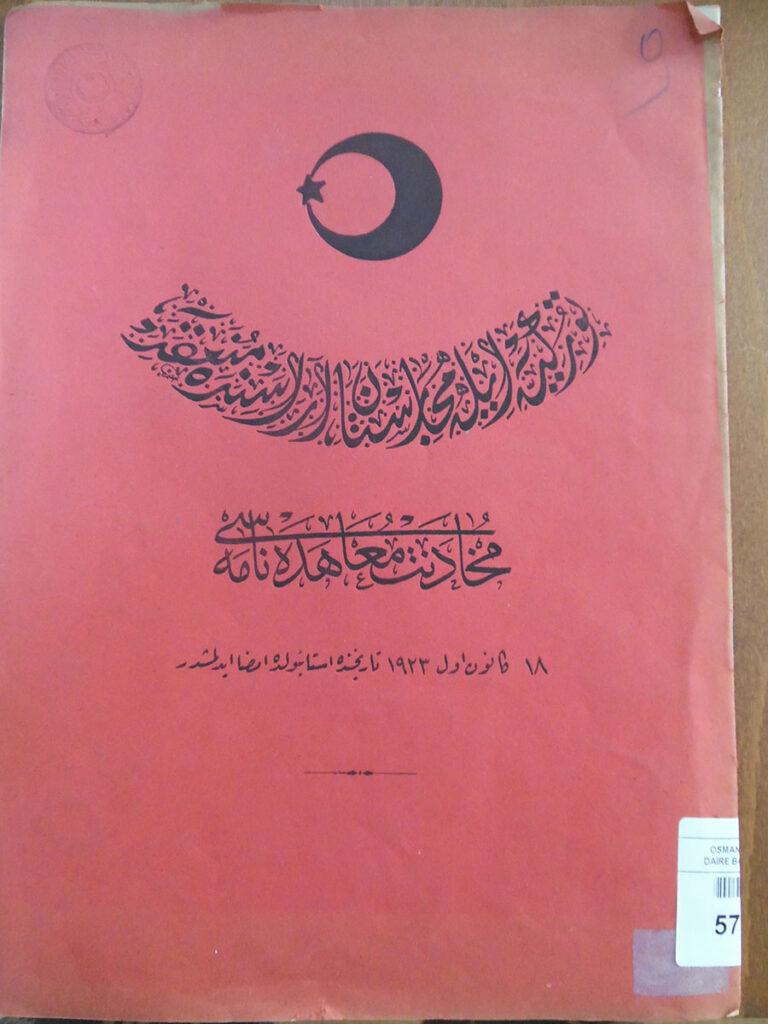
The first friendship treaty signed between the Republic of Turkey and the Kingdom of Hungary on December 18, 1923, was the first international agreement signed and entered into force under the name of the Republic of Turkey, and it laid a very solid and sincere foundation for the period that followed. Because the cooperation between the two countries did not finish at that point. After the end of World War I, hundreds of thousands of people lost their jobs in Hungary, hundreds of thousands of Hungarians crossed over to the new borders from the territories ceded to neighboring countries, and thus a significant amount of labor power accumulated.
Meanwhile, it should not be forgotten that Western and Russian powers sought to turn the economic crises of the Ottoman period to their own advantage, not wanting to miss an opportunity. The best example of this process and method was the so called capitulations (treaty). For developed countries, and even for Austria-Hungary, the Ottoman Empire was like a treasure trove in economic terms. With their military, political, and economic power, European countries tried to use Ottoman territories for their own interests, both materially and spiritually. Of course, not only the Young Turks but also Mustafa Kemal was aware of this, and therefore he began his work in a more effective and determined manner than previous attempts. The Izmir Economic Congress, convened in February 1923, was one of the first steps toward an independent economy in this regard. Because without an independent economy, military and political gains could not be maintained.
The Treaty of Lausanne abolished the capitulations. However, the signatories, including the United States, Poland, and Austria, were able to gain significant advantages over other countries through the trade agreements they made with Turkey.[1] Nevertheless, according to reports at the time, Turkish diplomats were ready to cooperate not only with powers on paper but also with anyone valuable to their homeland. This attitude provided an opportunity, especially for the defeated former allies, Germany and Hungary, as experts and capital from these two countries contributed to the revival of the Turkish economy. Six months after the Treaty of Lausanne and the Turkish-Hungarian Friendship Treaty, the Hungarian ambassador, László Tahy, wrote the following report to Budapest: “We have such strong ties with the current Turkish government that other countries have begun to envy us”.[2]
Looking at the economic situation of the Republic of Turkey at that time, we can note the following. The Agricultural Bank and the Industrial Bank were established to provide credit to the agricultural sector, the Agricultural Bank and private entrepreneurs. Both banks began operations in 1924, and significant developments took place, particularly in the agricultural sector. According to figures from 1922, the amount of money spent on agriculture had grown 25-fold by 1929. Until 1927, the state did not have a monopoly on alcohol, tobacco, and salt. Belgian companies owned the electricity system of Istanbul, and British companies owned the telephone system of the former capital. Similarly, most of the ports were also in the hands of foreign capital.
However, it is impossible to compare the economic situation of the Republic of Turkey at that time with that of Hungary. This is because, despite both countries losing the war, the Hungarian economy became more robust, particularly as a result of developments that emerged after 1867. In 1890, Hungary's per capita national income was 60.3 percent of Austria's. This figure rose to 74.6 percent by 1938.[3] These differences were also evident in foreign affairs. While Turkey was establishing its own national economy, Hungary was unable to utilize its industrial capacity in its new territories and faced serious problems in terms of raw materials. Some of the well-educated engineers and people with specific professions who were forced to live within the new borders could not find work in their homeland and left their homeland for either the West or the East. Some of them began working on important projects in Turkey.
For instance, Gyula Mészáros in ethnography, Antal Réthly in meteorology, Lajos Fekete in archiving and documentation, Imre Ormos in horticulture, Ferenc Csiki in animal husbandry, Oszkár Wellmann in veterinary medicine, and Péter Rezső in wrestling left a long lasting impact on the basis of modern Turkey. All in all, we can underline, after World War I, and especially after 1923 a page has been opened in the Hungarian-Turkish connections, that still indicates its impact in the present.
Sources:
[1] Macar Milli Arşivi (Magyar Nemzeti Levéltár, MNL, OL) K 69 761. cs. 1924–1935 I-a. 12/gazd. res. számú jelentés. Konstantinápoly, 1926. február 9.
[2] Macar Milli Arşivi (Magyar Nemzeti Levéltár, MNL, OL) K 69 761. cs. 1924–1935 I-a. 29/pol. számú jelentés. Konstantinápoly, 1924. július 28.
[3] Tomka Béla: Gazdasági változások és a fogyasztás alakulása a huszadik századi Magyarországon. In: Gyáni Gábor–Pritz Pál–Romsics Ignác–Szarka László–Tomka Béla: A mi 20. századunk. Komp-Press Kiadó Korunk, Kolozsvár, 2011. 128.
Author: Péter Kövecsi-Oláh, advisor - LCTS, LUPS
Image source: https://www.turkmacar.org.tr/turkiye-macaristan-dostluk-antlasmasinin-100-yildonumu/