Kazakhstan: China's Gateway to Eurasia
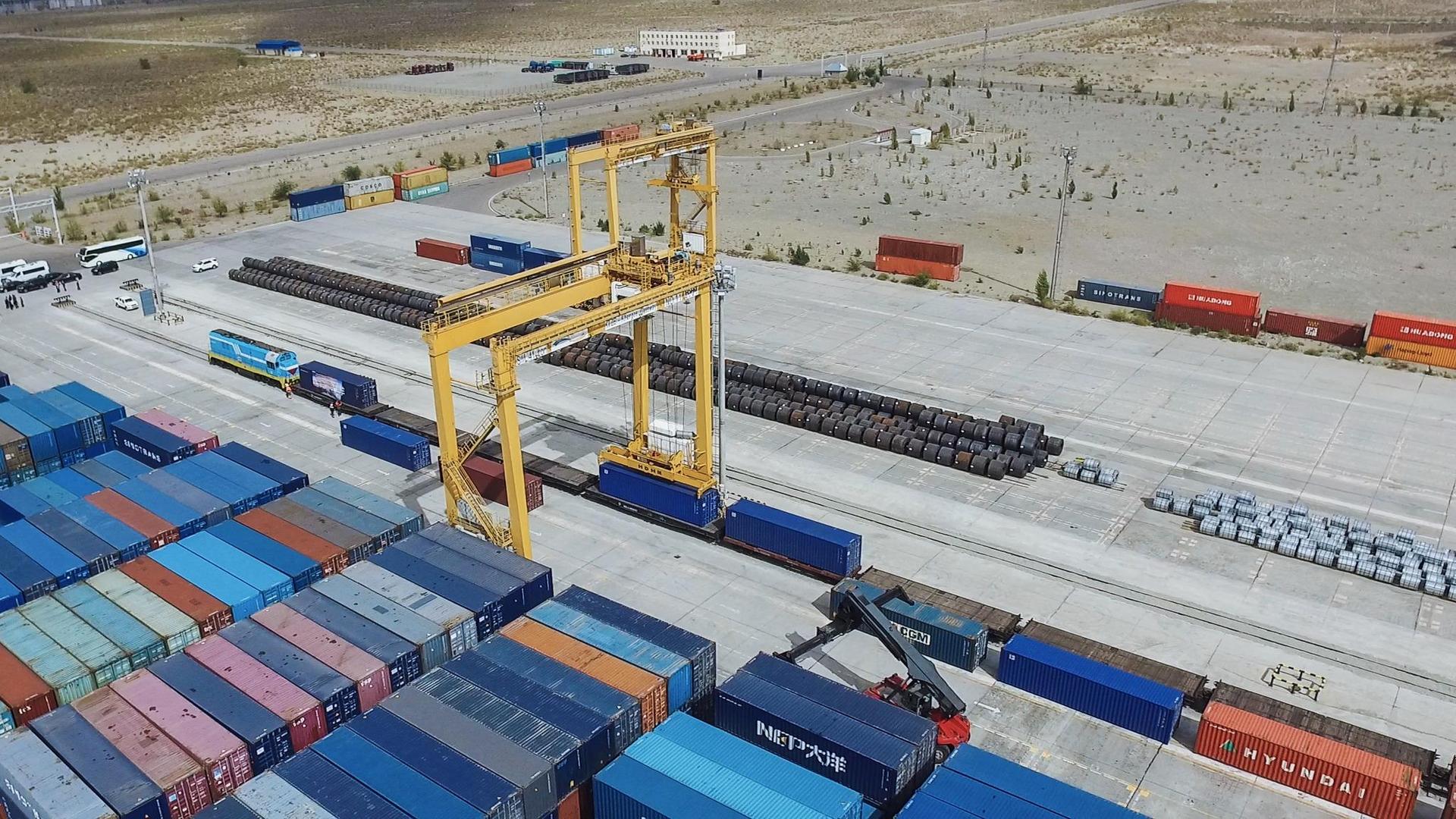
Kazakhstan: China's Gateway to Eurasia
For years, Kazakhstan has been described primarily as an energy powerhouse. Rich in oil, gas and uranium, the country is frequently portrayed as little more than a supplier of strategic commodities to global markets. While this narrative is not incorrect, it misses the much larger geopolitical reality. China does not simply need Kazakhstan for its natural resources—it needs Kazakhstan as the indispensable bridge connecting East Asia with Europe. Without Kazakhstan, Beijing's vision of a connected Eurasian continent would remain largely theoretical.
This is precisely why it was no coincidence that President Xi Jinping chose Astana in 2013 to unveil what would later become the Belt and Road Initiative (BRI). The announcement was both symbolic and strategic. Kazakhstan occupies the geographical center of Eurasia, shares more than 1,700 kilometers of border with China, and represents the shortest overland route between Chinese manufacturing hubs and European markets. In many ways, Kazakhstan is where China's continental ambitions truly begin. Since then, bilateral relations have expanded dramatically. Chinese investment has flowed into Kazakhstan's energy sector, transportation infrastructure, mining industry and manufacturing. Oil pipelines linking the two countries, uranium cooperation and logistics hubs have become cornerstones of the relationship. Yet viewing these projects solely through the lens of Chinese expansion risks overlooking an equally important development: Kazakhstan has become increasingly adept at leveraging Chinese interest to pursue its own national objectives.
This distinction matters. Western commentary often portrays Central Asian states as passive recipients of great-power competition, suggesting that Russia, China or increasingly the West dictate regional outcomes. In reality, Kazakhstan has demonstrated considerable diplomatic agency. Rather than aligning itself exclusively with any single power, Astana has consistently pursued what its policymakers describe as a "multi-vector foreign policy" – maintaining productive relations with China, Russia, the European Union, the United States, Türkiye and the Gulf states simultaneously. The Russian invasion of Ukraine only reinforced the importance of this strategy. As Russia's economic and political position weakened, Kazakhstan found itself facing both new opportunities and new dilemmas. Moscow remains an indispensable security and economic partner, yet Astana has carefully avoided endorsing Russian revisionism while simultaneously deepening economic cooperation with Beijing and expanding engagement with Europe.
China has undoubtedly benefited from this geopolitical shift. Beijing increasingly views Kazakhstan not only as a supplier of hydrocarbons but as the cornerstone of its westward connectivity strategy. Rail freight connecting China with Europe has become a visible symbol of this transformation. Every disruption along maritime trade routes – from the COVID-19 pandemic to instability in the Red Sea – has highlighted the strategic value of reliable overland corridors crossing Central Asia. This explains China's strong support for the Middle Corridor, which links China with Europe through Kazakhstan, the Caspian Sea, the South Caucasus and Türkiye. While still facing infrastructure bottlenecks and capacity constraints, the corridor has gained unprecedented political momentum over the past three years. It also reflects a broader reality: connectivity has become a geopolitical asset rather than merely a logistical concept.
Energy remains another pillar of bilateral relations. Kazakhstan is one of China's most important external suppliers of crude oil and uranium. Chinese state-owned enterprises have invested billions of dollars in upstream energy projects, pipelines and refining infrastructure. These investments contribute to China's long-term objective of diversifying supply routes away from vulnerable maritime chokepoints such as the Strait of Malacca. At the same time, Kazakhstan benefits from access to one of the world's largest energy markets and a reliable source of long-term investment. Yet energy is not the whole story. Chinese engagement increasingly extends into renewable energy, digital technologies, industrial manufacturing and education. Chinese universities host thousands of Kazakh students, while Confucius Institutes have expanded language and cultural exchanges. Technology companies have entered the Kazakh market, offering digital infrastructure and surveillance technologies alongside traditional investment.
This broader engagement illustrates how the Belt and Road Initiative has evolved. What began largely as an infrastructure strategy has gradually become a multidimensional framework encompassing finance, education, technology, industrial policy and political cooperation. Nevertheless, China's growing presence remains politically sensitive. Public opinion inside Kazakhstan is considerably more skeptical than official government rhetoric might suggest. Concerns about land ownership, environmental standards, Chinese labor practices and dependence on Chinese finance periodically trigger public protests. Human rights issues in Xinjiang resonate particularly strongly among many Kazakhs because of ethnic and family ties that extend across the border. These concerns reveal an important distinction often overlooked in international analysis: governments and societies frequently assess China differently. Political elites generally emphasize the economic opportunities associated with Chinese investment, while segments of the public remain cautious about excessive dependence.
Kazakhstan's leadership understands this balancing act remarkably well. Rather than rejecting Chinese investment, Astana has sought to diversify its partnerships. European interest in critical raw materials, growing Turkish engagement, expanding Gulf investments and closer cooperation with middle powers such as South Korea and Japan all contribute to reducing the risks associated with overreliance on any single external actor.
This diversification strategy has become even more important as global competition intensifies. Central Asia is no longer viewed as a peripheral region but as a strategic crossroads linking Europe, Asia and the Middle East. In this new geopolitical landscape, Kazakhstan's value derives not only from what lies beneath its soil but also from where it sits on the map.
This changing perception has transformed Kazakhstan from an energy exporter into a geopolitical connector. Perhaps the greatest misconception surrounding China's role in Kazakhstan is the assumption that Beijing is steadily converting the country into a dependent client state. Such interpretations underestimate both Kazakhstan's diplomatic sophistication and the structural realities of contemporary geopolitics. China undoubtedly possesses enormous economic leverage, but Kazakhstan has demonstrated considerable skill in converting external competition into national advantage. Indeed, China's need for Kazakhstan may ultimately be greater than Kazakhstan's need for China. The Belt and Road Initiative depends on stable transit routes across Eurasia. China's search for secure energy supplies depends on reliable partners. Its ambition to reduce maritime vulnerabilities depends on functioning continental corridors. All of these objectives converge in Kazakhstan.
This does not eliminate the risks associated with Chinese investment, nor does it guarantee that Kazakhstan will successfully maintain its strategic autonomy indefinitely. Economic dependence, debt exposure and political influence remain genuine concerns that require careful management. However, reducing Kazakhstan to a passive object of Chinese strategy fundamentally misunderstands the country's foreign policy. Kazakhstan is not simply the first stop on China's Belt and Road. It is one of the few countries capable of shaping how that vision unfolds. As the global balance of power continues to shift, Kazakhstan's greatest strategic asset will not be its oil fields or uranium mines. It will be its ability to remain indispensable to multiple competing powers without becoming fully dependent on any of them. In an increasingly fragmented international order, that may prove to be the country's most valuable resource of all.
Author: Blanka Benkő-Kovács, advisor - LCTS, LUPS
Image source: intermodalnews.eu