Kyrgyzstan: Infrastructure, Democracy and China's Delicate Balancing Act
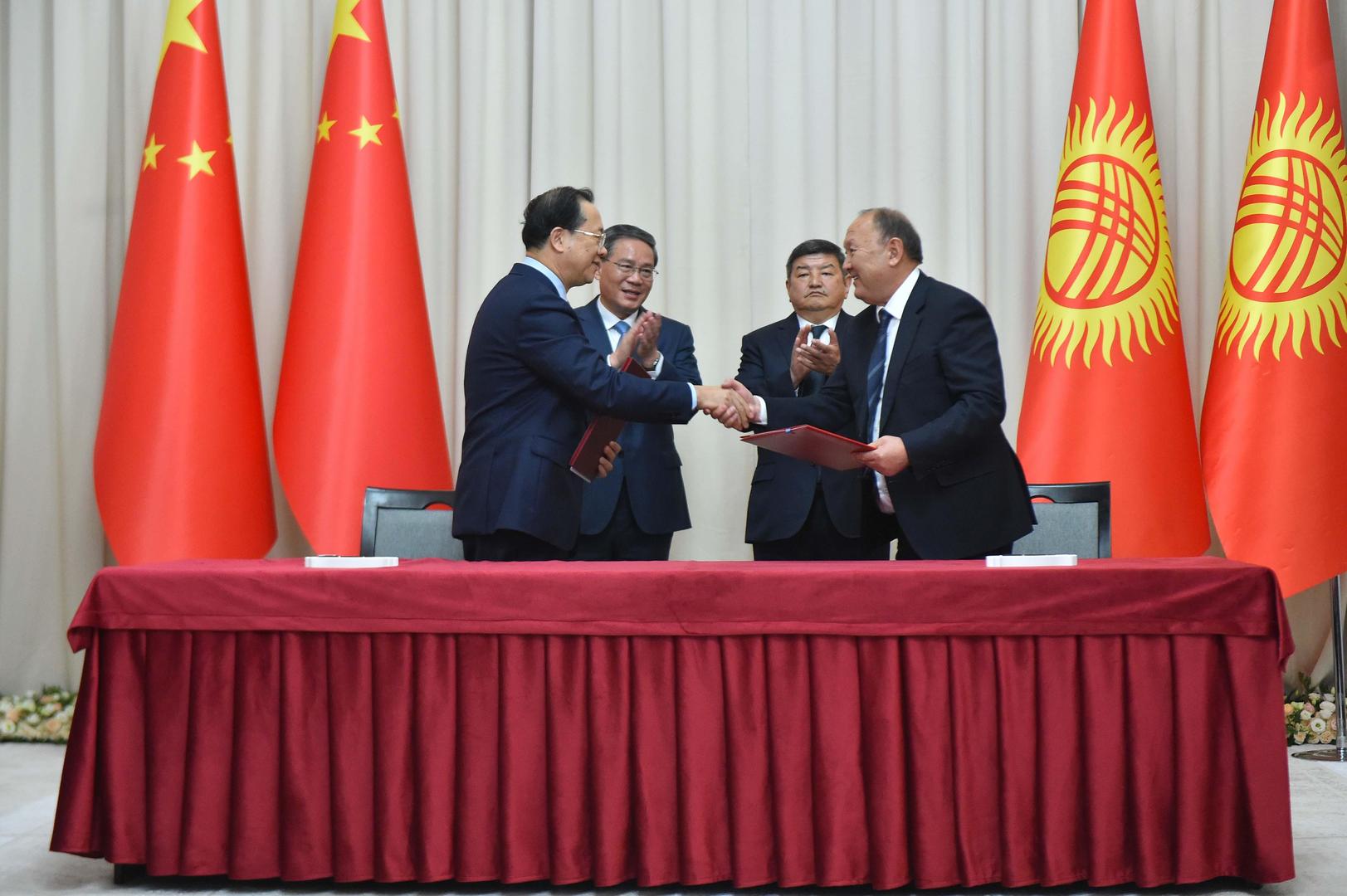
Kyrgyzstan: Infrastructure, Democracy and China's Delicate Balancing Act
Among Central Asia's five republics, Kyrgyzstan occupies a unique position. It is the region's smallest open political system, its most politically volatile state, and increasingly one of China's most important strategic neighbors. Unlike resource-rich Kazakhstan or gas-dependent Turkmenistan, Kyrgyzstan offers Beijing something far less tangible but arguably just as valuable: geography.
Sharing a border with China's Xinjiang Uyghur Autonomous Region, Kyrgyzstan sits at the intersection of Beijing's economic ambitions and its security concerns. It is here that China's Belt and Road Initiative (BRI) reveals one of its most important realities: infrastructure is never just about infrastructure. Every highway, railway and logistics hub built across Kyrgyzstan serves two purposes simultaneously. It facilitates trade while also contributing to China's broader objective of creating a more stable and predictable western frontier. For Beijing, the logic is straightforward. Economic development reduces instability. Improved connectivity strengthens regional integration. Closer economic ties make political crises less likely. Whether these assumptions always hold true is another question entirely.
For Kyrgyzstan, Chinese investment has undoubtedly delivered tangible benefits. Since the launch of the Belt and Road Initiative in 2013, Chinese financing has supported roads, tunnels, electricity infrastructure, industrial facilities and mining projects across the country. In a mountainous state where geography has historically limited economic development, modern infrastructure is not merely desirable, it is essential. Few projects illustrate this better than the China–Kyrgyzstan–Uzbekistan (CKU) railway.
Discussed for more than two decades, the railway is finally moving closer to reality. Once operational, it will create a new transport corridor linking western China to Central Asia and, eventually, Europe and the Middle East. By bypassing northern routes through Russia, the railway carries significance that extends well beyond commercial logistics. For Beijing, the project strengthens the resilience of Eurasian supply chains. For Bishkek, it promises transit revenues, investment and greater regional relevance. For Europe, it forms part of a broader effort to diversify transport routes in an increasingly fragmented geopolitical environment. The railway therefore represents far more than steel tracks crossing mountain ranges. It reflects the emergence of Central Asia as a strategic connector between competing geopolitical and economic blocs. Yet unlike many of its neighbors, Kyrgyzstan presents China with challenges that cannot be solved through infrastructure spending alone. Public opinion matters.
Although Kyrgyzstan has experienced democratic backsliding in recent years, it continues to possess a far more active civil society than most Central Asian states. Public protests, investigative journalism and political mobilization remain influential forces capable of shaping national debates. This has had important consequences for China's image. Across Kyrgyzstan, Chinese investment often generates conflicting reactions. Many citizens recognize the country's urgent infrastructure needs and acknowledge that Chinese financing has accelerated development. At the same time, concerns over transparency, environmental standards, corruption and labor practices regularly spark criticism. One recurring grievance concerns employment. Large Chinese-funded projects frequently rely on imported Chinese labor alongside Chinese contractors and suppliers. While this approach may improve efficiency from the investor's perspective, it often disappoints local communities that expect foreign investment to create domestic jobs. In a country where employment opportunities remain limited and labor migration continues to shape the economy, these expectations are understandable. Infrastructure alone cannot guarantee public support if local populations perceive themselves as excluded from its benefits.
Debt represents another source of concern. Kyrgyzstan owes a substantial share of its external debt to China's Export-Import Bank. Critics frequently describe this situation as evidence of "debt-trap diplomacy," arguing that Beijing intentionally extends excessive loans to gain future political leverage. The reality is considerably more complex. Chinese financing became attractive precisely because few alternatives existed for funding large-scale infrastructure projects. Western development institutions often attach governance conditions to loans, while private investors have historically shown limited interest in high-risk infrastructure projects across mountainous Central Asia. China filled this financing gap. Nevertheless, dependence remains a legitimate concern. Heavy debt obligations inevitably reduce fiscal flexibility and increase vulnerability to external economic shocks. The challenge for Kyrgyz policymakers is therefore not to reject Chinese investment but to ensure that infrastructure projects generate sufficient long-term economic returns to justify their costs.
Perhaps the most sensitive aspect of bilateral relations concerns security. Unlike Kazakhstan, where public concern often focuses on economic dependence, Kyrgyzstan's proximity to Xinjiang gives China's domestic policies immediate regional implications. Ethnic Kyrgyz communities live on both sides of the border. Reports concerning detention facilities, restrictions on religious practices and surveillance policies in Xinjiang therefore resonate deeply within Kyrgyz society. Family connections, cultural ties and historical interaction transform what might otherwise appear to be a foreign human rights issue into a deeply personal concern for many citizens. This creates an unusual diplomatic dilemma. The Kyrgyz government seeks closer economic cooperation with Beijing while simultaneously facing domestic pressure over issues connected to China's internal security policies. Managing these competing pressures requires careful political balancing. China understands Kyrgyzstan's strategic importance beyond economics. For Beijing, stability along the Xinjiang frontier remains a national security priority. Regional cooperation on counterterrorism, border management and intelligence sharing has therefore expanded alongside economic engagement. Within the framework of the Shanghai Cooperation Organisation, security and development increasingly reinforce one another as complementary objectives. This reflects a broader evolution in China's foreign policy.
Kyrgyzstan also is not a passive actor. Like its Central Asian neighbors, it increasingly pursues a multi-vector foreign policy, expanding relations not only with China but also with Türkiye, the European Union, the Gulf states, South Korea and international financial institutions. Although China's economic role remains significant, Bishkek continues searching for additional investment sources capable of reducing excessive dependence.
Whether this strategy succeeds remains uncertain. What is clear, however, is that Kyrgyzstan's future will be shaped not only by the infrastructure it builds but also by the institutions it strengthens. Railways can shorten transport routes, highways can connect markets. Power plants can reduce energy shortages. But none of these investments automatically create resilient governance, public trust or sustainable development. China can finance infrastructure. Only Kyrgyzstan can build the political and institutional foundations necessary to maximize its benefits. That is ultimately the country's greatest challenge.
Author: Blanka Benkő-Kovács, advisor - LCTS, LUPS
Image source: gov.kz