More Than a Linguist: Mándoky Kongur’s Legacy
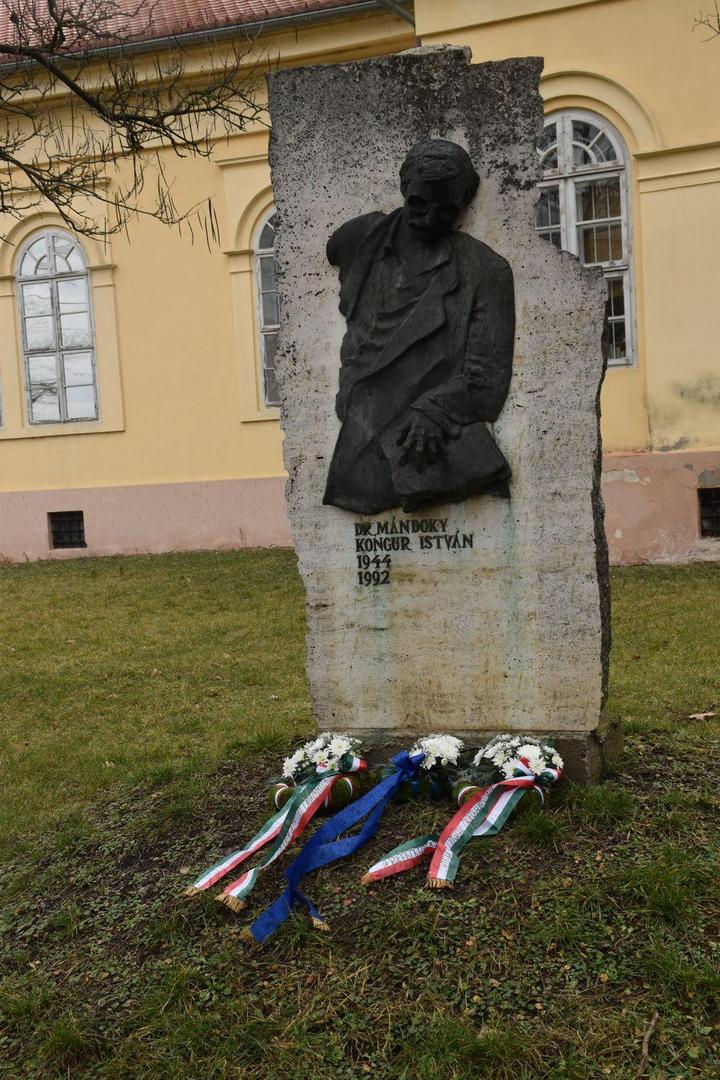
More Than a Linguist: Mándoky Kongur’s Legacy
To understand a region, one must first understand its people. Global attention has increasingly turned toward Central Asia in recent years. Yet much of today's discussion revolves around tangible strategic interests: transport corridors, critical minerals, energy security, and competition among major powers. While these issues dominate contemporary policy debates, they represent only one layer of a region whose significance has long been recognised by generations of scholars. Researchers regarded Central Asia not as a remote periphery, but as one of Eurasia's defining historical and cultural spaces, shaped by centuries of migration, linguistic exchange, cultural interaction and shared historical experiences.
Among them, Mándoky Kongur occupies a distinctive place. His importance lies not simply in the breadth of his linguistic knowledge or in the remarkable geographical scope of his fieldwork, but in the intellectual project that connected much of his scholarship: understanding the historical, linguistic and cultural continuities of the Kipchak world and, within it, rediscovering the place of the Hungarian Cumans.
Born in 1944 in Karcag, at the heart of Hungary's historic Cuman region, Mándoky's scholarly interests were inseparable from the cultural landscape in which he grew up. The Cumans had entered the Kingdom of Hungary in the thirteenth century and, over the following centuries, became integrated into Hungarian society. Their language eventually disappeared in Hungary, but elements of Cuman identity survived in local traditions, place names, family histories and regional consciousness, particularly in the areas of Nagykunság and Kiskunság. For Mándoky, however, the Hungarian Cuman heritage was not an isolated curiosity of Hungarian history. Its deeper significance could only be understood by placing it back within the wider history of the Eurasian steppe.
The Cumans belonged to the broader Kipchak world that for centuries extended across vast parts of Eurasia. The medieval Kipchak confederations occupied territories stretching from Central Asia toward the Black Sea and Eastern Europe, while their linguistic and cultural heritage survived among numerous later communities. The modern Kipchak branch of the Turkic language family encompasses languages including Kazakh, Karakalpak, Nogai, Tatar and Bashkir, alongside other closely related linguistic traditions across the Eurasian steppe. The historical trajectories of these peoples diverged considerably, yet their languages and traditions preserved traces of older connections across the steppe. This wider space became the central intellectual landscape of Mándoky's career.
His contribution was not to "discover" the relationship among these peoples. Generations of Turkologists had already studied the linguistic and historical connections within the Kipchak family. Rather, Mándoky brought an unusual combination of comparative linguistics, ethnography and intensive fieldwork to the subject. Crucially, he approached the surviving Cuman linguistic heritage in Hungary not simply as a relic, but as material that could be interpreted through comparison with living Kipchak languages and traditions.
This approach culminated in one of the defining works of his scholarly legacy, A kun nyelv magyarországi emlékei(The Cuman Linguistic Heritage in Hungary), based on his doctoral research and published posthumously in 1993. By examining surviving Cuman linguistic material in Hungary through comparison with related Kipchak languages, Mándoky helped reconnect fragments preserved in the Carpathian Basin with the wider linguistic history of the Eurasian steppe. His work thus placed Hungarian Cuman heritage within a much broader historical and linguistic context.
This gave his research an inherently transnational character. Perhaps the most distinctive aspect of Mándoky's scholarship was his conviction that this world could not be understood from written sources alone. His fieldwork extended from the communities of the Dobrujan Tatars to Crimea, the Caucasus and Soviet Central Asia, and further east to Western Mongolia and Xinjiang. He conducted research among Kazakhs, Kyrgyz, Karakalpaks, Nogais, Tatars, Bashkirs and other communities, collecting linguistic material, recording dialects and oral traditions. Language was therefore not merely the object of his research. It was also his method. Mándoky's knowledge of Turkic languages allowed him to engage directly with communities rather than encountering them primarily through translators or through Russian, the dominant scholarly and administrative language of the Soviet period. The resulting relationships gave his research a depth that is difficult to reproduce through archival material alone.
There is another reason Mándoky's scholarship remains important. Modern scholarship and policymaking naturally organise Central Asia around states: Kazakhstan, Kyrgyzstan, Uzbekistan, Turkmenistan and Tajikistan. Historically, however, the Eurasian steppe was structured very differently. Peoples migrated, confederations emerged and disappeared, languages interacted, and cultural traditions travelled across territories whose present borders are relatively recent.
The Kipchak world makes this particularly visible. Its historical geography cannot be neatly contained within contemporary Central Asia. It stretches north toward the Volga-Ural region, west through the northern Caucasus and the Black Sea steppe, and ultimately reaches the Carpathian Basin through the history of the Cumans. Mándoky's work therefore implicitly challenges the tendency to understand cultural history through the borders of modern nation-states. His scholarship instead reveals a cultural geography shaped by mobility and historical continuity: one in which the Carpathian Basin and the Central Asian steppe belonged to interconnected historical processes rather than entirely separate worlds.
Mándoky's significance is also unusual because his legacy exists simultaneously in Hungary and Central Asia. In Hungary, his scholarship forms part of a much longer intellectual engagement with the Turkic world. From the nineteenth century onward, Hungarian Oriental studies produced internationally significant research on Turkic languages, Central Asia and the historical connections between the Carpathian Basin and the Eurasian steppe. Mándoky inherited this tradition but gave it a particularly personal form through his lifelong engagement with the Kipchak peoples.
In Kazakhstan, however, his memory developed beyond the conventional boundaries of academic recognition. He became known not simply as a foreign scholar studying Kazakh language and culture, but as someone who had entered deeply into the intellectual and cultural life of the communities he studied. That connection endured until the very end of his life. Mándoky died unexpectedly in Makhachkala, Dagestan, in 1992, while still actively engaged with the Turkic world, and was subsequently buried in Almaty in accordance with his wishes. His grave in Kazakhstan became more than a personal memorial: it symbolised the unusual place a Hungarian scholar had come to occupy in the cultural memory of the people he had spent his life studying.
More than three decades after his death, this may be the most important way to understand Mándoky Kongur's legacy. His significance cannot be reduced to the number of languages he mastered, the territories he visited or even the individual linguistic questions he sought to answer. He represented a form of scholarship built on language, fieldwork, comparison and sustained engagement with the communities themselves.
Author: Blanka Benkő-Kovács, advisor - LCTS, LUPS
Image source: szoljon.hu