Perceptions of the Turkology Congress in Baku, 2026
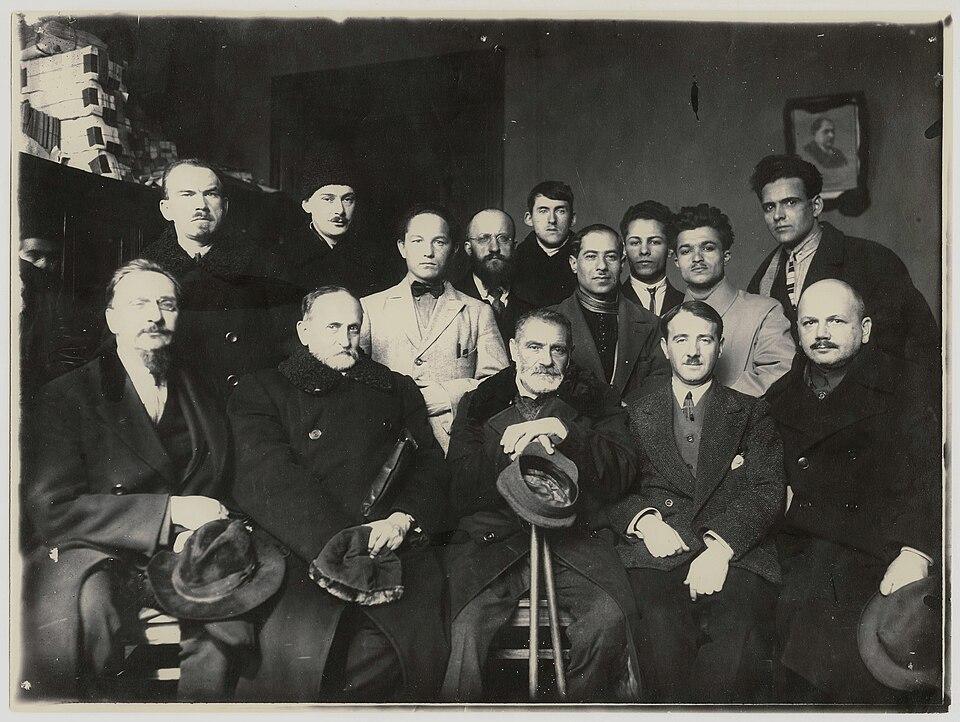
Perceptions of the Turkology Congress in Baku, 2026
Összefoglalás: Ahogy egy korábbi írásunkban már jeleztük (https://lcts.uni-nke.hu/articles/baku-conference-1926-2026), az első turkológiai kongresszus nemcsak a török világ számára bírt, bír jelentőséggel, de nem elhanyagolható magyar vonatkozásai is voltak az elsőként Bakuban megrendezett összejövetelnek. A kongresszus centenáriuma kiváló alkalmat nyújt ugyanakkor arra is, hogy a sorok között olvasva próbáljunk meg következtetéseket levonni a török világ globális integrációjának irányairól, kihívásairól.
The Baku Centenary Congress of Turkic Studies, held in February 2026, was organised primarily in cooperation with the Azerbaijan Academy of Sciences, the Yunus Emre Institute, the Turkish Linguistic Society, Marmara University and Hazar University. Among the speakers, it is noteworthy that while the President of the Azerbaijan Academy of Sciences, İsa Hababbeyli, in his speech pointed out that the 1926 Congress could be considered as a foundation for cultural and scientific cooperation between the Turkish peoples, the Azerbaijani Deputy Minister of Culture, Ferid Caferov, spoke of the development of a "common strategic perspective", in addition to mentioning the cultural heritage.
At the same time, Sayit Yusuf, Deputy Secretary General of TURKSOY, took a pragmatic approach and reminded the audience that while it is important to develop a common alphabet and a common language, however without joint work and strengthening of relations, linguistic research alone would not be of much daily use.
But compared to the opening speeches, the theme of the event perhaps shows more about the current priorities of the Turkish world. The panels, named after Kaşgarlı Mahmud, Ali Bey Hüseyinzade, İsmail Bey Gaspiralı, Abay Kunanbayoğlu, Mağcan Cumabay, Bekir Çobanzade, Ahmet Caferoğlu, Nesib Bey Yusifbeyli, Ayaz İshaki, clearly identify the direction and the framweork in which the Turkic world is orienting its cooperation and its search for a new path. Indeed, the names show that, with the exception of Mahmud Kaşgarlı, who lived in the 11th century, all the others were active in the scientific, literary and political revival of the Turkic world, in the intellectual life of Turkic communities struggling for independence.
Hüseyinzade, for example, was one of the inventors of the motto 'Turkify, Islamify, Europeanize' and a pioneer of modern Azerbaijani nationalism. Gaspiralı was one of the founders of the journal Tercüman and a prominent figure in the Crimean Tatar community in Russia, who advocated the purging of Arabic and Persian words from the Turkic language. He also played an important role in bringing European intellectual products to the Muslim population of Tsarist Russia, which was predominantly Turkic-speaking.
Cumabay and Çobanzade were the victims of Stalinist terror against the Kazakh and Crimean Tatar communities, which shows that the deepening integration in the Turkic world is difficult to interpret in terms of Russian political or economic interests. This is true, of course, even if the Russian modernisation process in many cases functioned as a vehicle for European intellectual works at the turn of the 19th and 20th centuries. İshaki and Yusifbeyli also found themselves confronted with the threat of Russian imperialism, for while the former, as a Kazan Tatar, called contemporary Tsarist Russia a 'prison of nations' (though he never disputed the Russian cultural influence), the latter vehemently opposed the Bolshevik takeover of Azerbaijan.
From the above, it is clear that the major issues of self-determination of the Turkic peoples in 2026 remain significantly linked to modernisation, relations with Europe and the current strengths of the Russian imperial idea. Russian politics and Russian intellectual influences in this sense are, however, sharply distinct, for while Moscow's imperial aspirations posed a threat, Russian-language cultural products created an opportunity for Turkic-speaking communities.
These questions and choices of themes are thus also about where the global integration of the Turkic world is heading and the ideas on which the foundations of identity of Turkic peoples living in different geographical contexts are being developed. Moreover, compared to the world political conditions of a hundred years ago – after the end of Soviet hegemony and the bipolar world order – today's world offers more opportunities for Turkic communities. Baku has thus not only hosted a historical conference a century ago, but also an initiative that has served as a scientific and intellectual meeting point for discourse on the past, present and future of the Turkic world.
Author: Péter Kövecsi-Oláh, advisor - LCTS, LUPS
Sources:
https://tdk.gov.tr/icerik/basindan/100-yilinda-baku-turkoloji-kurultayi-bakude-yapildi/
https://muallim.edu.az/turk-xalqlarinin-medeni-inteqrasiyasinda-tarixi-hadise
Image source: