Silk Road Meets the Danube: What “Turkic Week in Vienna” Really Signals
Silk Road Meets the Danube: What “Turkic Week in Vienna” Really Signals
Introduction
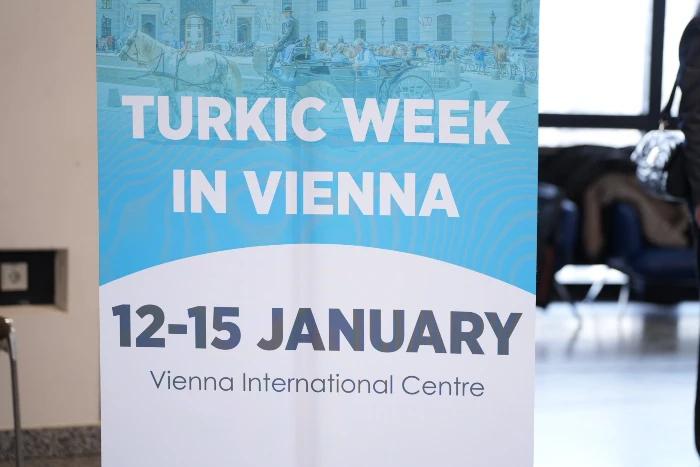
When Vienna has a Turks Week, it is not just one more event in the rich culture agenda of the city. It is one such silent yet meaningful announcement concerning the position of the Turkic world in an internationally shifting fast world order. Between 12 and 15 January, the Organization of Turkic States (OTS) hosted a multi-day program in the capital of Austria, starting with a photo exhibit at the UN office in Vienna, then a high-level roundtable at the Hofburg, a diaspora capacity-building program and a gala concert by artists of the Turkic world. At the outward level, these were soft-power activities, pictures of the Silk Road, songs of Baku to Bishkek and networking parties. However, their whereabouts, their messages and timing all point to greater geopolitical intentions.
Vienna as a platform of a new middle power formation
Symbolic accuracy is in the selection of Vienna. It is also a European capital; it is one of the central European cities of multilateral relations in the world: there are the main offices of the UN, the OSCE, a wide range of international institutions and organizations. The OTS put its narrative at the centre of the process of global rule-making, rather than at its edges, by hosting Turkic Week within the premises of the UN and hosting the connectivity roundtable on the OSCE platform at the Hofburg. The Turkic world on the Silk Road expo went beyond displaying picturesque landscapes. It put the Turkic states to the task of historical mediators between civilizations and modern stakeholders in the discussions on trade routes, energy safety, and the regulation of transport. That is, the message was not ambiguous, the Turkic world is not a system of transit states, but an organized actor with the capabilities of forming the principles of connectivity.
Middle Corridor as a strategic offer
The roundtable under the name From the Silk Road to the Middle Corridor: Promoting Connectivity through Transport and Trade Facilitation embodied the economic and strategic main idea of that suggestion. The so-called Middle Corridor, which connects China, Central Asia, and Europe via the Caspian, the South Caucasus, and Turkiye has become the focus of increasing attention as an alternative and an addition to the conventional Far East-West routes. The members of OTS were not just marketing their project by addressing trade facilitation, transport interoperability and customs cooperation in Vienna. They were welcoming European and international partners to consider the Middle Corridor as a component of the overall global connectivity framework and, they had also implemented the EU Global Gateway and established Eurasian transport networks. The implicit meaning here is that the global supply chain resilience will rely on diversification, and the Turkic geography is the necessary part of that diversification. This matters for Europe. An operational Middle Corridor will save time on the movements within the Asian continent, Europe, decrease over dependency on any route, and increase the strategic depth of the EU access to Central Asia and the South Caucasus. The fact that these issues were framed in an OSCE-related venue implied that connectivity can be viewed as a matter of infrastructure as well as security, trust, and cooperative rules.
Strategic depth cultural diplomacy
None of this would be heard without a plausible soft-power base. In this case, Turkic Week was based on culture, art and common memory. The concert held under the cooperation of the OTS and the embassies of member-states in Vienna in MuTh concert hall featured musicians of Azerbaijan, Kazakhstan, Kyrgyzstan, Turkiye, and Uzbekistan and was attended by the diplomats, international officials and local population. The selection of the contemporary high-quality venue was a strong signal that the Turkic world does not want to be discussed as the exotic other, but as the modern image of the world in the European popular life. The show and concert was accompanied by culinary and craft presentations, creating a story of diversity based on a shared Turkic identity. To some international viewers who might be more used to bilateral stereotypes, such as a NATO partner, an energy provider in Central Asia, a Caspian participant, Azerbaijan as a state is exposed to the concept of a larger, coherent Turkic space through this type of cultural diplomacy. Meanwhile, the voice was not aggressive but accommodating. The OTS positioned itself as an organization that enhances multilateralism instead of a group that aims at destroying the current institutions. This diplomatic subtlety is needed in case the Turkic cooperation should be seen as supplementary to the system like the EU, the OSCE as well as the UN system.
Geneva, Vienna: making a tradition institutional
Adventure Week in Vienna was not the only experiment. This was the sequel to a previous event held in Geneva and OTS Secretary-General Kubanychbek Omuraliev has made it clear that the objective is to host this format in different international capitals. His evaluation that the Vienna version has increased the profile of the Turkic world in the multilateral diplomacy is not merely a pat on the back commentary; it is an indication of a strategy of permanent presence in the major multilateral centers. Through the Turkic Week institutionalization, the OTS is slowly creating its own set of milestone events – similar to the way ASEAN, or the African Union, have branded their annual meetings and outreach activities. Gradually, these repetitions diminish the element of novelty and familiarize the Turkic world as an interlocutor, international civil servant, and opinion-maker, who is already familiar. This is especially applicable during a time when the world governance is straining. The principle of cooperative solutions can be diluted by fragmentation, rivalry in the scope of connectivity projects, and geopolitical competition. It is in that context that the effort to integrate culture, diplomacy and conversation, without requiring coherence on every matter, can sustain, albeit in a modest, but substantive way, a rules based, networked multilateralism.
A test of strategic maturity
Finally, the meaning of Turkic Week in Vienna can be more about the combination of three vectors than about the specifics of the events thereof, which is: a common Turkic identity, a tangible connectivity agenda, and an intentional decision to act in the context of multilateral tools. This intersection indicates that Turkic collaboration is also taking a new stage of strategic maturity. In the case of the Turkic states, it will be difficult to turn the soft-power accruals and increased visibility into tangible results: law-abiding regimes of customs, compatible infrastructure, mutual investment format, and harmonized positions in international institutions. To the European partners, this is to see the Turkic world not primarily as an object of policy, but a subject, an up-and-coming middle-power constellation whose own interests, contributions and sensibilities. A long tradition of a crossroads of empires and ideas, Vienna provided a good metaphor. The interpretation of the message is clear when the pictures of the caravans on the Silk Road are projected inside the UN domes, and the debate about the Middle Corridor is conducted in the halls of the Hofburg: the history of the Eurasian connectivity is being rewritten in real-time, and the Turkic world is going to have a pen. It will be up to decisions made much further than one themed week whether this tale is one of inclusive cooperation or hardened competition. But Turkic Week in Vienna indicates that the Turkic states are, at least in the meantime, more willing to rule out ultimatums and present their case through exhibitions, through round-table conferences, through music, a language of diplomacy with which Europe, and the world at large, would do well to listen.
Author: Dávid Biró, senior advisor, research & academic network lead - LCTS, LUPS
Image source: OTS