Strategic Gateway: The Representation Office of the OTS in Budapest as Europe-Facing Powerhouse of Turkic Cooperation
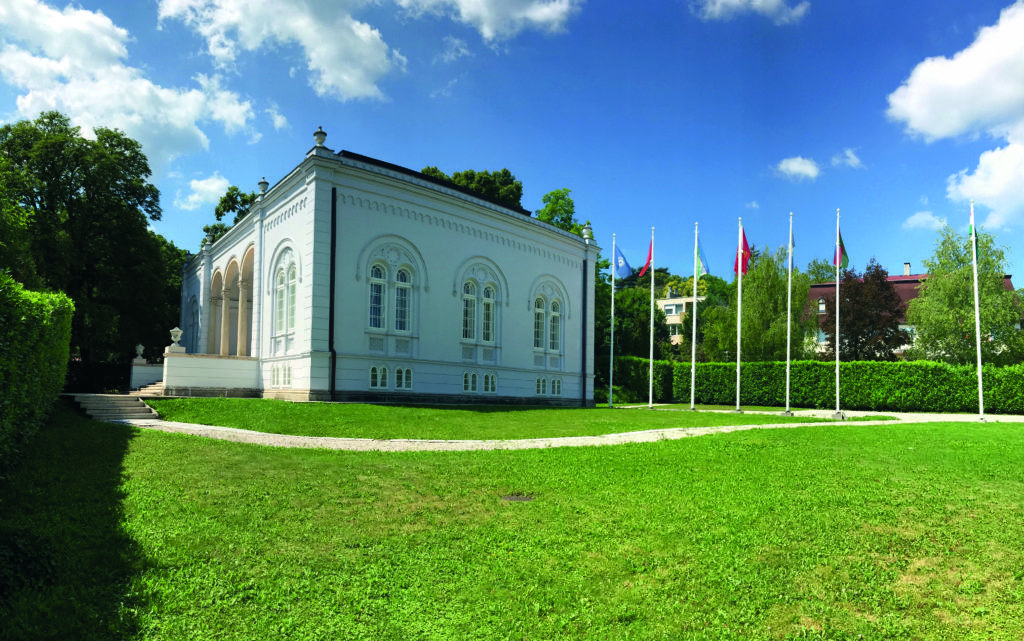
When the Representation Office of the Organization of Turkic States (OTS) opened in Budapest, few could imagine how quickly its relevance would grow. In 2026, with Europe redesigning its connectivity policies and seeking stable partners between the EU and Asia, the Budapest Office is poised to become far more than a diplomatic outpost It can become the operational EU platform of the OTS - a genuine meeting point between the strategic project of the Turkic world and the policy tools, EU markets and institutions.
It is the right time
The world is reconfiguring its supply chains, energy supplies, and technological ecosystems, thus providing a unique opportunity for closer cooperation between the OTS region and the EU. Europe is spreading the risk of relying on single corridors and Turkic world is becoming the natural bridge corridor of Eurasia – the lifeline that unites the economies of the Caspian, Central Asia and Anatolia. In this context, the OTS Office of Budapest must not be limited to symbolic representation. Its geography, political setting and institutional access make it the ideal European Coordination Hub of the OTS that can transform strategic intent into actionable policy.
From Representation to implementation
The centrality of Budapest has already been proven in practice. The OTS Informal Summit took place in 2025 in a neutral European environment, with leaders and senior officials from all the member states in attendance. The meeting was no only a tribute to Hungary's reliability as a host, but also a sign that Budapest has the potential to serve as an informal political hub for the Turkic world in Europe. The OTS can institutionalize a regular high level exchange space in the city, which can be complemented by the formal summits in Central Asia and could enhance the OTS' political presence in Europe. During the early stages, the Budapest Office has been able to make OTS visible to the European stakeholders. But the times are changing: Europe is now in a new era of policy pragmatism, where potential partners will be assessed not by what they say, but by what they can deliver. It is essential to redefine the Office role from representational node to project-execution center to accommodate and lead projects that have concrete results. All states of the OTS have diplomatic missions in Budapest, which strengthens their coordinating mission. The dense network of embassies and consulates provides a ready-made institutional environment around the Representation Office that facilitates quick consultation, planning and coordination of crisis response. The fact that the Office is physically and politically close to its member states makes it a living forum for consensus‑building and policy alignment.
This change needs to be aligned with Europe's investment and policy instruments. There are opportunities for the EU to cooperate with the EBRD on green transition portfolio, the EIB's climate and connectivity initiatives, and the EU's Global Gateway initiative. A concrete next step would be to create a “Middle Corridor Coordination Desk” in the Office, which would help coordinate OTS connectivity and transport priorities with the EU's Trans-European Transport Network (TEN-T). An EIB/ EBRD joint initiative could also bring OTS infrastructure concepts to a stage where they can be turned into financeable projects. This would have the effect of permanently integrating the Turkic world into the macro-economic structure of Europe, giving the Budapest Office a permanent link for investments and implementations.
Strengthening Narrative Power
Another potential area of influence that is beyond operational capacity is narrative. The essence of soft power is perception: Today in Europe's strategic discourse, perception is policy. The OTS's presence in Budapest should thus be presented not just as a cultural bridge, but as a strategic partnership proposition – one that builds on connectivity, innovation and shared modernization, but is not exclusively defined by identity. Budapest is a special city where this discussion is fitting. The city already connects East-West within the EU itself: the city is the home of policy think tanks, business chambers, and innovation clusters, all keen to find out more about the possibilities of linking up with the East. The Budapest Office can advance a new narrative by reinforcing the vision of OTS countries as dynamic partners in Europe's competitiveness, energy diversification and digital transformation, positioning the office as the gateway to Europe of the Turkic world.
A potential model may be a “Turkic–Europe Dialogue Series” together with the key European policy institutes on the subject of supply chains, sustainability and AI governance. It might be forming a Turkic-Europe Business Platform, which would bring together chambers of commerce and tech accelerators from Central Europe, Türkiye and Central Asian countries. These efforts are not merely PR, but also about establishing relations of trust in the policy arena and visibility in Brussels and elsewhere, which is a prerequisite for strategic legitimacy. Budapest has already been put to the test in other fields with its institutional role. The creation of the DPI (Drought Prevention Institute) in the city under the OTS framework is an example of a new trend: A permanent technical and research institution dedicated to the regional priorities can be established in Budapest as well as summits and dialogues. In the areas of early warning systems, water governance, and climate resilience, the DPI's activities serve as a template for the Representation Office to initiate flagship projects and roundtables and to make Budapest a centre for policy experiments and coordinated solutions in environmental and sustainability areas.
Financing the Future
An execution body has to be able to execute. The existing institutional framework of host-country support and money raised by voluntary donations has proved successful in diplomatic actions, but it is insufficient for long-term operations planning. Confidence and clarity will be the yardsticks for credibility. Could establish a multi-year financing structure (agreed by OTS leaders) to create continuity and predictability. This type of system would also allow the use of European and international funds in conjunction with OTS resources. Budapest Office could act as an EU grant aggregator as well as IFI loan and private funds for the same goals, such as digitalization, logistics modernization or green infrastructure. This would create an Office as a 'development interface', giving a platform to the integration of Eurasian projects and high-quality European funding mechanisms in an institutionally neutral environment within the EU. It will also mark in a symbolic way that the OTS is not only an intergovernmental organization, but a strong partner in the economic transition in Europe.
To improve governance and performance.
Getting from diplomacy to delivery is all about institutional agility! The main governance instruments of the 21st century should be implemented in the Budapest Office: annually established execution frameworks, thematic task forces, and secondments of OTS member ministries and Hungarian government agencies. Digital project management tools, combined with a small, but knowledgable team structure could help prevent a bureaucratic delay, and maintain quick reactions to new opportunities. This lean management system also would be familiar to European expectations of efficiency and accountability. In practice, it may take the form of regular progress monitoring shared across OTS capitals, Brussels coordination on funding eligibility and clear reporting on progress. The message would be obvious: the Office isn't just here, it works.
An Impact and Opportunity that focuses on Europe
The city's position is symbolic and practical as it is at the crossing point of Eurasia and the industrial heartland of Europe. There are immediate opportunities to align OTS with EU in a number of policy sectors. The cooperation between OTS is still based on Connectivity and Trade. The OTS will facilitate the integration of investment, rail, port and logistics under one roof by the Budapest Office, thus weaving the Middle Corridor into the EU's own connectivity narrative. Co-financed projects connecting Central Asia with the Black Sea and Central Europe can be presented during the collaborative investment events, including an Annual Turkic Connectivity Forum. Another frontier is Innovation and Dual-Use Technologies. A Turkic Innovation hub in Budapest could facilitate the linkage between start-ups and universities from the member states and the European incubators and programmes. The Office could organise a Turkic Digital Governance Roundtable, bringing together OTS and EU experts in the field of cybersecurity, AI ethics and data protection policies. Likewise, a Turkic HealthTech Alliance could develop the digital health pilot initiatives in the member capitals with the assistance of digital innovation funding from Europe.
Not only a Bridge, but a Centre of Attraction
The power of Budapest is its attractiveness. The city can become the living ecosystem of Turkic-European dialogue, the centre of knowledge, ideas and business contacts. This positioning would be enhanced by the creation of a Turkic–Europe Academic Consortium and a Think Tank Foresight Network under the umbrella of the Office, which would provide depth in the policy development process, allowing for research and expertise to guide policy development – not just diplomacy. The softer dimension could be complemented by an annual Turkic Innovation and Culture Week with a combination of modernity and identity, which would signify the OTS's multifaceted presence in Europe's intellectual life. Why It Matters Now? The key could be timing. The economic geography of the European continent will be shaped in the coming years until 2030 and for decades thereafter. The EU is putting significant efforts into new connectivity networks, both on transport (Central Asian ports) and digital (Caspian digital corridors). Meanwhile, the Turkic world is also building its regional identity and promoting the initiative Turkic World Vision 2040 aimed at enhancing economic integration. The consolidation of these developments has led to the fact that if the OTS now asserts itself, it will have its own seat at the European policy table for the coming generation thanks to an empowered, professionally managed Budapest Office. Otherwise somebody will take up the space. And in Energy and Sustainability, Budapest could play host to the Turkic Energy Transition Forum, a collaboration between IEA and the city, that would bring together OTS renewable energy projects and green hydrogen options to European investors and regulations. The same network may be used to enable cooperation between universities and industries in the storage and nuclear safety programs.
The city of Budapest is the Strategic Engine
The OTS' Budapest Representation Office is on the verge of a change. It can be Europe's platform for Turkic cooperation with strategic political backing, strong finances and modernized governance, and where connectivity becomes action, and representation is transformed to influence. Budapest is the OTS Office's capital, but it's also much more. It can make the strategic power that carries the economic and intellectual energy of the Turkic world to Europe.It can turn itself into the strategic engine for the Turkic world's economic and intellectual vitality to project to Europe. The strengthening is no longer just institutional housekeeping, it is a geopolitical investment in the image and voice of the Turkic States in the Europe of the 2030s. The gateway is available. Now the focus is on leaders at the upcoming Summits to determine whether the OTS is prepared to walk through it.
Author: Dávid Biró, Senior Advisor, Research and Academic Network Lead of the Ludovika Center for Turkic Studies
Image source: https://www.turkkon.hu/EN/wp-content/uploads/2020/10/IMG_6426-1024x641.jpg
