The Ankara NATO Summit and Türkiye’s Pivotal Role
The Ankara NATO Summit and Türkiye’s Pivotal Role
A point of change
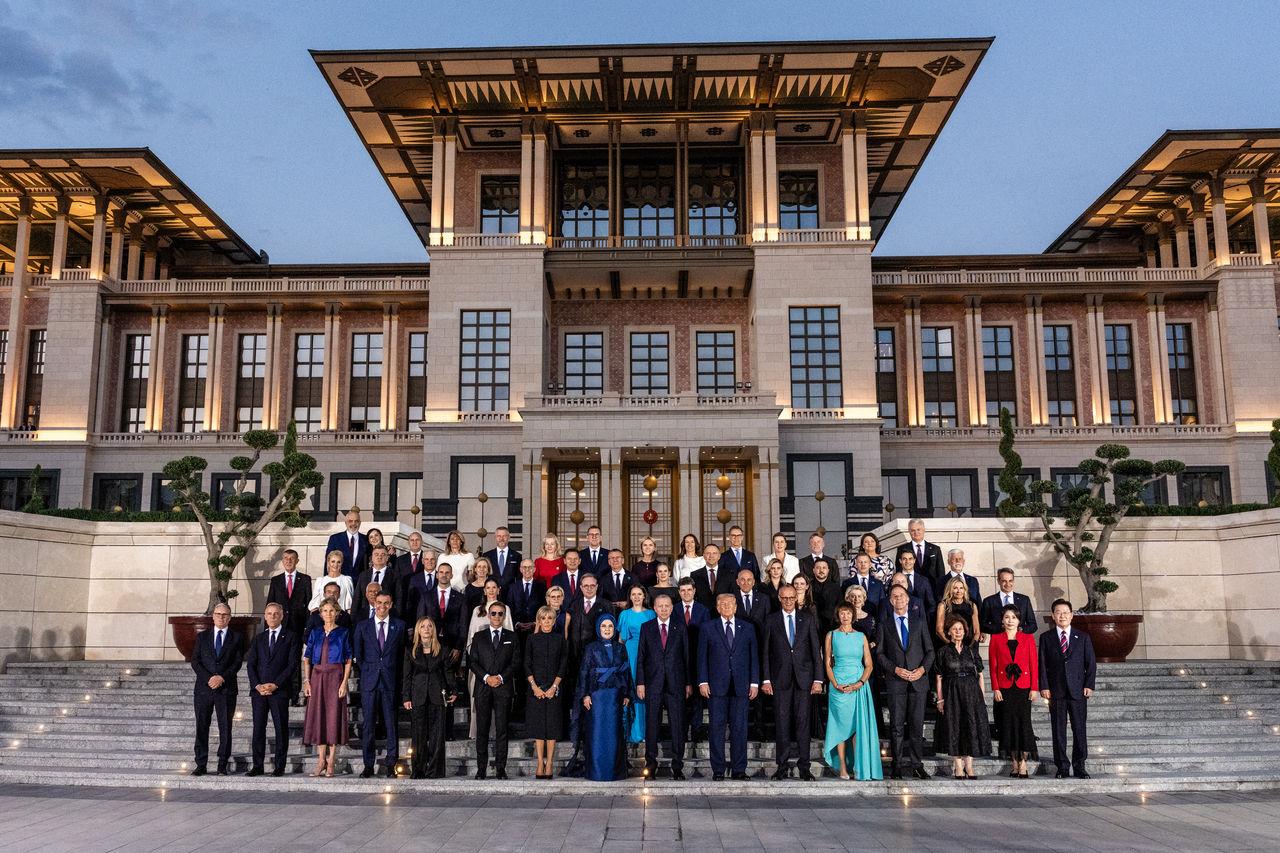
The Ankara meeting marked NATO's 36th summit, its second to be held in Türkiye following the NATO summit in Istanbul in 2004, which emphasized Ankara's long-term integration into NATO. The summit took place amidst a backdrop of strategic rivalry and tensions, a war on NATO's borders, and uncertainties regarding the future of US involvement in European security.
Allies progressed from rhetoric to real commitments in Ankara for rearmament and burden sharing, including promises to make previous targets on defence spending into reality in terms of capabilities. The Ankara Summit Declaration restated Article 5, acknowledged the multi-dimensionality of deterrence (nuclear, conventional, missile defence, space and cyber), and emphasized a “360-degree” perspective on threats ranging from Russia through to terrorism and hybrid threats. [1]
From strength to real force
The most tangible was probably Allies' €70 billion commitment in military equipment, assistance and training for Ukraine, which will be maintained at least at the 2026 level in 2027. This shifted the support of Kyiv from the ad hoc security packages to a more predictable, multi‑year approach, with European Allies and Canada covering the bulk of the support. [2]
Meanwhile, Ankara was the epicentre of a new defence‑industrial financing system, with nine countries, including Türkiye, supporting the Canada-led Defense, Security and Resilience Bank, which aims to raise up to $134 billion of low-cost loans for defence and security projects by 2027. NATO also declared big new purchases and deep‑strike operations, including spending on GlobalEye surveillance aircraft and the procurement of long-range precision strike capabilities under the NATO umbrella, in a way that indicates that industrial depth is now being viewed as a strategy to deter rather than just a procurement policy. [3]
Türkiye at the centre of NATO
The summit was as much about role definition as it was about hosting logistics in the case of Türkiye. Turkish government officials saw Ankara 2026 as proof that the country had shifted from “the periphery to the centre of NATO”, and was no longer merely a country on the Alliance's borders, but a country in the middle of every main issue. Geography – Black Sea, Eastern Mediterranean and Middle East span – and Ankara's increasing participation in the security discussions of the southern flanks and Black Sea support this narrative. [4]
The summit enabled Türkiye to demonstrate its flourishing defence sector, including its plans for its own Steel Dome air defence system, and the broader sphere of drones, aerospace and missile technology that Ankara believes can form the backbone of NATO's industrial revolution. While there was no formal decision on the Turkish re‑entry to the F‑35 programme, the US's statement that it would consider re‑entering and remove the sanctions when Türkiye was simultaneously pushing its indigenous KAAN fighter-underlines how Türkiye is balancing between alliance dependence and strategic autonomy. [5]
Balancing US uncertainty and European responsibility
The summit in Ankara was also a wake-up call to the pace of what is expected in the United States' withdrawal and Europe's absorption of the burden that comes with it. President Trump's combination of tough talk and, following that, his focus on "unity" and "tremendous love" for allies captured the ambiguity: the U.S. is still an indispensable partner, but it's clearly driving Europe to take on a lot more “normal” defence burden.
European nations, on the other hand, communicated through Ankara their willingness to transform the boost in defence spending into a capability-multinational aircraft fleet, deep-strike systems and interoperable warfighting networks, based on European platforms. The status of Ukraine symbolized this transition: Kyiv was proclaimed a “security provider” that would help transatlantic security, and it received significant air-defence and financial commitments, but none of them was accompanied by a clear date when this country could join the Alliance. The status of Ukraine was emblematic of this transition: Kyiv was recognized as a “security provider” contributing to transatlantic security and secured substantial air-defence and financial commitments, but without a clear timetable for the country's accession, thus reflecting lingering political hesitation within the transatlantic Alliance. [6]
Strategic implications for Türkiye
In this context, the strategic importance of Türkiye is shaping a strategic space that combines geographical, defence-industrial and diplomatic capacities into a unified strategy in the framework of NATO's changing division of labour. Ankara presents itself as a “safe harbour”, a crisis manager, with a focus on moderation and diplomatic room, while also developing hard power capabilities which bolster NATO's deterrent posture at various fronts. [7]
Türkiye is targeting to be a leading figure in the Alliance's military transformation, not a mere consumer of Western technology, through co‑shaping emerging industrial structures such as the Defence, Security and Resilience Bank, as well as its own defence industry and through deep-strike and air-defence projects. The Ankara summit, in other words, marked an important development: a NATO that is increasingly forced to defend itself and a U.S. that has adjusted its presence in the world, in which Türkiye will play a key role as a hinge between the Baltic and Black Sea and the Mediterranean and Middle East theatres, supply chains and political coalitions.
More than the communiqués or the pledges on funding, the true importance of the Ankara NATO Summit lies in the direction of their strategic path, which is from higher European responsibility towards industrialised deterrence and multi-regional crisis management – with Türkiye sitting firmly at the centre, not at the periphery of the map. [8]
References
[1] https://www.ussc.edu.au/ankara-in-the-spotlight-potentials-of-the-nato-summit-2026
[2] https://www.nato.int/en/about-us/official-texts-and-resources/official-texts/2026/07/08/the-ankara-summit-declaration
[3] https://breakingdefense.com/2026/07/six-take-aways-from-the-2026-nato-summit/
[4] https://www.trtworld.com/article/82cf3c513229
[5] https://www.youtube.com/watch?v=fdcm-QDV7Cw
[6] https://www.atlanticcouncil.org/dispatches/eleven-takeaways-from-the-nato-summit-in-ankara/
[7] https://www.trtworld.com/article/82cf3c513229
[8] https://www.nato.int/en/about-us/official-texts-and-resources/official-texts/2026/07/08/the-ankara-summit-declaration
Author: Dávid Biró, Senior Advisor, Research and Academic Network Lead of the Ludovika Center for Turkic Studies
Image source: nato.int