The Future of Turkic Cooperation in the Context of Hungary’s Elections
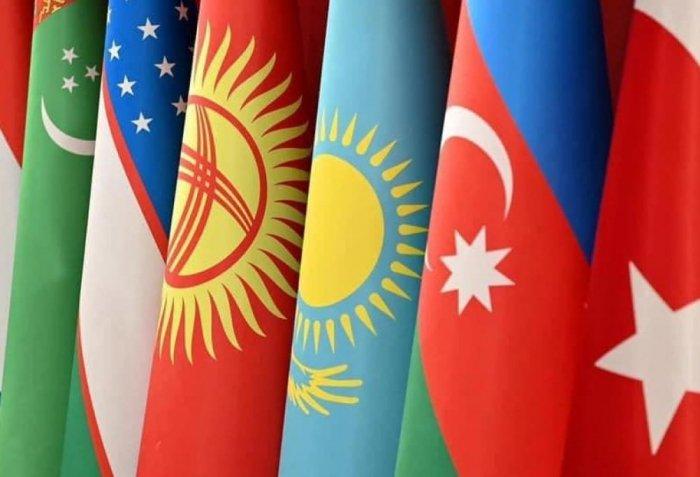
The Future of Turkic Cooperation in the Context of Hungary’s Elections
Over the last decade, Hungary's relationship with the Turkic world is one of the most unique aspects of its foreign policy. It started as an affinity, political symbolism and an opening to the East, but has now evolved into a viable forum for economic, energy, education and diplomatic cooperation. But now the big question is not if this connection exists, but how strong it will be following Hungary's elections, and how well it will serve as a bridging function between Europe and the Organization of Turkic States (OTS).
There is a lot of evidence of their work already. Hungary was an observer to the OTS since 2018 and that subsequently led to institutional presence, and not only in their words. In May 2025, Budapest will host the first informal OTS summit in the territory of an observer state, which will highlight Hungary's intention to become a hub of cooperation between the East and the West. As a result of the relationship, issues of energy security, transport connectivity, business relations, scholarship programmes and even security cooperation have been touched upon-most recently, the Uzbekistan's 2025 Defence Cooperation Declaration. These are not abstract gestures, but assets which can endure the passage of political cycles if they do not depend on personalities. [1]
Cooperation has been strongest in the area of energy. Hungarian officials have stressed that the country has to cooperate with the Turkic nations to ensure supply security, particularly in a volatile regional environment, on several occasions. Nowadays, Hungary imports gas mainly via routes connected to Türkiye, and Hungarian energy firms have been investing in the energy resources of Azerbaijan and Kazakhstan. The reasoning is simple: diversification is important and Hungary has a number of areas that are vital to its growth but difficult to secure elsewhere, such as hydrocarbons, energy transmission routes and potential for renewable energy supply from the Turkic region. Cooperation among the Turkic people is not only about identity politics but also about lessening vulnerability. [2]
The cooperation in trade and industry has also strengthened. For years, Hungary has been actively encouraging credit lines, strategic cooperation and sectoral projects with the Turkic countries, whereas the OTS countries have gained increased market and logistics potential. Hungarian companies operate in the rail sector, in the pharmaceutical industry, in industrial areas and in infrastructure projects throughout the region. Education has also been a persistent channel with thousands of Turkic students studying in Hungary through education programmes. This is important because the values of people-to-people relations are usually more lasting than election promises, and they form constituencies that can be more pro-consistency.
Still, it would be a mistake to overstate the structural depth of the relationship. The political alignment, particularly in the leadership and narrative, has been a big driver of Hungary's Turkic turn. That's why the elections in 2026 are important. The new era will likely be a bit more conservative and less dogmatic. A new government might retain the valuable aspects but would be less likely to warm the more apparent civilizational rhetoric, and use the OTS almost as a foreign-policy tool instead of an identity project.
It doesn't necessarily mean that it's a break. In practical terms, the good and sensible aspects of the relationship should endure a political change. Issues like energy diversification, transport links, investment opportunities and selective defence cooperation are the ones which tend to span beyond electoral changes. The weaker side is the symbolic side: the narrative of common destiny, civilizational kinships, as well as Hungary as the gateway of the West to the Turkic world. These themes are political but less fundamental to the process of cooperation. [3]
The future of Turkic cooperation will thus rely on the possibility to de-ideologize it without diluting it. The ideal for Hungary is one of discipline and interest rather than maximalism, in pursuing the Turkic world and joining Budapest to Central Asia, Azerbaijan, Türkiye and more. It implies targeting tangible results: energy corridors, alternative imports, logistics corridors, protection of investments, research relations and beneficial technology cooperation. It is also about maintaining OTS channel as a supplement rather than a replacement of Hungary's commitments as EU and NATO member.
For the Turkic countries, Hungary is a unique value as a European interlocutor with a legal framework and a political profile within the EU system. That structural function can't really be eliminated even if Hungarian politics change. Budapest can still be a medium of conversation (as well as the Representation Office of the Organization of Turkic States in Hungary), market access and visibility in Europe. However, it has to be viewed as a realistic, not a romantic, interpretation of geopolitics.
So, the post-electoral trajectory of Turkic partnership is not likely to be as explosive as partisan reporting makes it sound. The ongoing model would become even more profound if it were continued by the Hungarian government. Its underlying message could remain unchanged, though its rhetoric would be curtailed. In both instances, the most successful projects are the ones that have economic and institutional value. This is the true challenge of Hungary's Turkic ramp-up.
References
[1]https://www.dailysabah.com/opinion/op-ed/hungarys-increasing-role-in-the-organization-of-turkic-states
[2]https://abouthungary.hu/news-in-brief/fm-cooperation-with-the-turkic-states-enables-hungary-to-guarantee-secure-energy-supplies
[3]https://abouthungary.hu/speeches-and-remarks/speech-by-prime-minister-viktor-orban-at-an-informal-summit-of-the-organization-of-turkic-states
Author: Dávid Biró, Senior Advisor, Research and Academic Network Lead of the Ludovika Center for Turkic Studies
Image resource: azvision.az