The Result of Turkistan Summit
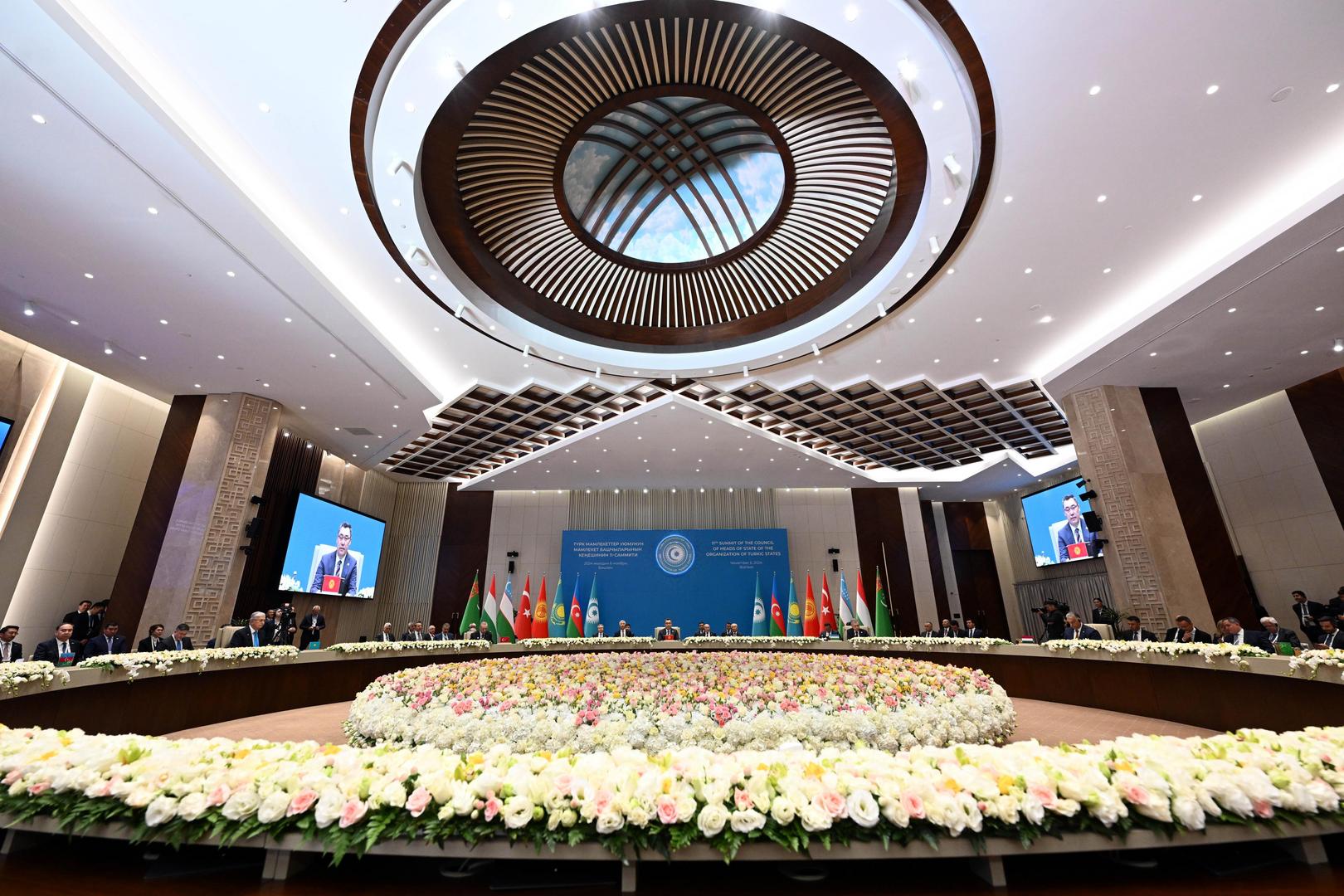
The Result of Turkistan Summit
The Turkistan summit of the Organization of Turkic States (OTS) was not just another diplomatic event on the regional agenda. It was a definite proclamation that the Turkic world is making its transition from symbolism to institution building, digitalization and strategic coordination.
The informal summit took place on 15 May 2026 in the spiritual capital of the Turkic world, Turkistan, and resulted in the Turkistan Declaration and decisions which were focused on the enhancement of the Secretariat's institutional and digital capabilities, thereby confirming the shift of emphasis in the organization from rhetoric towards action. In fact, the summit's actual outcome was not just a set of communiqués, but a new sense of direction.[1]
OTS has been linked mainly with identity, historical memory, and political solidarity for years. These are key pillars, but Turkistan demonstrated that the organization is seeking to turn identity into action. AI and digital governance, cyber security, smart infrastructures, logistics, transport connectivity and trade facilitation were the main points underlined in the agenda. This is particularly relevant when considering the geopolitical value of the Turkic world will increasingly hinge on its ability to deliver greater efficiencies in markets, data, institutions and people linking capabilities than other states.[2]
The summit also symbolized what is going on globally: the Turkic countries are dealing with a fragmented international landscape, a competition in supply chains, and technological speed. In this context, “declaratory” regional bodies may be rendered irrelevant. This seems to be understood by the OTS. The Turkistan Declaration and the following decisions imply the creation of a more flexible institutional structure that will be able to coordinate joint projects in various areas. That change is important because the future of regional cooperation will not just depend on the political will, it will also depend on administrative capacity. [3]
Digital transformation was one of the major topics of the summit. There were reports of discussions and proposals regarding cooperation in the use of AI, digital infrastructure, electronic documents, digital signatures, and data connectivity. These are not theoretical technical problems. They are the pillars of the modern integration in the region. By implementing interoperability of digital systems among the OTS member states, transaction costs can be lowered, trade can be facilitated and transport and customs can be made more efficient. From a practical point of view, that would make the Turkic space more competitive and more resilient.
Connectivity was also a key outcome. Focus was given to the summit on aspects of transport integration, the Middle Corridor, logistics coordination and simplified customs procedures. This is important strategically as the Turkic world covers a very large "Eurasian" area that stretches from Europe, through the Caspian basin, Central Asia and beyond. This area can be transformed into a significant transit and logistics artery, when connected properly. It is only when it is not coordinated that it is not strong enough and stays fragmented and open to external pressures. The member states demonstrated their growing understanding of the fact that connectivity is about more than just economics, and that it is a geopolitical asset, in the Turkistan meeting. [4]
It's also important not to forget the human and cultural aspects of the summit. The venue was, and is, of symbolic value, and the summit did not lack in exploiting that value. The OTS always had a strong affinity with the concept of civilizational kinship but civilizational rhetoric is only legitimate so far as it results in institutions, research, education, and cultural exchange. These are the directions indicated by these discussions concerning cultural heritage, digital cultural platforms and educational cooperation. This is where the OTS can stand out from numerous other regional organizations, with its blend of modernity and history. [5]
Yet another significant outcome was consolidation of institutions. One of the unusual aspects of the proposed measures to beef up the Secretariat of the OTS is that international organisations do not often fail from lack of ambition but of weak coordination mechanisms. The Secretariat could also be stronger, ensuring continuity between the summits, ensuring monitoring of implementation and providing technical support to cooperation. It's an understatement, but in regional diplomacy, institutional memory is far more important than lofty declarations. This is the type of reform that will have the greatest impact if the OTS is to have any role in long-term cooperation.
The Turkistan summit must be viewed, however, in a realistic manner. It's easy to make your intentions known, but hard to carry them out. The challenge now will be on the part of the member states to implement agreed projects in the fields of digital infrastructure, transport, energy collaboration and common standards. Its credibility will be on the line as per delivery. Going forward, the volume of the commitments announced is not the metric for measuring the success of a summit; what truly matters will be the number of tangible outcomes from the summit in the region.
Nonetheless, the political message of Turkistan was clear. The OTS is not just satisfied to be viewed as a cultural arena or a symbolic fraternity of Turkic peoples. It is seeking to become the institutionalized future-looking regional framework that actually has some strategic value. That evolution is good, as the comparative advantage of the Turkic world is to unite civilizations and link them with modernity. The summit proved to be a success in that both of these were now being introduced to the same policy conversation.
References
[1] https://turkicstates.org/u/Turkistan%20Declaration.pdf
[2] https://turkicstates.org/en/news/the-informal-summit-of-the-organization-of-turkic-states-convened-in-turkistan-kazakhstan
[3] https://akipress.com/news:896095:Several_documents_signed_at_OTS_Informal_Summit_in_Turkistan/
[4] https://www.euronews.com/2026/05/22/one-turkic-vision-ots-leaders-unite-for-a-smarter-connected-future
[5] https://turkicstates.org/u/Turkistan%20Declaration.pdf
Author: Dávid Biró, Senior Advisor, Research and Academic Network Lead of the Ludovika Center for Turkic Studies
Image source: turkicstates.org