The Role of Turks in the Iranian Modernization Process (19th-20th century) – part I
The Role of Turks in the Iranian Modernization Process (19th-20th century) – part I
The period of Ottoman modernization (Tanzimat), as well as the background and circumstances surrounding the implementation of modern European achievements in Turkey, are relatively well known, and there is a substantial body of literature on the subject. The situation is similar regarding the period following the proclamation of the Republic of Turkey, when the new state sought to bridge its technological, scientific, and educational gaps by adopting European methods – and in many cases, by employing experts from the European countries.
Therefore, we can say that the Western dimensions of Turkish modernization are a well-researched field. A different picture emerges, however, when we examine Turkish modernization not from the West but from the East. What role did the Turkish (Ottoman) elite, or the Turkish state, play in the Iranian reform movements? Why can we speak of – or should we speak of – a “Turkish model”? An examination of Turkish-Iranian relations during the late Ottoman period and the Atatürk era offers an opportunity to better understand the evolution of Turkish imperial thinking and the image of the Turkish state, as well as to gain a more complex picture of the objectives of Turkish foreign policy.
European hegemony, which had become increasingly evident since the 18th century, was made clear by the 1774 Treaty of Küçük Kaynarca, and the Treaty of Gulistan signed in 1813, made it clear to the Ottoman Empire and the Qajar Dynasty (1779–1925) that Western military methods and technology had gained unquestionable superiority over their own. The Ottomans were forced to relinquish their dominance over the Black Sea and, in addition to other territories, lost the Crimean Tatar Khanate, thereby paving the way for the Tsar’s Black Sea aspirations. In Gulistan, meanwhile, the Iranian state lost its influence over a significant portion of the Caucasus. Moreover, in 1857 – following countless attempts at recapture – the Persian Shah was forced to relinquish Herat permanently, as the region fell under Afghan (British) influence following the war with Britain (1856–1857).
Given this, it is not surprising that significant modernization efforts were launched in both countries under the leadership of Sultan Selim III (1789–1807) and Prince Abbas Mirza (1789–1833).[1] True, even shared goals and, in some cases, organized action against a common threat – primarily Tsarist Russia – could not prevent military clashes between the two states. For after Gulistan, Baghdad, which was under Ottoman rule, and Eastern Armenian territories were attacked by the Persians. In many cases, the frequent border violations that occurred from time to time were due to the frequent relocations of local Kurdish tribes. The work of the border demarcation commission, established to precisely define the situation and the borderline, encountered serious difficulties until 1847, when the Treaty of Erzurum was signed.[2]
Iranian modernization, however, began later than that of the Ottomans and had a more limited impact. On the one hand, while Ottoman merchants, envoys, and travelers were already frequent visitors to Europe as early as the 17th century, the first Iranian envoy appeared in Paris in 1715.[3] Another significant difference is that the central government was unable to sufficiently reduce the influence of a portion of the ulema, the various tribes living in the country, and the bazaar merchants class (بازارگان) as well as the intellectuals who supported them in some places.[4] In fact, the role of the ulema in Iran – in contrast to Ottoman practice – even increased, as the rejection of the reorganization of life according to foreign principles could also be interpreted as a defense of sovereignty.
The 1807 treaty with France was the first to lay the groundwork for the modernization of the Persian army – with French assistance. However, following Napoleon’s downfall, Franco-Iranian relations receded into the background in the second half of the 19th century due to the British and Russian advance in the region.[5] It is clear from the above that, like the Ottomans, the Persian state also sought to strike a balance among the great powers in a way that would, on the one hand, benefit the country and, on the other, make the parties interested in the development of the country.
At the same time, the social implications of the modernization process periodically aroused opposition among a significant portion of the ulema, who would later emerge in the public eye as the guardians of the country’s sovereignty.[6] The crackdown on the Bábí movement in the 1840s also strengthened the ulema’s position within the country. Following the execution of Sayyed Ali Muhammad Shirazi (1819–1850), the movement’s leader, armed clashes broke out between certain Shi’ite groups and the followers of the Bábí movement. The government finally put an end to the unrest in 1852, when it massacred thousands of followers of the newly formed religious movement on charges of plotting an assassination attempt against the shah.
Unlike what was observed in the Ottoman Empire, the Qajar reforms left intact those social groups that enjoyed widespread support. Moreover, units organized on a tribal basis remained within the army. In this form, the state was unable to extend its power as effectively as was seen in the Ottoman Empire or Tsarist Russia.[7]
The question of state efficiency is, in any case, a central issue of the era, as the nation-state models created by the European great powers and the image of the “service-providing” state took shape during these decades. The establishment of a unified state, however, often presupposed cultural unity as well, which French nationalism – frequently cited as an example – had largely achieved within its borders by the 18th century. The so-called cultural nationalism applied in German territories also achieved some success (for example, in the Carpathian Basin), but even that was unable to hold together historical state formations on the European continent.
In this context, the situation in the Ottoman Empire and Persia was far more difficult, as the conception of the state did not for a long time allow a professional bureaucratic class to manage public affairs. Other unifying efforts also faced serious obstacles, partly because of the vast geographical distances and partly because of the societies that were diverse in linguistic, ethnic, and religious terms.
It is worth noting here that Tatars and Azerbajianis from Russia also played a significant role in the development of Anatolian Turkish nationalism, notably through the work of Yusuf Akçura, Hüseyinzade Ali, Ahmet Agaoğlu, and İsmail Gaspiralı, and later, for example, through the work of Zeki Velidi Togan. The process received support from two directions: on the one hand, in the territories of Tsarist Russia, the Turkish intelligentsia gained earlier access to the results of modern European historical research and became acquainted sooner with the political implications of European nationalism; and on the other hand, British (and later German) imperialist ambitions sought to use the Turkic peoples against Russian aspirations in Central Asia to further their own political and economic goals. It is therefore worthwhile to examine the period of the emergence of Turkish nationalism and Pan-Turkic thought within this framework as well.[8]
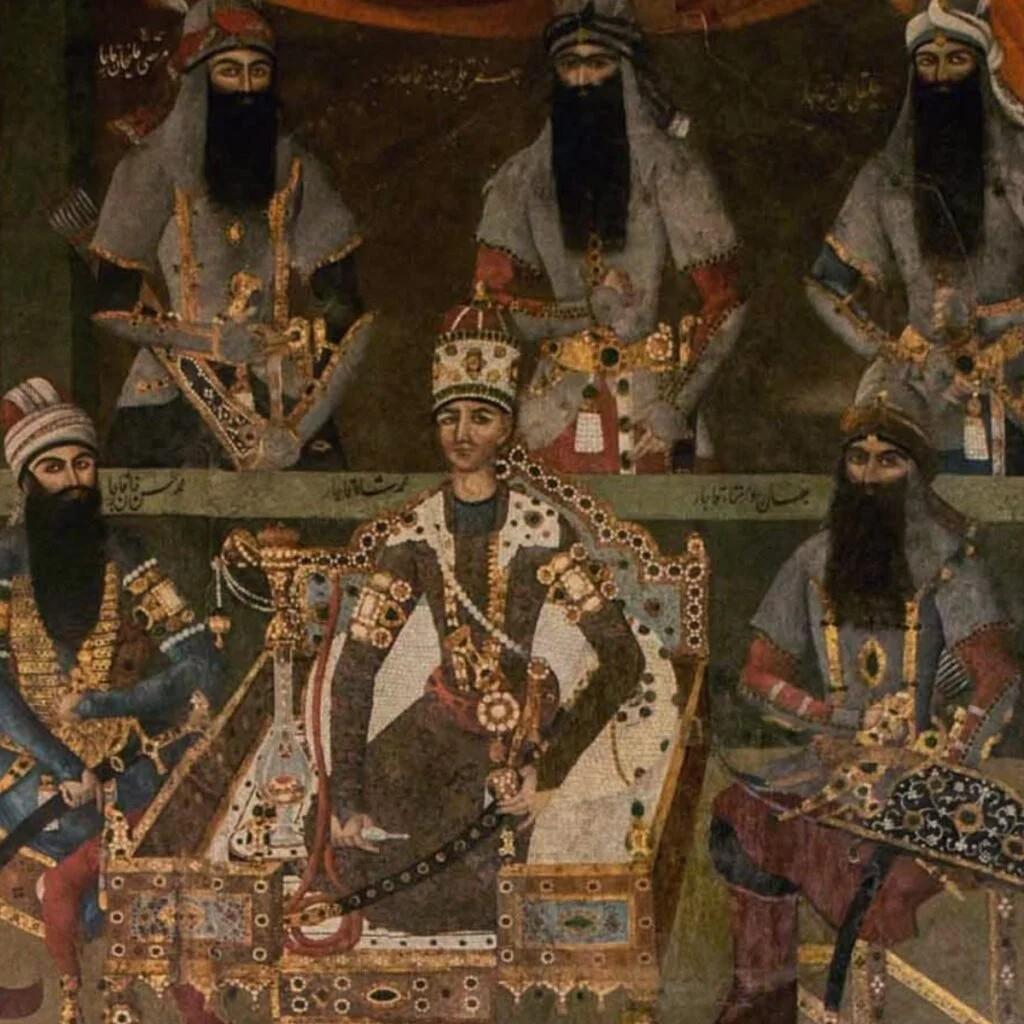
A comparison of constitutional movements clearly illustrates how vastly different the driving forces behind seemingly similar social and political events were in contemporary Persia and the Ottoman Empire. In the run-up to the Iranian constitutional revolution that began in 1905, Shah Naser al-Din (1848–1896) introduced numerous reforms in the country. Among other things, he is credited with establishing the postal service, opening the first university (Darülfünun, دارالفنون) in 1851, and organizing Cossack units within the army modeled after the Russian Cossacks.
Mirza Taghi Khan Amir Kabir (1807–1852), who, partly influenced by his studies in Russia and the Tanzimat, later sought to promote the modernization of the Iranian state as sadrazam, or prime minister (1848–1852).[9] In 1855, the Persian ruler signed a trade agreement with France and – first in 1873 and later on several occasions, including a stop in Budapest – undertook a tour of Europe.[10]
During his final trip to Europe, the Shah also met in person with Ármin Vámbéry, with whom he had ample time to exchange views during his three-day stay in Hungary.
In connection with his meeting with the Shah in Budapest, Vámbéry also touched upon a comparison of the modernization efforts of the Turkish and Persian states, emphasizing that while the Ottomans viewed the future of their state positively – primarily through Pan-Islamism – “all of the Qajar’s efforts were limited to the prosperity of his dynasty, or more accurately, his own person.”[11] Vámbéry’s contemporary view is somewhat nuanced by the fact that, according to some authors, a portion of the Iranian reformists also viewed the pan-Islamist policy pursued by Ottoman Sultan Abdul-Hamid II positively and supported Shiite-Sunni reconciliation and cooperation. However, since Ottoman forces occupied several border areas when the constitutional revolution broke out in 1905, the prestige of the sultan and the Young Turks declined significantly in the eyes of the reformists in their Eastern neighborhood.[12]
[1] Metin, Celil, Emperyalist Çağda Modernleşme. Türk Modernleşmesi ve İran (1800–1941). Ankara, 2011, 62.
[2] Kashani-Sabet, Firoozeh, Sınır Kurguları, İran Ulusunun Şekillenmesi (1804-1946). İstanbul Bilgi Üniversitesi Yayınları, İstanbul, 2018, 32–34.
[3] Metin, Ibid., 99.
[4]. Raheb Mohammadi Ghanbarlou, İran’da Anayasalcı Hareket ve Siyasal Modernlik İlişkisi. In: 2018, UDEF 4. Uluslararası Öğrencilik Sempozyumu Bildirileri Kitabı, 133.
[5] Sarıkaya, Yalçın, Tarihi ve Jeopolitik Boyutlarıyla İran’da Milliyetçilik. Ötüken Neşriyat A.Ş., İstanbul, 2008, 60.
[6] Türkislamoğlu, Elif, Rıza Pehlevi Döneminde İran’da Modernleşme Hareketi ve bu Harekette Türk Devriminin İzleri. In: Atatürk Yolu Dergisi, 71 (2022), 324.
[7] Sohrabi, Nader, Historicizing Revolutions, Constitutional Revolutions in the Ottoman Empire, Iran, and Russia. 1905–1908. In: American Journal of Sociology. Vol. 100, No 6, 1995, 1394.
[8] Demirci, Sibel, Türk Siyasi ve Düşünde Hayatında Rusya Türkleri (1945–1960). İstanbul, 2020, 26–27.
[9] Metin, Ibid., 112.
[10] Zeynel Özlü – İsmail Hakkı Üzüm, İran’ın Modernleşme Sürecinde Nâsırüddin Şah’ın Avrupa’ya İlkSeyahati İle İlgili Bulgular. In: Modern İran Tarihi Kaçar Handedanı’ndan İslam Devrimi’ne. Ed. by Osman Karacan, İstanbul, 2021, 123–124.
[11] Vámbéry Ármin, Küzdelmeim. Dunaszerdahely, 2001, 364.
[12] Çağlayan, Selin, Şii Düşüncesinde İslamcılık: İran. Mehdi’ye Beklerken. Cinius Yayınları, İstanbul, 2012, 68.
Author: Péter Kövecsi-Oláh, advisor - LCTS, LUPS
Image source: https://thelionandthesun.org/422/from-ashes-to-empire-how-the-qajar-dynasty-came-to-rule-iran/