Three Years After the Earthquake in Türkiye
Three Years After the Earthquake in Türkiye
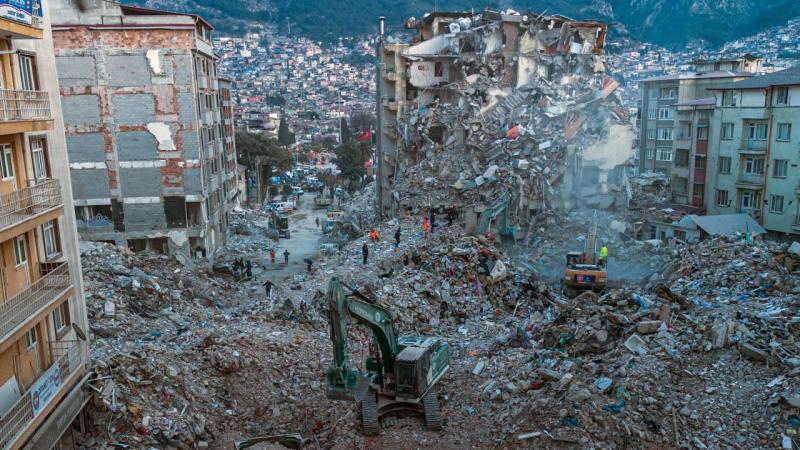
On February 6, 2023, two major earthquakes centered in Kahramanmaraş occured. Tens of thousands of people lost their lives, and hundreds of thousands were left homeless. Despite the three years that have passed, the housing crisis remained partly unresolved.
Early on the morning of that day in 2023, two major earthquakes with their epicenters in Kahramanmaraş struck. The first earthquake, measuring 7.7 on the Richter scale, occurred in the Pazarcık district of the region. Approximately nine hours later, at 1:24 p.m., the second earthquake, measuring 7.6 on the Richter scale, struck with its epicenter in Elbistan. The earthquake affected the cities of Adana, Kahramanmaraş, Adıyaman, Diyarbakır, Hatay, Osmaniye, Gaziantep, Kilis, Malatya and Şanlıurfa.
The earthquake, which affected an area home to 13.5 million people, claimed the lives of at least 53,537 people in Turkey and at least 8,476 in Syria. In Turkey, at least 107,213 people were injured – bringing the total number of injured to over 122,000 – and hundreds of thousands were left homeless. From economic point of view, the total amount of damages is approximately 148 billion US dollars, which is around six times bigger than the country had to suffer after the earthquake of 1999.
However in the end of March, 2023, the government promised to build 650,000 new homes, the constructions have not been finished yet.
In the first year following the earthquake, only 2.7% of the promised housing units were delivered, while the construction rate remained at 31% in the second year. According to official data released in the third year since the earthquake, a total of 455,000 homes and commercial spaces were completed in the earthquake affected region by the end of last year.
Nowadays, approximately 360,000 people are living in a total of 126,000 containers across 242 container cities in the 10 provinces affected by the earthquake. Comparing this amount with the 2 million people who had to live in such circumstances right after the tragedy, we can say, that more than 80% of earthquake survivers have been solved. From this perspective, this phenomena can be considered as a step forward for those families, who were spending their third year in 21 square meter containers are facing persistent housing issues such as cramped living spaces, poor insulation, and a lack of privacy.
From legal point of view, there are still ongoing investigations as 2,310 investigations and 1,491 prosecutions have been initiated against the possible responsibles. As part of the investigations process, 248 people were arrested, while 1,036 were released on judicial supervision. In the cases that have been resolved, 118 people have so far been sentenced to various prison terms.
The harshest sentence was handed down to Hasan Alpargün, the contractor of the Alpargün Apartment Building in Adana, where 96 people lost their lives. Alpargün was sentenced to 62 life sentences and 865 years in prison for the crime of “causing the death and injury of multiple people with probable intent.” In other cases where contractors were tried, sentences generally ranged from 8 to 21 years.
At a time when the housing crisis is deepening in general, earthquake victims are once again being subjected to a new injustice through the “reserve area” policy. With amendments made in 2023 to Law No. 6306 on Urban Transformation, which came into effect in 2012, the way was paved for not only high-risk areas but also existing residential areas to be designated as reserve areas. The first major implementation following this amendment began with the designation of a 270 hectare area in the Antakya and Defne districts of Hatay – which suffered the most severe destruction in the February 6 earthquakes – as a reserve area.
According to official data, high-risk zones, urban transformation and development project areas, and renewal areas have been designated in dozens of provinces; additionally, a total of 60,000 hectares of reserve construction areas have been identified in 70 provinces for use as new settlement areas.
In connection with everyday life – still focusing on Hatay – employment data shows a recovery in the post-earthquake period. However, while employment in the construction sector rose rapidly, the number of workers in agriculture and industry declined. Furthermore, the fact that a significant portion of the employment created in construction relies on temporary labor from outside the province has limited the extent to which this increase translates into sustainable income and improved well-being for the people of Hatay.
Although per capita income indicators appear to have risen in the post-earthquake period, this increase largely stems from a statistical effect caused by population decline and monetary expansion. During the same period, the TR63 region, which includes Hatay, became one of the regions in Turkey where the cost of living rose the fastest. The housing crisis, rising prices, and lost savings have severely eroded household purchasing power.
All in all, we can say, that three years after the biggest earthquake happened in the modern history of Türkiye, the reconstruction continues, but the future of the effected region is still vulnerable.
Author: Péter Kövecsi-Oláh, advisor - LCTS, LUPS
Image source: TRT Haber