Türkiye’s Indian Ocean Footprint: Türkiye’s Somalia Strategy and Its Implications for Turkic Cooperation
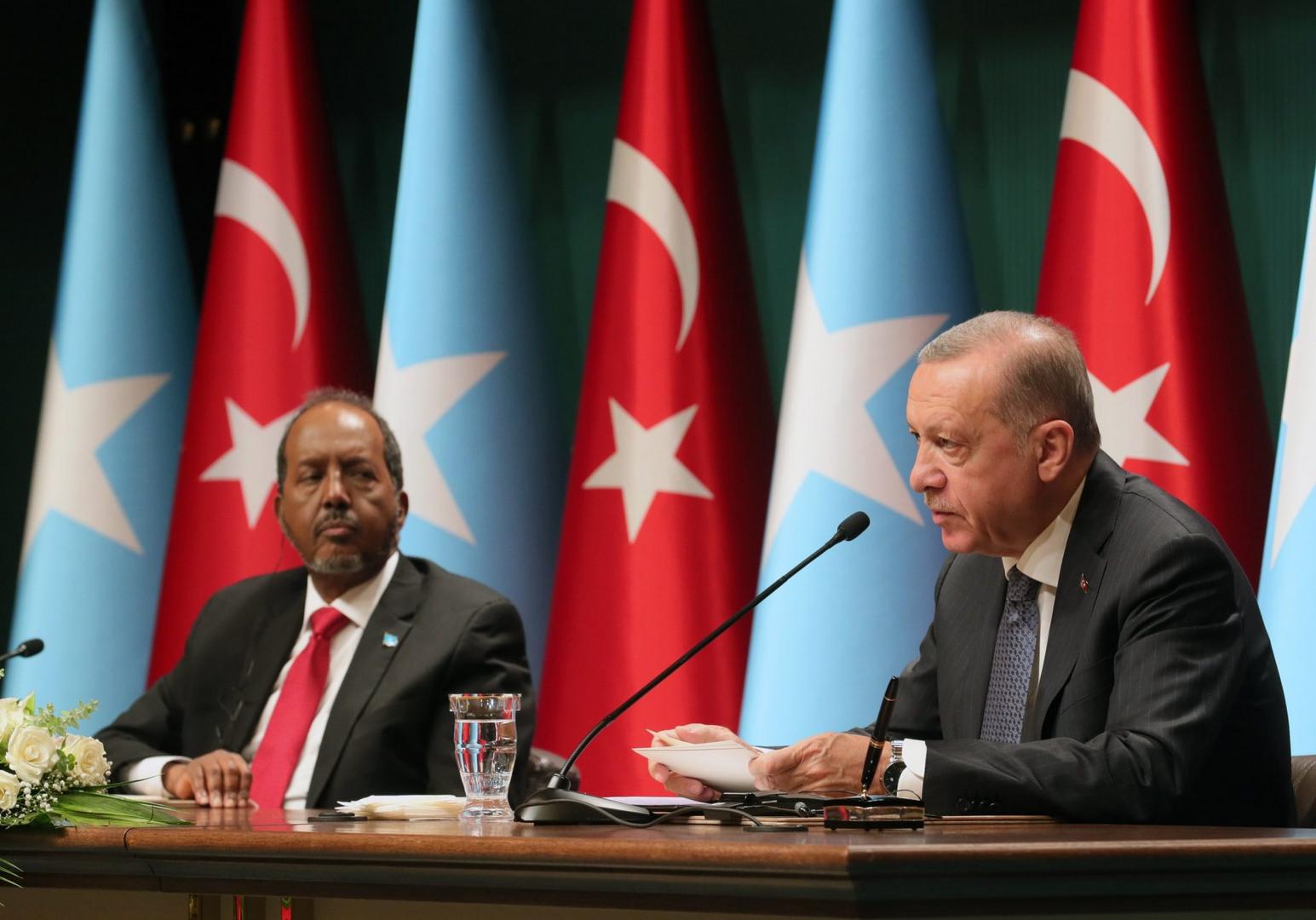
Indian Ocean Pivot of Türkiye through Somalia
The re-emergence of Türkiye as an Indian Ocean player has not been through the time-tested chokepoints such as the Strait of Hormuz or the Malacca Strait but through a mangled coastal state that is generally regarded as peripheral Somalia. What started as a rather unusual humanitarian involvement in 2011 has become the biggest foreign military base of Ankara and a 10-year-long naval and energy alliance. This Somali turn now poses a strategic challenge to the wider Turkic world, is Türkiye opening a common blue frontier, or is it simply selling a national Blue Homeland in Turkic wrappings?
Humanitarian Engagement to Hard Security
Within the last ten and a half years, Türkiye has made massive investments in the state-building of Somalia as it constructs its infrastructure, its largest African embassy, and its largest foreign military base, Camp TURKSOM, in Mogadishu, where thousands of Somali soldiers and officers will be trained. The symbolism has been two sided. Türkiye meant a lot to most Somalis as a non-colonial, and Muslim ally who was ready to share risks on the ground rather than write cheques back in the foreign country. In the case of Ankara, Somalia was a gateway to Africa and the Indian Ocean - a location where development rhetoric and hard security interests can be combined. [1]
It is now beyond any mistaking that fusion
In 2024, Türkiye and Somalia agreed on an extensive defense and economic partnership: the Somali navy will be rebuilt and trained by Ankara, which will play a significant role in the protection of the territorial waters of Somalia in return, allegedly, a 30 percent share of the income of the Exclusive Economic Zone of Somalia. Turkish state energy firms will explore offshore oil and gas. This has been presented as a win-win on paper: Somali sovereignty is safeguarded, illegal fishing is discouraged, piracy is kept under control and long-overlooked resources are finally monetized. In theory, it locates Türkiye militarily, economically and symbolically at the western edge of the Indian Ocean. [2]
Opportunities and threats to Ankara
The rationale is obvious to a Turkish. It will also be decades before global trade, energy flows and maritime security will be a contested area in the Indian Ocean. To be more than a regional power confined within the rift of the Eastern Mediterranean, Ankara will need blue-water experience, logistics, and partners. Somalia offers the three at relatively cheap monetary price and high levels of diplomatic payoff. It also bolsters the Turkish story of standing in defense of fragile Muslim communities to terrorism and foreign intrusion, be it on the hands of al-Shabab or foreign actions on the shores of Somaliland. Making this picture more difficult is that Israel is increasingly involved in Somaliland, even de facto actions towards recognition and even interest in Berbera as a Red SeaGulf of Aden base. To Ankara, which supports an extreme policy of One Somalia and has placed political capital in resolving the feud between Mogadishu and Addis Ababa over the Ethiopia-Somaliland port arrangement, an Israeli-Somaliland alliance would escalate regional polarities. It maps the Gaza war and the pro-Palestinian policy of Somalia onto the Horn of Africa and makes ports and bases projections of global Middle Eastern animosity. In case Türkiye is viewed as nothing more than a competitor of Israel in a zero-sum game over the Somali and Somaliland beaches, then its Somali relationship will be re-framed as yet another proxy battle. The trick that Ankara will face is to take this opportunity and emphasize on its role of supporting Somali territorial integrity and inclusive regional diplomacy, instead of entering an open competition that will further destabilize the already shaky coastline.
What Is at Stake of the Turkic World?
And that is the reason why the Somali strategy of Türkiye is important to Turkic cooperation. To date, the Organization of Turkic States (OTS) remains largely a continental undertaking: linking Central Asia to Caucasus and Anatolia in terms of transport networks, interconnectors and cultural programs. Somalia is something of qualitative novelty in the sense of a Turkic opening onto the Indian Ocean that is not geographically Turkic, but is politically and strategically connected with Ankara. When appropriately exploited, it may expand the OTS framework beyond overland connectivity to maritime involvement, climate-resilient ports, and Indian Ocean trade pathways wherein the Turkic economies overall have a great deal to receive. But there are actual threats when this turns into a factual Turkish unilateral action under the Turkic color. First, the economic conditions of the maritime agreement such as sharing of the revenue of the blue economy of Somalia will be examined keenly in Africa. Unless the construction appears extortionate, obscured, or biased toward Turkish defense and energy corporations, it will not augur well with the long-developed perception of Ankara as a partner, but not a patron. A Turkic model of pure enhancement of Turkish corporate interests by a non-observable agency of Somalia is likely to be perceived as a new version of dependency, rather than solidarity. Second, it is not a blank stage in Somalia. Emirati, Qatar, Chinese, American and European actors already have a presence in the Horn of Africa, and the wider Indian Ocean, each having bases, port concessions or naval deployments. The increased involvement of Türkiye is bound to overlap with these networks. Other Turkic capitals could be reluctant in case the Turkic cooperation seems to be aligning with Ankara in regional conflicts, either with some members of the Gulf, or, indirectly with Indian own Indian Ocean interests. Kazakhstan or Uzbekistan are not interested in being dragged into Horn -of-Africa conflicts or sea conflicts that they have nothing to control but might be diplomatically punished. Third, exists the issue of the internal balance of Somalia. The interest in the central government of Mogadishu and the TURKSON-trained forces already caused the alarm in such parts of the country as Puntland and Somaliland. A fleet and an army constructed largely by one foreign ally may be turned into an instrument of internal politics as much as an antiterrorist or antipiracy weapon.
Inference: Desire, Discipline, and a common Ground
The presence of Türkiye in Somalia is already real. Now the question is whether it is the basis of a greater Turkic presence in the ocean which is respected in Africa or a small-scale demonstration of power projection, being balanced against in silence by others. It will also hinge not so much on the Turkish war vessels off Mogadishu but on the attitudes of Ankara and its Turkish allies to Somali sovereignty, regional sensibilities, and international standards. Provided that the Indian Ocean is to become the new horizon of the Turkic world, then it must be there that Turkic cooperation will be taught to walk the fine line between ambition and restraint.
References
[1] https://www.voanews.com/a/turkey-opens-largest-foreign-military-base-in-mogadishu/4051001.html
Dávid Biró, Senior Advisor, Research and Academic Network Lead of the Ludovika Center for Turkic Studies
Image source: yetkinreport.com