Turkmenistan: The Risks of Having Only One Customer
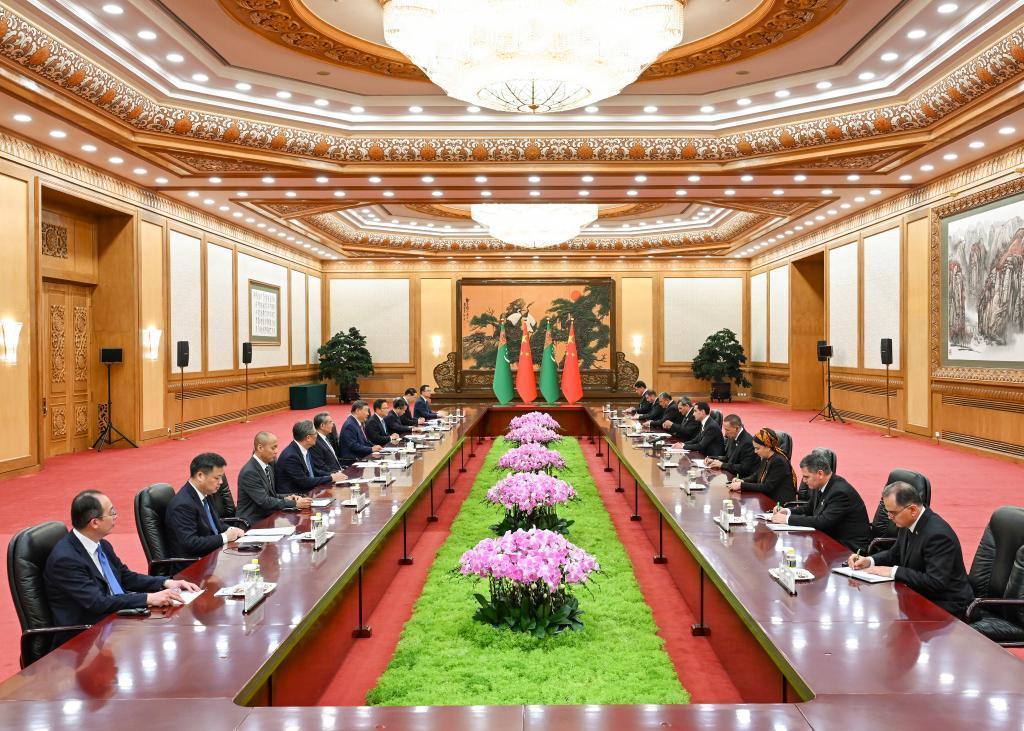
Turkmenistan: The Risks of Having Only One Customer
Among Central Asia's five republics, Turkmenistan is perhaps the most enigmatic. It possesses the world's fourth-largest proven natural gas reserves, follows a policy of permanent neutrality recognized by the United Nations, and remains one of the most politically isolated countries in the world. Yet despite this isolation, Turkmenistan has become indispensable to one global power: China.
Few bilateral relationships illustrate Beijing's growing influence in Central Asia more clearly than the energy partnership between China and Turkmenistan. What began as a pragmatic commercial relationship has gradually evolved into a strategic dependency – one that offers substantial economic benefits while simultaneously limiting Ashgabat's room for maneuver. Turkmenistan's challenge is no longer finding buyers for its gas. It is avoiding becoming dependent on just one. Unlike Kazakhstan or Uzbekistan, Turkmenistan's economy lacks meaningful diversification. Hydrocarbon exports dominate state revenues, government spending and foreign trade. While successive governments have spoken of industrial modernization and economic diversification, natural gas continues to define the country's economic model. This is precisely where China enters the picture.
Following Turkmenistan's independence in 1991, Beijing quickly recognized the country's enormous strategic potential. Diplomatic relations were established almost immediately, but cooperation accelerated dramatically after the late 2000s, when China sought to diversify its energy imports away from vulnerable maritime routes. The result was one of the most important energy infrastructure projects of the twenty-first century: the Central Asia–China Gas Pipeline. Stretching thousands of kilometers from Turkmenistan through Uzbekistan and Kazakhstan before reaching China's Xinjiang Uyghur Autonomous Region, the pipeline fundamentally altered Eurasia's energy geography. For the first time, Turkmen gas could flow eastward in significant quantities without passing through Russian-controlled infrastructure. For Beijing, this represented an enormous strategic achievement.
For decades, China's energy security had been heavily dependent on maritime transport through chokepoints such as the Strait of Malacca. Pipeline imports from Central Asia reduced this vulnerability while strengthening China's political and economic presence across the region. For Turkmenistan, however, the implications were more complex. On the one hand, Chinese demand created a stable export market capable of absorbing enormous volumes of natural gas. Chinese financing also enabled major upstream investments that Turkmenistan would have struggled to undertake independently. Also, dependence gradually shifted from transit routes to customers. Today, China purchases the overwhelming majority of Turkmenistan's gas exports. This concentration gives Beijing considerable leverage, not necessarily through overt political pressure but simply through market power. When one customer accounts for most export revenues, pricing negotiations become inherently asymmetrical. This dependence is often overlooked because it differs from traditional geopolitical influence. China has generally avoided the coercive rhetoric or military presence associated with great-power competition elsewhere. Instead, Beijing's influence is exercised through long-term contracts, infrastructure financing, development loans and commercial integration.
In Turkmenistan's case, economics has become geopolitics. The Belt and Road Initiative further reinforced this dynamic. Turkmenistan occupies an important position within the China–Central Asia–West Asia Economic Corridor, linking Chinese markets to Iran, the Middle East and eventually Europe. Officially, both governments describe this relationship as one of "comprehensive strategic partnership," emphasizing mutual development and connectivity. There is considerable truth in that characterization.
Chinese investment has supported transport infrastructure, cross-border connectivity and energy development. New railway links connecting Kazakhstan, Turkmenistan and Iran have strengthened regional trade while expanding export options beyond traditional Soviet-era routes. Yet infrastructure alone cannot eliminate structural dependence. Perhaps the greatest irony of Turkmenistan's energy policy is that a country endowed with extraordinary natural wealth enjoys relatively limited commercial flexibility. Gas reserves may be enormous, but export infrastructure ultimately determines market access. This explains why diversification has become the central challenge facing Ashgabat. For years, policymakers have promoted alternative export routes.
The long-discussed Turkmenistan–Afghanistan–Pakistan–India (TAPI) pipeline promised access to South Asian markets and reduced dependence on China. However, decades of instability in Afghanistan, financing uncertainties and persistent security concerns have repeatedly delayed the project. Similarly, greater exports toward Europe have frequently been discussed but remain constrained by political disagreements, infrastructure limitations and unresolved questions surrounding Caspian Sea connectivity. As a result, China remains the overwhelmingly dominant buyer. This dependence should not necessarily be interpreted as evidence of Chinese exploitation.
From Beijing's perspective, Turkmenistan is simply an essential component of a broader energy security strategy. Chinese policymakers prioritize supply reliability above all else, and Turkmenistan has consistently demonstrated its willingness to fulfill long-term contracts. The relationship therefore reflects converging interests rather than overt coercion. Nevertheless, structural asymmetry remains unavoidable. When export revenues depend heavily upon a single external market, domestic economic resilience inevitably becomes linked to foreign demand. Any significant reduction in Chinese imports, or changes in pricing would have immediate consequences for Turkmenistan's fiscal stability. This vulnerability extends beyond economics. Energy partnerships inevitably influence foreign policy calculations. Although Turkmenistan officially maintains strict neutrality, its strategic choices increasingly take place within an environment where Chinese economic interests carry growing weight.
Importantly, this does not mean Ashgabat has abandoned its independent foreign policy.
Turkmenistan continues to pursue relations with Türkiye, the Gulf states, Russia, Iran and, increasingly, the European Union. However, none of these partnerships currently approaches the scale of China's economic importance. This imbalance defines Turkmenistan's geopolitical dilemma. Unlike Kazakhstan, which balances multiple major investors, or Uzbekistan, which actively diversifies its partnerships, Turkmenistan possesses fewer realistic alternatives. Its geographic position offers opportunities. Its export structure imposes constraints. China understands this reality remarkably well.
Unlike many Western governments, Beijing rarely links economic cooperation to governance reforms or political liberalization. This makes China an attractive partner for governments prioritizing sovereignty and regime stability. Turkmenistan's highly centralized political system therefore fits comfortably within Beijing's broader diplomatic approach of non-interference.
At the same time, China's own interests are straightforward. Reliable gas supplies. Secure infrastructure. Regional stability. Everything else is secondary. Looking ahead, Turkmenistan's greatest challenge will not be producing more gas. It will be creating more options. Diversification does not require abandoning China. On the contrary, Beijing will almost certainly remain Turkmenistan's principal energy partner for decades to come. But genuine strategic autonomy requires alternatives. Additional export corridors, broader industrial development and deeper engagement with multiple international partners would provide greater resilience against future geopolitical or economic shocks. This lesson extends far beyond Turkmenistan.
Across Eurasia, infrastructure is reshaping geopolitical relationships. Pipelines, railways and ports increasingly determine patterns of influence just as much as military alliances once did. Turkmenistan demonstrates both the opportunities and the risks of this transformation. Natural resources can generate extraordinary wealth. But when almost every pipeline points toward the same customer, geography gradually gives way to dependence. And in international politics, dependence is rarely just an economic concept, it is a strategic one.
Author: Blanka Benkő-Kovács, advisor - LCTS, LUPS
Image source: chinamil.com