Uzbekistan: The New Center of Gravity in Central Asia
Uzbekistan: The New Center of Gravity in Central Asia
For decades, Kazakhstan has dominated discussions about Central Asia. Its vast territory, abundant natural resources and strategic location have made it the region's most recognizable state. Yet while much of the world's attention remained fixed on Kazakhstan's oil fields, another country quietly began transforming itself. Increasingly, the future political and economic center of gravity of Central Asia may lie several hundred kilometers to the south – in Uzbekistan. Unlike Kazakhstan, Uzbekistan's greatest strategic asset is not energy. It is people.
Home to more than 37 million citizens—roughly half of Central Asia's total population – Uzbekistan possesses the demographic weight that none of its neighbors can match. Combined with an ambitious reform agenda, growing industrial capacity and an increasingly proactive foreign policy, this demographic advantage is gradually reshaping the regional balance.
This transformation is relatively recent. For much of the post-Soviet era, Uzbekistan pursued a cautious and inward-looking foreign policy under President Islam Karimov. The country remained skeptical of regional integration, tightly controlled foreign investment and often preferred political stability over economic openness. While this approach maintained state control, it also limited Uzbekistan's economic potential and regional influence. Everything changed after 2016.
Following the election of President Shavkat Mirziyoyev, Uzbekistan embarked on one of the most ambitious reform programs in the post-Soviet space. Currency liberalization, investment reforms, trade facilitation, administrative modernization and a significantly more active diplomacy transformed the country's international image almost overnight. Today, Uzbekistan is no longer merely participating in regional affairs, it is increasingly shaping them.
China quickly recognized this shift. Although Uzbekistan formally joined the Belt and Road Initiative (BRI) in 2015, bilateral cooperation expanded considerably under Mirziyoyev's leadership. Beijing saw an opportunity not only to strengthen economic ties but also to integrate Uzbekistan more deeply into its continental connectivity strategy. Unlike Kazakhstan, whose relationship with China revolves primarily around hydrocarbons, Uzbekistan's cooperation with Beijing is far more diversified.
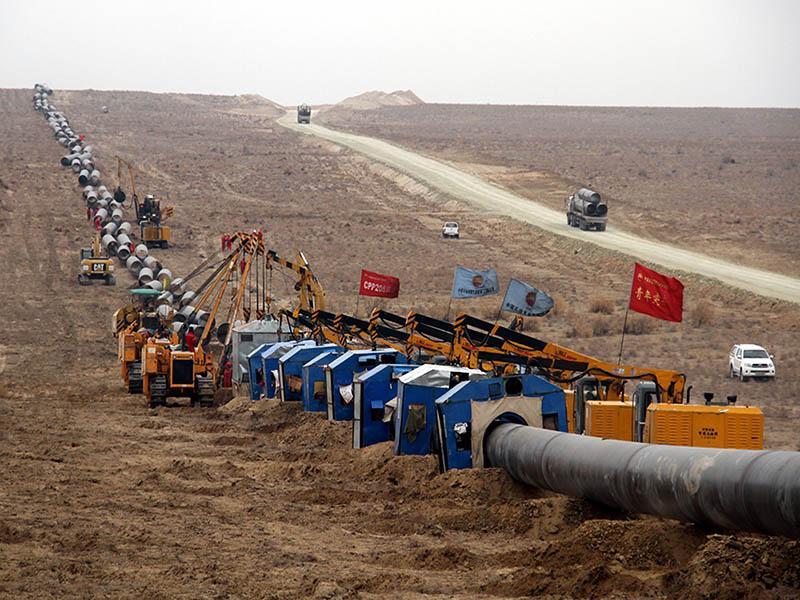
Energy remains important, particularly through the Central Asia–China gas pipeline, but Chinese investment now extends well beyond fossil fuels. Telecommunications, renewable energy, industrial manufacturing, construction materials, agriculture and digital infrastructure have all become pillars of bilateral cooperation. Chinese companies have financed industrial parks, logistics centers and manufacturing facilities, reflecting Uzbekistan's broader ambition to move up global value chains rather than remain simply an exporter of raw materials.
Perhaps no project better illustrates Uzbekistan's strategic ambitions than the long-awaited China–Kyrgyzstan–Uzbekistan (CKU) railway. For years dismissed as an unrealistic geopolitical dream, the railway has gradually become one of the most consequential infrastructure projects in Eurasia. Once completed, it will shorten transport routes between western China and Europe while reducing dependence on northern corridors passing through Russia. For Uzbekistan, however, the railway represents something even more significant. As a double landlocked country – the only one in Central Asia surrounded exclusively by other landlocked states – Uzbekistan has long faced structural disadvantages in international trade. Geography has historically increased transportation costs, reduced export competitiveness and limited access to global markets.
The CKU railway promises to change that equation. By improving access to Chinese markets while strengthening connections toward the Caspian region, Türkiye and Europe, Uzbekistan seeks to transform geography from a constraint into a competitive advantage. Connectivity, in other words, has become a development strategy rather than simply a transportation policy. This reflects a broader shift in Tashkent's foreign policy. Unlike many analyses that frame Central Asia as an arena of competition between Russia and China, Uzbekistan increasingly pursues a far more diversified approach. Relations with Beijing have undoubtedly expanded, yet so too have partnerships with the European Union, Türkiye, South Korea, Japan and the Gulf states.
The European Union has intensified cooperation on critical raw materials, green energy and transport corridors. Gulf investors are financing renewable energy projects and urban development. South Korean companies remain deeply involved in manufacturing and technology. Türkiye has strengthened economic and cultural ties while supporting transport connectivity across the Turkic world.
Rather than choosing between competing powers, Uzbekistan seeks to benefit from all of them. This balancing strategy has become one of the defining characteristics of Central Asian diplomacy. It also explains why simplistic narratives about Chinese dominance often fail to capture the region's political realities. Chinese investment is certainly substantial, but it exists within an increasingly crowded geopolitical landscape where multiple external actors compete for influence. Nevertheless, China's role should not be underestimated. Beijing has become Uzbekistan's largest bilateral creditor, accounting for a significant share of the country's external debt. While Chinese financing has accelerated infrastructure development, it has also generated understandable concerns regarding long-term financial sustainability.
These concerns are neither unique to Uzbekistan nor necessarily evidence of so-called "debt-trap diplomacy." The reality is considerably more nuanced. Infrastructure projects require capital that many developing economies cannot generate domestically. Chinese policy banks often provide financing faster and with fewer political conditions than Western institutions. This explains why governments throughout Central Asia continue to welcome Chinese investment despite growing public debate over dependence and transparency. For Uzbekistan, the challenge is therefore not whether to cooperate with China but how to do so without limiting future policy autonomy. Fortunately, Tashkent appears increasingly aware of this balance. The country's reform agenda extends beyond attracting foreign capital. Significant emphasis has been placed on improving governance, strengthening regional cooperation and encouraging private-sector development. Uzbekistan's leadership understands that infrastructure alone cannot generate sustainable economic transformation. Institutions, education, industrial upgrading and innovation ultimately matter just as much as highways and railways.
This broader vision distinguishes Uzbekistan from several of its regional neighbors. Another important dimension of China's engagement concerns technology. Chinese firms have expanded their presence in telecommunications, digital infrastructure and renewable energy. At the same time, Uzbekistan continues to engage with European, Japanese and South Korean technology providers, reducing the likelihood that any single actor will dominate future digital development. This diversification reflects an increasingly sophisticated understanding of economic security. Perhaps the greatest misconception surrounding Uzbekistan is that it remains merely another post-Soviet republic adapting to external pressures. In reality, the country is becoming one of the principal architects of a new Central Asia. Its growing diplomatic activism has improved relations with neighboring states, reduced long-standing regional tensions and revitalized discussions on water management, transport connectivity and economic integration. Rather than competing with its neighbors for regional leadership, Tashkent increasingly presents itself as a facilitator of cooperation.
This matters because Central Asia itself is changing. The region is gradually evolving from a geopolitical buffer zone into a strategic connector linking Europe, Asia and the Middle East. In such an environment, demographic dynamism, economic diversification and diplomatic flexibility may prove more valuable than natural resources alone. China clearly understands this reality. The question is whether the rest of the world does. Much international attention remains focused on Kazakhstan's energy exports or Turkmenistan's gas reserves. Yet the country's most likely long-term partner in shaping Central Asia's political and economic future may well be Uzbekistan. Its population is young, its economy is diversifying, its diplomacy is becoming increasingly confident and its regional ambitions are unmistakable. The future of Central Asia will not be determined solely by pipelines or railways. It will be determined by which country succeeds in transforming connectivity into sustainable development while preserving strategic autonomy in an increasingly competitive geopolitical environment. At present, Uzbekistan appears determined to become that country.
Author: Blanka Benkő-Kovács, advisor - LCTS, LUPS
Image source: russian.china.org