Why Meloni’s Baku Visit Matters for Europe
Why Meloni’s Baku Visit Matters for Europe
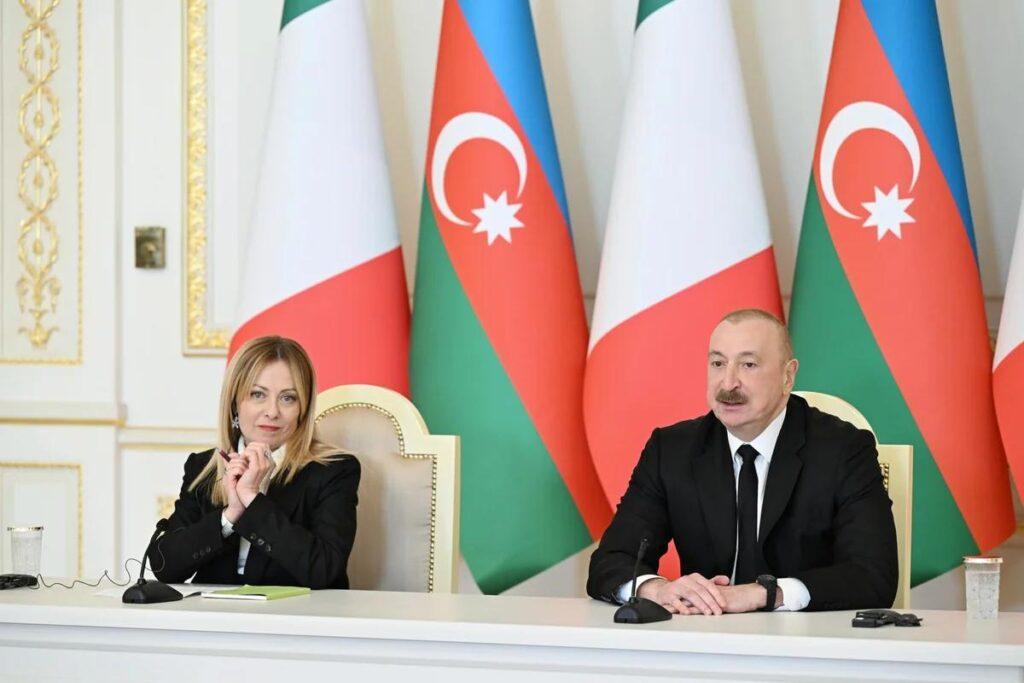
Giorgia Meloni's visit to Baku on 4 May was no ordinary diplomatic visit. It was a reminder that Azerbaijan is now much nearer the heart of Europe's energy and geopolitical map than many in Brussels are willing to believe and that Italy wants to influence the European Union's response to that fact.
Azerbaijan’s Strategic Weight
Azerbaijan is significant in terms of energy but not limited to that. It is one of the few non-Russian suppliers that can transport significant quantities of natural gas directly to the EU market via an existing pipeline network, especially through the Southern Gas Corridor and the Trans Adriatic Pipeline (TAP).[1]
Real leverage Baku has is that existing infrastructure. In his speech during Meloni's visit, Azerbaijan's President, Ilham Aliyev, said that Azerbaijan has exported 25 billion cubic metres of natural gas in the past year, with 9.5 billion cubic metres being shipped to Italy alone. Since commercial use started, TAP has supplied 47.5 billion cubic metres of gas to Italy, meeting some 16 percent of the country's gas demand in 2025 and around 25 percent of its gas pipeline imports excluding LNG.[2] Not only is this a symbolic relationship, however, Bloomberg pointed out that Azerbaijan's gas and oil imports into Italy accounted for 16 percent and 17 percent respectively of the country's gas and oil imports.[3]
This is why Azerbaijan is important off the page of South Caucasus. In an era when the European Union is still working to lessen its reliance on Russian energy supplies and dealing with the uncertainty in the Middle East, Baku is an unusual place which has volumes, diversification of routes and an already operational corridor into Europe. This is not to say Azerbaijan is indispensable in every aspect but it is certainly more important to the EU than it is to be imagined.
Italy’s Energy Diplomacy
During Meloni's visit to Baku, it also emerged that Italy is not satisfied to remain merely a customer. Rome is striving to become the main political European partner of Azerbaijan and the primary source of access to the European market for Caspian energy. In the course of the visit, Meloni expressed her desire to Azerbaijan to play a more active part in developing its energy potential as a bridge between Europe and Asia, Italy being “the privileged gateway to the European market.” [4]
That language is important because it is a reflection of a wider Italian strategy. Italy has been shifting its gas supplies away from Russia since the beginning of the full-scale invasion of Ukraine and Azerbaijani gas is one of the cornerstones of this transition. Azeri oil and gas are “crucial” or “decisive” for Italy's energy security, Meloni said, and she promised to significantly expand the partnership. Rome is not only interested in the short-term supply. In early 2026, it was reported that Italy had expressed their desire to develop the Southern Gas Corridor if the economic and financial considerations would allow. This indicates that Italy's intentions with Baku are not just to serve as a safety valve in case of emergency, but to secure a central role in the post-Russian European energy balance. [5]
The EU Dilemma
Meloni's visit to the EU is a stark reminder of a not-so-gleaming truth for the bloc. The bloc desires security in energy supply, reduced strategic vulnerability, and diversification of energy supply, while it simultaneously desires a foreign policy based on norms, conditionality and political prudence. In the case of partners like Azerbaijan, such goals may not fit together. [6]
The "how" of cooperation is stronger than the "why. Azerbaijan is already connected to the European energy market and TAP is not a theoretical project but an existing “vital artery” that can be extended further. When the world is facing the fragility of its energy routes during all the wars, sanctions and instability in the region, that's what makes Azerbaijan a useful tool for Europe.
However, there is also a strategic danger if Brussels approaches the relationship as just a transaction. The EU might become more dependent without being more coherent, if individual member states create more comprehensive frameworks to deepen their ties with Baku but the EU itself does not. In that case, Italy would have influence, Azerbaijan would have leverage, and Brussels would see once again how markets beat strategy.
A Test for Europe
The larger purpose of Meloni's trip is that. It wasn't just about finding additional volumes of gas-or it was-but it was also about who will be in charge of shaping Europe's thinking on the South Caucasus, energy corridors and the political economy of diversification. Italy is trying to play a part in it by making bilateral energy diplomacy a European issue.
A sound EU policy should be based on reality not rhetoric. Azerbaijan has emerged as one of the key energy partners for parts of Europe, particularly and significantly for Italy, and one of the few real achievements in Europe's diversification policy has been the Southern Gas Corridor. The question for Brussels is not if it's going to engage Baku, it is how. Does it invest, does it plan infrastructure, does it coordinate politics, and are all those elements in sync with the importance that Europe assigns to energy resilience? [7]
That's the message Meloni got in Baku. Her visit showed that the future of European foreign policy will not be decided in Brussels, Berlin or Paris – on pipelines, ports and transit corridors. Azeri energy supplies, Azeri connectivity, and Azeri manipulation of Europe's room for manoeuvre are reasons enough for the importance of Azerbaijan in this emerging map, but Italy is trying to make it count to become the leader of Europe.
References
[1] https://www.euronews.com/business/2026/04/17/rome-and-caucasus-poised-to-further-discuss-closer-energy-ties
[2] https://www.euronews.com/business/2026/04/17/rome-and-caucasus-poised-to-further-discuss-closer-energy-ties
[3] https://www.bloomberg.com/news/articles/2026-05-04/italy-s-meloni-vows-closer-ties-with-azerbaijan-in-energy-push?embedded-checkout=true
[4] https://caliber.az/en/post/pm-italy-aims-to-consolidate-cooperation-on-energy-security-with-azerbaijan
[5] https://www.aceconsultants.az/en/news/5112.html
[6] https://ec.europa.eu/commission/presscorner/detail/da/statement_22_4583
[7] https://www.euronews.com/video/2026/05/05/italys-pm-meloni-visits-baku-to-reinforce-key-energy-links
Author: Dávid Biró, Senior Advisor, Research and Academic Network Lead of the Ludovika Center for Turkic Studies
Image source: jam-news.net