Why the Turkic World and the United States Need Each Other Amidst a Fragmenting Middle East
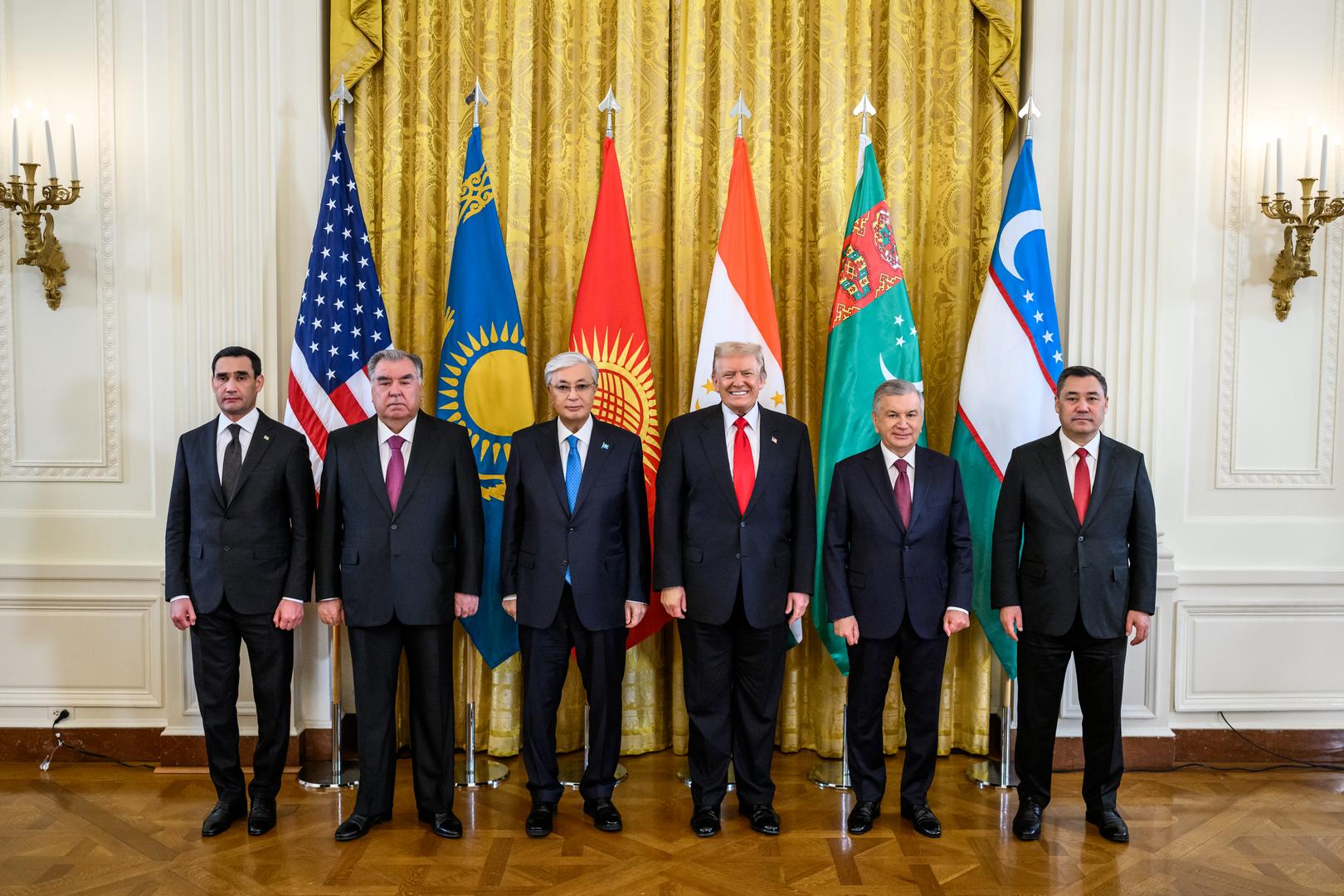
Many were surprised that Turkic countries were included in Donald Trump’s Board of Peace. However, it is nothing to be surprised by. In the age of enhanced connectivity, prosperity in neighboring countries cannot be understood without each other and this is especially true for the Turkic World and the Middle East. The Middle East, however, is entering yet another phase of strategic volatility. Wars after wars, crises after crises. The constant threat of escalation, fragile deterrence, cross-border terrorist activities and overlapping proxy dynamics are reshaping not only the region itself but also the broader Eurasian security architecture. It is therefore no wonder that the Turkic countries would work under the banner of peace and cooperation to preserve their own economic development and stability.
The participation of Turkic countries – Türkiye, Uzbekistan, Kazakhstan and Azerbaijan – in President Donald Trump’s Board of Peace should not be misread in an ideological war or by reshaping their loyalty frameworks. It is a strategic move. Not to mention that we should remember, until relatively recently, some of these states lacked the freedom to choose their geopolitical alignments. Their current pursuit of diversified partnerships reflects a new phase of nation-building and international endeavors – one defined by growing strategic agency rather than inherited dependency.
For the Turkic world, engagement with Washington at this level represents a deliberate effort to institutionalize their role in regional stability while strengthening their geopolitical leverage in an era of renewed great power competition. The countries have recognized their strategic location and have learned throughout history what it means to exist in the center of Eurasia.
OTS provides the primary framework for regional cooperation. For years, its ambitions remained relatively modest, focusing on identity, economic ties, and symbolic integration. That phase is ending. The geopolitical shifts triggered by the turmoils in the last few years, and the growing uncertainty in the surrounding region have accelerated strategic coordination among Turkic states. Energy security, transport corridors, critical mineral supply chains, and even defense cooperation are now part of the agenda. In this context, it is also important for Washington to be a reliable partner for these countries.
The Turkic states sit at the crossroads of the Eurasian landmass - between Russia and Iran; along the western edge of China; across key energy and transit corridors and adjacent to the volatile South Caucasus. For Washington, deeper cooperation embeds regional development into a broader transatlantic framework. For the Turkic states, US engagement provides balance – hopefully, without forcing binary choices.
President Trump’s former mediation between Armenia and Azerbaijan demonstrated that diplomatic engagement in the South Caucasus can bring tangible results. Stabilization opens transport routes. Open routes alter power balances. The Board of Peace is therefore significant because it institutionalizes dialogue around conflict resolution at a time when regional crises risk spilling over into interconnected theaters. By participating in this initiative, the Turkic states are showcasing at least three strategic priorities. First, they want to prove they are responsible and reliable regional stakeholders. Second, they do not want to react to what is happening around them, they want to shape it. And third, they believe the region’s status quo cannot be left to decide by internal actors only. Hence, this participation can signal a broader, structured diversification.
The Turkic countries remain committed to multi-vector diplomacy. They maintain ties with Russia, engage economically with China, and cooperate with the European Union and the GCC countries as well. Participation in US-led platforms does not negate this. It strengthens negotiating space.
The current crisis in the Middle East highlights the delicate balancing act facing the Turkic world. In response to the recent military escalation, Türkiye, Azerbaijan, Uzbekistan, and Kazakhstan have adopted cautious and measured positions, emphasizing de-escalation and regional stability rather than alignment with any military side. Türkiye has been the most vocal among them, openly opposing further military escalation, warning of severe regional consequences, and calling for an immediate halt to hostilities and a return to diplomacy. Ankara has also stressed that its territory and airspace should not be used for operations that could widen the conflict. Azerbaijan expressed deep concern over the growing tensions, calling for maximum restraint, respect for international law, and a return to diplomatic dialogue. Uzbekistan similarly underscored the importance of peaceful conflict resolution and urged all parties to avoid further escalation, maintaining its traditionally balanced foreign policy approach. Kazakhstan, while engaging diplomatically with regional partners, highlighted the need to preserve stability in the broader Middle East and promised support for cooperative efforts aimed at preventing further deterioration. Overall, these Turkic states have refrained from direct involvement, instead prioritizing neutrality, diplomatic engagement, and the prevention of a wider regional spillover.
For the Turkish states, de-escalation is not a moral abstraction. It is an economic and security necessity. Their presence in diplomatic frameworks tied to Washington reflects this calculation.
Author: Blanka Benkő-Kovács, advisor - LCTS, LUPS
Image source: Flickr