Zangezur Corridor and Washington Agreement: New Chances for the South Caucasus
The South Caucasus is entering a new and perhaps decisive phase in its development. For more than three decades, the region was known for unresolved conflicts, economic isolation, and fragile ceasefires. Attempts to achieve peace – such as the OSCE Minsk Group process with its “Madrid Principles” of 2007, or the Russian-brokered talks after the 2020 war – brought limited results. They were often focused on managing disputes rather than transforming relations. Now, two recent initiatives – the Zangezur Corridor, promoted within the U.S.-backed TRIPP framework, and the Washington Agreement of August 2025 – offer something different. They do not only speak about solving conflict, but about building shared infrastructure and interdependence. This may open new ground for peace, prosperity, and regional integration.
Economic promise of the Zangezur Corridor
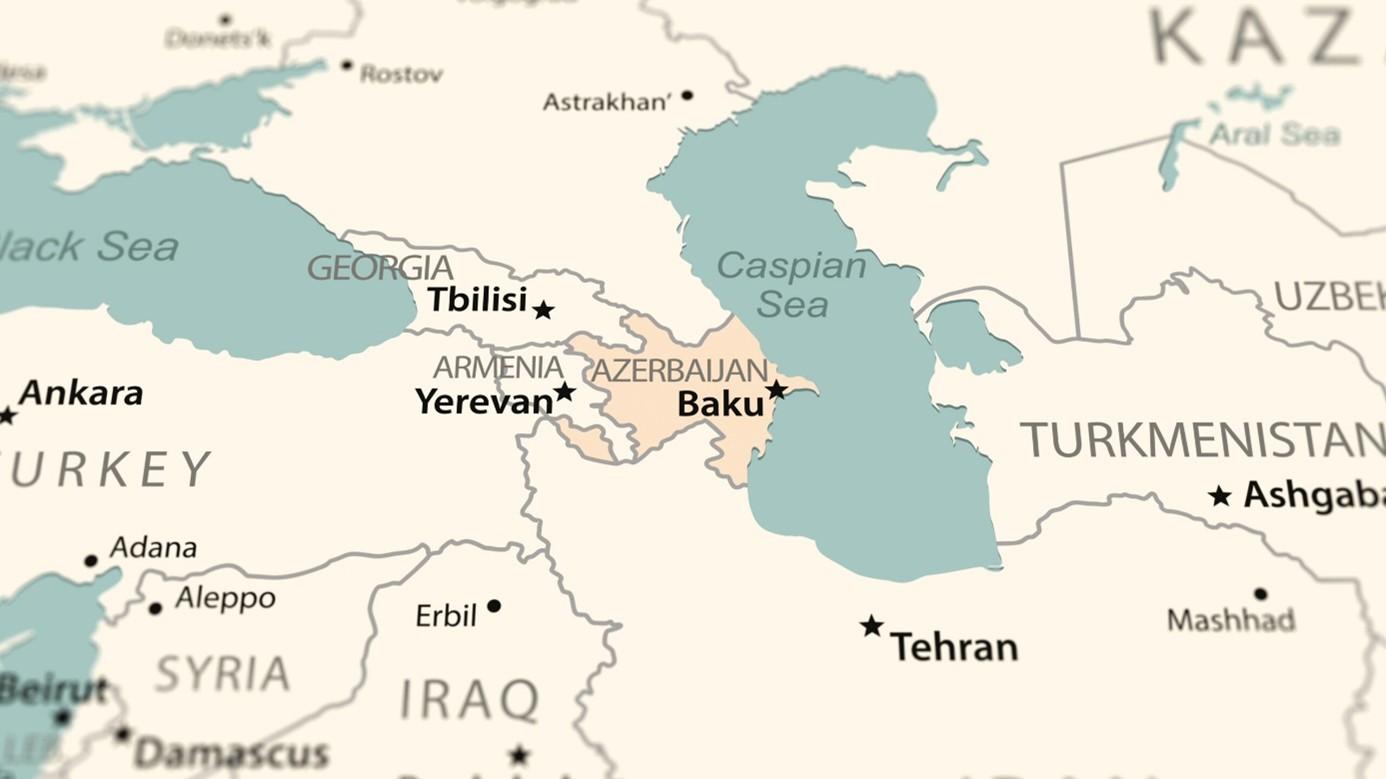
The Zangezur Corridor is more than a symbolic idea. It is a practical land connection between Türkiye, Nakhchivan, and mainland Azerbaijan across the Armenian province of Syunik. In simple terms, it means Azerbaijan will have secure and direct access to its exclave of Nakhchivan, while Türkiye and Azerbaijan will also be connected through Armenian territory.
The corridor fits into the larger “Middle Corridor” strategy, which links Europe with China through Central Asia. In the past, trade depended mainly on the northern route through Russia and the southern route through Iran. Both are longer, more expensive, and politically fragile. The Zangezur Corridor reduces costs and travel time, making Eurasian trade more competitive.
But this is not only about movement of goods. The corridor is designed to include energy pipelines, electricity interconnectors, and fiber optic cables. This means Armenia and its neighbors can benefit from energy exports to Europe, regional electricity exchanges, and improved digital infrastructure. The project is multi-layered: it combines transport, energy, and digital dimensions in one network.
For Armenia’s Syunik province, traditionally associated with military tension and border insecurity, the corridor could provide customs revenues, jobs in logistics and construction, and long-term investment. For Azerbaijan and Nakhchivan, it guarantees reliable access and integration with regional markets. In this way, the economic promise goes beyond simple trade – it can shape local development and regional growth.
Corridor as instrument of peace
The political logic is also strong. If the corridor is formally part of Armenian law but operated with third-party involvement, it creates a system of mutual dependence. Every train or container that passes increases the cost of renewed confrontation. In this sense, the Zangezur Corridor is not only infrastructure but also a peace project.
Still, challenges must not be underestimated. Inside Armenia, many fear loss of sovereignty, and the word “extraterritoriality” triggers strong emotions. Iran looks at the corridor with suspicion, seeing it as a U.S.-backed project near its northern border. And like all linear infrastructure, it is exposed to sabotage or political disruption.
This is why the corridor should not be presented as narrow east–west passage only. It should be integrated with Armenia’s broader “Crossroads of Peace” initiative, which promotes multi-directional connectivity – linking not only Azerbaijan and Türkiye, but also Iran and Georgia. If framed this way, the corridor becomes part of a larger vision of inclusion, not exclusion.
Washington Agreement as political umbrella
The Washington Agreement of August 2025 offers the necessary political framework. Unlike earlier Russian-led deals, which mainly froze conflicts without solving them, the Washington Agreement puts emphasis on cooperation and interdependence. With the United States as guarantor and facilitator, it balances the influence of Russia and Iran and gives Armenia and Azerbaijan a different platform for negotiation.
The agreement is not only about geopolitics, but also about specific areas of cooperation:
- Customs and railway harmonisation. With U.S. and international support, Armenia and Azerbaijan can align their rules, making trade faster and more predictable.
- Security arrangements. Monitoring of the corridor, dispute-resolution channels, and prevention mechanisms can reduce the risk of new clashes.
- Energy and digital integration. Shared electricity grids, gas networks, and fiber optic systems increase resilience and attract investment.
- Broader partnerships. Armenia can expand relations with Western institutions, while Azerbaijan strengthens its ties with Türkiye, the EU, and the United States.
This framework moves away from endless discussions of status and territory, which dominated the OSCE Minsk Group era, and instead focuses on practical cooperation that creates real interests for stability.
Strategic meaning and fragility
The Washington Agreement can be described as bold experiment in “geoeconomic statecraft.” By embedding infrastructure projects under international stewardship, it raises the costs of disruption and creates incentives for cooperation. This is a different approach compared to earlier Russian-led initiatives, which mostly relied on military presence and temporary ceasefires.
Yet the environment remains fragile. Armenia is still sensitive about sovereignty and fears being forced into projects it cannot control. Azerbaijan demands strong guarantees of long-term access. Iran opposes the corridor and sees it as part of U.S. strategy to reduce Tehran’s influence. Russia, weakened by its war in Ukraine, has less leverage but still does not want to lose its role.
The success of TRIPP and the Washington Agreement will therefore depend on careful framing. If they are presented as one-sided or imposed solutions, they will face resistance. But if they are connected to a broader regional connectivity agenda – including Georgia, Iran, and Türkiye – then they can gain legitimacy. In this way, Armenia could become a true hub, and the corridor would serve not as a dividing line but as a bridge.
Lessons from past failures
The region has seen many attempts at peace that ended with disappointment. The Madrid Principles offered a framework for gradual settlement of the Nagorno-Karabakh conflict, but they were never implemented because of lack of trust and domestic opposition. The Moscow-brokered ceasefire of November 2020 ended large-scale fighting, but it left many questions unresolved and placed Russian peacekeepers in an uncertain role. Even regional initiatives, like the “3+3” platform proposed by Russia, Türkiye, and Iran, did not progress because of mistrust and competing interests.
Compared to these past efforts, the Zangezur Corridor and the Washington Agreement represent a different model. Instead of abstract principles or fragile ceasefires, they try to create concrete economic ties that make conflict less attractive. In other words, they are not only about stopping war but about making peace profitable.
Conclusion
The Zangezur Corridor and the Washington Agreement are rare opportunities for the South Caucasus. They combine economic potential with political logic of interdependence. They also show that external powers, especially the United States, are now ready to invest in infrastructure as tool for peace.
Their success is not guaranteed. The politics are fragile, the risks are high, and both internal and external actors may resist. But if carefully implemented and linked with a wider regional vision, these projects can move the South Caucasus away from decades of unresolved conflict and failed negotiations. They can offer something that the Madrid Principles, the Moscow-brokered talks, and the 3+3 platform could not deliver: a real path from fragile ceasefires toward sustainable cooperation, prosperity, and long-term stability.
Author: Prof. Dr. László Vasa, Head of the LCTS, chief advisor - LUPS