Europe is Losing the Contemporary Great Game
Europe is Losing the Contemporary Great Game
The competition for influence over Central Asia has entered a new phase. Unlike the nineteenth-century Great Game, today's rivalry is driven less by military confrontation than by infrastructure development, trade and energy corridors, critical raw materials, and strategic investments. While China has expanded its economic footprint through the Belt and Road Initiative, Russia seeks to preserve its regional influence, and middle powers such as Türkiye and the Gulf states have significantly increased their engagement, the European Union has often struggled to translate political ambitions into strategic presence. Although the EU has paid increased attention to the region over the past few years and announced tens of billions of euros in support and investment, the results are far from being achieved. Europe promises, others deliver.
This op-ed argues that Europe risks losing the contemporary Great Game not because of a lack of resources, but because of fragmented policies, slow implementation, and because it offers highly bureaucratic funding mechanisms that often fail to reflect local priorities. Focusing on Central Asia, this article examines the growing importance of connectivity initiatives such as the Middle Corridor, and the region's increasing geopolitical relevance following the Russia-Ukraine war. It also assesses the opportunities created by the EU's Global Gateway strategy, while highlighting the gap between political commitments and real implementation.
The paradox is that Europe is by no means an insignificant actor in Central Asia. In fact, the opposite is true. In 2025, the EU accounted for 21.3 percent of the five Central Asian states' combined foreign trade and remained the destination for almost one-third of the region's exports. This gives Brussels an economic position that many of its competitors would envy. The problem, therefore, is not European absence. It is Europe's persistent difficulty in transforming existing economic weight into long-term strategic presence. That difficulty has become much more consequential since Russia's full-scale invasion of Ukraine in 2022. Routes crossing Russia became politically and commercially more problematic for European actors, while sanctions and geopolitical tensions increased the risks associated with existing supply chains. At the same time, Europe's experience of energy dependence and growing concerns over concentrated critical raw material supply chains pushed economic security towards the centre of EU policymaking. Central Asia consequently became more important for two interconnected reasons: because of what it possesses, and because of where it is. The region is rich in hydrocarbons, uranium and a wide range of minerals increasingly relevant to Europe's industrial and energy ambitions. At the same time, it occupies the geographical space between China, Russia, Iran, and the South Caucasus. In an increasingly fragmented Eurasian economic landscape, that location is itself a strategic asset.
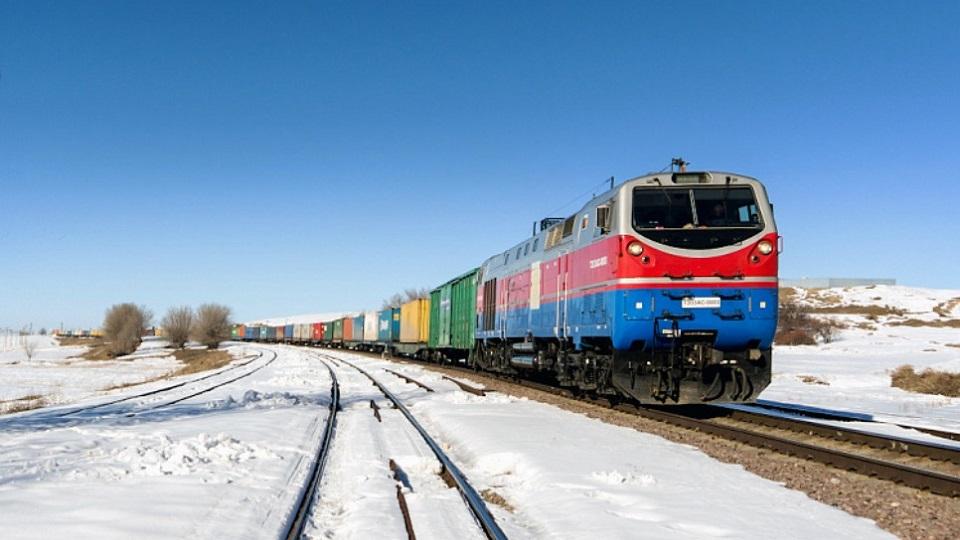
So, the Middle Corridor is a good example of why European initiatives often struggle with implementation. The Trans-Caspian Transport Corridor connects China and Central Asia with Europe through Kazakhstan, the Caspian Sea, Azerbaijan, Georgia and onward connections through Türkiye and the Black Sea. Once treated largely as a supplementary route to the much larger northern corridors passing through Russia, it gained a fundamentally different strategic relevance after 2022. According to OECD data, freight traffic along the Trans-Caspian corridor reached approximately 4.5 million tonnes in 2024, an increase of around 62 percent in a single year. This was several times the level recorded only a few years earlier. The corridor is nevertheless far from operating at its full potential. Its competitiveness continues to be constrained by port capacity, railway bottlenecks, border procedures, insufficient coordination between national operators, limited Caspian shipping capacity and the complexity essential in moving freight across several jurisdictions and transport modes. (I wrote about this topic more extensively in a previous LCTS article.) The World Bank estimates that a combination of infrastructure investment and efficiency improvements could triple trade flows along the Middle Corridor and shorten travel times by 2030. Importantly, the WB stresses that the corridor's importance does not lie only in functioning as a bridge between China and Europe. Its greatest economic value may come from generating more trade among the countries located along the route themselves. For Europe, therefore, this corridor can help maintain its supplies and economic security. The countries along the route also recognise its benefits, as it supports their increasingly multi-vector foreign policies and gives them greater room for manoeuvre between larger powers. The EU has correctly identified the strategic potential of the region, the problem lies less in its objectives than in the way it approaches implementation.
At the Global Gateway Investors Forum in January 2024, European and international financial institutions announced plans to mobilise €10 billion for sustainable transport connectivity in Central Asia. A year later, at the first EU-Central Asia summit in Samarkand, the relationship was upgraded to a strategic partnership, accompanied by more than €12 billion in planned Global Gateway investment across transport, critical raw materials, digital connectivity, water and energy. These commitments are significant, but they also highlight a core weakness of the European approach: these packages largely refer to investment to be mobilised through loans, guarantees, public and private finance. Economically, this model is understandable; in a broad strategic manner, however, the gap between money announced and projects delivered matters.
European projects move through feasibility studies, environmental assessments, financing negotiations, procurement procedures, guarantees and the mandates of several different institutions. The European Commission operates alongside the European Investment Bank, national development banks, member states and private companies. There are good reasons for many of these procedures. Transparency, environmental safeguards, procurement standards and debt sustainability should not be sacrificed simply in the name of speed. But what appears from Brussels as a sophisticated financing architecture can appear from Astana, Bishkek or Tashkent as an institutional maze. Central Asian governments do not evaluate external partnerships exclusively through the value of agreements signed at summits. They also observe how quickly those agreements become roads, railways, industrial facilities and jobs. This is the environment in which Europe is competing. And this is where the comparison with China becomes uncomfortable.
China builds while Europe “mobilises”. China's trade in goods with the five Central Asian states reached a record $106.3 billion in 2025, according to China's Ministry of Commerce, an increase of 12 percent from the previous year. Chinese exports to Central Asia reached $71.2 billion, while imports amounted to $35.1 billion. According to Beijing's statistics, China became the region's largest trading partner for the first time that year. But trade is only part of China's advantage. Over more than a decade of Belt and Road engagement, Beijing has embedded its regional presence in many forms of infrastructure. The cumulative effect is more important than any single project since Chinese economic influence has acquired a physical geography. The China-Kyrgyzstan-Uzbekistan railway provides a particularly telling example. The project had been discussed for decades before its commencement ceremony finally took place in December 2024. By late April 2025, according to Chinese government reporting, construction of the main line had entered the substantive construction phase. Its significance extends far beyond a new railway. The line has the potential to create an additional connection between western China and Uzbekistan through Kyrgyzstan and, ultimately, towards wider westbound networks. Central Asian states however are aware of the risks of excessive dependence on China and actively seek alternatives. This is precisely why Europe's ability to deliver matters.
However, nor is China Europe's only competitor. Russia's relative position has changed since the beginning of the war in Ukraine, but its influence cannot be reduced to annual trade figures. Kazakhstan and Kyrgyzstan remain members of the Eurasian Economic Union, while decades of Soviet and post-Soviet integration continue to shape transport systems, labour migration, language, education, business networks and security relations. Moscow may no longer enjoy the uncontested position it once did, but it remains deeply embedded in the regional architecture. Türkiye has also steadily expanded its role through investment, construction, trade, cultural diplomacy and the growing institutional framework surrounding cooperation among Turkic states. Kazakhstan illustrates the scale of that engagement. By 2025, Turkish investment in the country had reached approximately $5.8 billion, while more than 4,000 companies with Turkish participation were operating there, according to Kazakhstan's authorities.
The Gulf states have emerged as another increasingly important group of actors. Their influence is particularly visible because much of their engagement is organised around large and tangible commercial projects in energy, infrastructure, agriculture, logistics and digital development. Uzbekistan provides perhaps the clearest example. In October 2025, the Uzbek presidency reported that the portfolio of joint Saudi-Uzbek projects had reached $27 billion, while energy projects involving ACWA Power amounted to approximately $15 billion. Uzbek authorities also reported that $2 billion in Saudi investment had been absorbed since the beginning of 2025 alone. These figures require an important qualification. A portfolio of planned and ongoing projects is not identical to realised foreign direct investment. But the distinction does not undermine the broader point.
Taken together, these examples point to a broader lesson: Europe does not necessarily need to outspend its competitors, but it does need to better understand the region in which it wants to compete. Central Asian states are actively diversifying their partnerships and increasingly expect external actors to respond to their own economic and development priorities. If Europe wants to build a lasting market presence in Central Asia, it cannot treat the region as if it were simply an extension of the European market. It needs to adapt to local priorities, political timelines and development needs, rather than expecting Central Asian partners to fit into European institutional and regulatory logic. Strategic presence requires not only bringing European capital into the region, but shaping an offer that makes sense from a Central Asian perspective as well.
Author: Blanka Benkő-Kovács, advisor - LCTS, LUPS
Image source: RailFreight.com